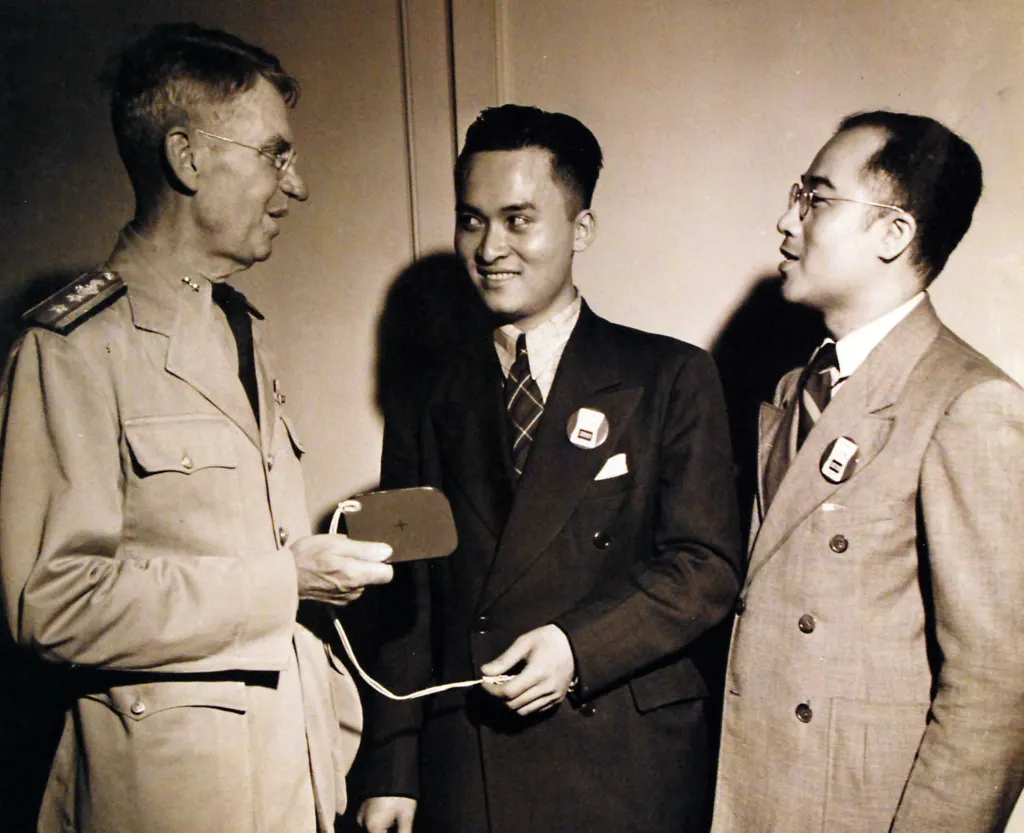
Poon Lim spent 133 days alone on a wooden raft in the South Atlantic after his ship went down in November 1942. When three Brazilian fishermen pulled him aboard on April 5, 1943, he had set a record for survival on a life raft that, by the latest count, nobody has broken.
He was 24 years old, a Second Mess Steward from China, and he could not swim well.
Washed overboard in two minutes
Poon was born on March 8, 1918, in a village in Wenchang County on Hainan island. His father taught martial arts on the road. At 18 he was sent to British Hong Kong to train as a sailor.
By 1942 he was working on the Benlomond, a British cargo ship with British officers and a mostly Chinese crew, sailing from Cape Town toward Paramaribo and New York without an escort. On November 23, the German submarine U-172 struck it with two torpedoes about 250 miles north of Brazil. Poon grabbed his life jacket and ran for his boat station, but a wave swept him overboard. The ship went under in roughly two minutes.
After about two hours in the water, he climbed onto an empty life raft. He spotted another raft carrying a handful of men, but he had no way to steer toward it, and the two drifted apart. He would be the only survivor of the Benlomond.
How he stayed alive
The 8-foot raft came stocked: 10 gallons of water, six boxes of hard biscuits, chocolate, pemmican, canned milk, a bottle of lime juice, flares and a flashlight. That lasted about 55 days for food and about 15 more for water.
Then he improvised. He turned the spring from the flashlight into a fishhook, unraveled hemp rope for a line and crushed biscuit into bait. Later he pried a nail out of the raft boards to make a stronger hook. He caught fish, used small ones to land bigger ones, and snared seabirds that landed on the raft, salting and sun-drying the meat. A canvas life jacket cover caught rainwater, and a tarpaulin rigged on four poles became a sunshade. He tied himself to the raft with a rope in case he fell in.
Ships passed. Poon said they ignored his shouts because he was Asian and might be taken for a Japanese sailor. Another explanation offered is that crews feared a U-boat trap, since a lone “survivor” on a raft was rumored to be used as bait. A US Navy patrol plane once dropped a marker buoy near him, but a storm hit and he was lost again.
The math of the drift
Poon drifted west roughly 750 miles before he reached shallow water. Spread over 133 days, that works out to about 5.6 miles a day, slower than an easy two-hour walk. He knew land was near only when the sea turned from deep blue to a lighter color. The fishermen found him about 9 nautical miles off the coast of Pará, east of Salinas. He had lost 20 pounds but could walk again within three days.
A medal, a new country and a famous reply
King George VI awarded him the British Empire Medal. The citation said he “displayed exceptional courage, fortitude and resource” during the voyage. Told that no one had ever survived longer on a raft, he answered: “I hope no one will ever have to break that record.”
US immigration quotas for Chinese nationals were full after the war, but with help from Senator Warren Magnuson he received a special exception and became a citizen in 1952. He worked as a ship’s steward until retiring in 1983 and died in Brooklyn in 1991, aged 72. His story later fed into Alfred Bester’s science fiction novel The Stars My Destination.
For another tale of people stranded far from help, read about the possible camp of 1873 castaways found on Isla de los Estados, or the World War II sub USS Cobia’s tow up Lake Michigan.
Longer ordeals at sea have happened since, including José Salvador Alvarenga’s drift across the Pacific in a disabled boat. On a life raft, Poon’s 133 days still stand.
Further reading
Image: National Museum of the U.S. Navy, Public domain via Wikimedia Commons
This article was produced with AI assistance and reviewed by our Editorial Desk. How we work.