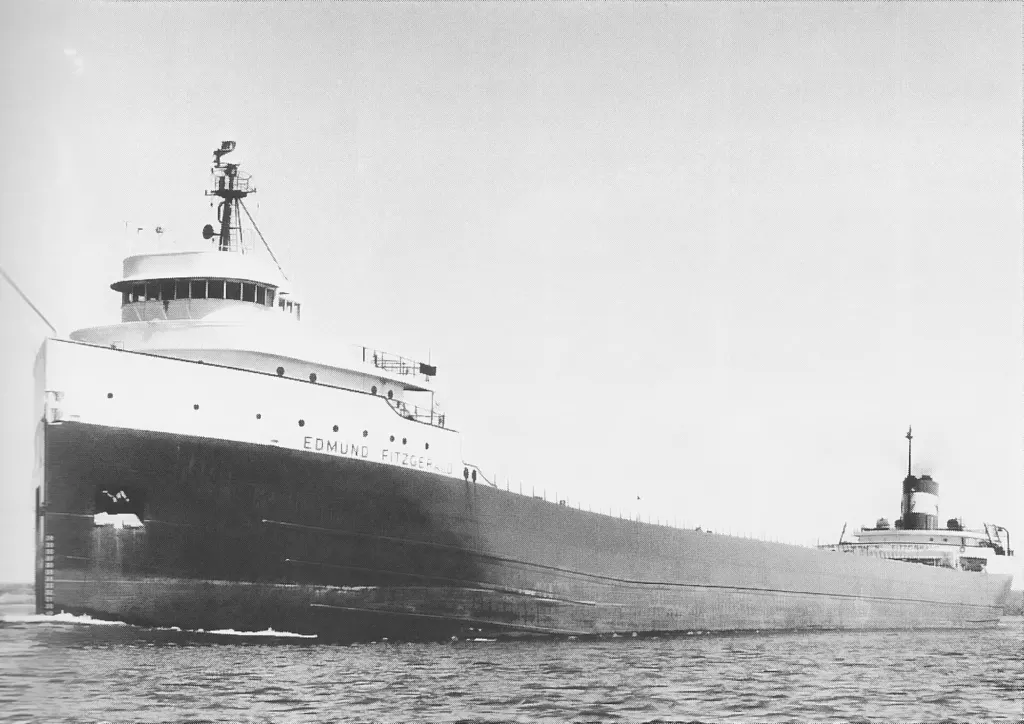
Gordon Lightfoot recorded “The Wreck of the Edmund Fitzgerald” in December 1975, only weeks after the freighter went down in Lake Superior on November 10, 1975, and about five months before anyone sent a camera down to look at the wreck. The song that most people now treat as the story of the sinking was, by the singer’s own account, partly a guess.
The Edmund Fitzgerald was lost with all 29 of her crew in a fierce late-season storm. When launched in 1958 she had been the largest ship on the Great Lakes, and she remains the largest to have sunk there. This week marks 51 years since she went down.
According to the National Weather Service, she had left Superior, Wisconsin, the evening before, bound for Detroit with 26,116 long tons of iron ore. Ships on the lake that day reported winds of 50 knots and waves of almost 20 feet, and the crew never radioed for help. By 1979, partly in response, eight weather buoys had been placed across the Great Lakes.
A song written ahead of the evidence
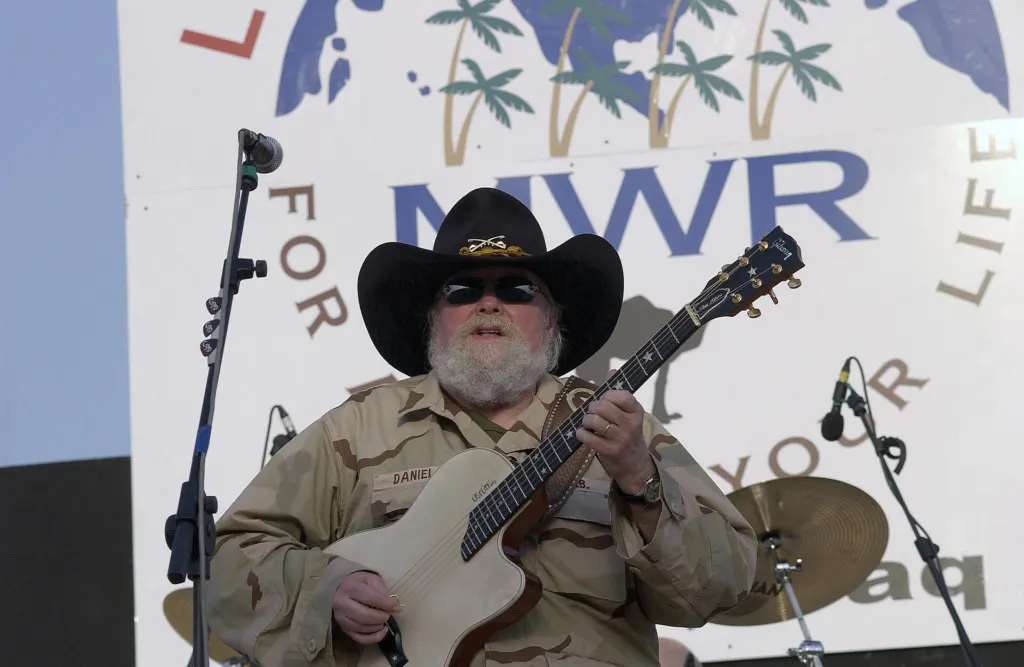
Lightfoot, a Canadian who sailed the Great Lakes for pleasure, drew on magazine coverage published in late November 1975, including its retelling of Ojibwe legends of Lake Superior. That is where the opening line comes from: “The legend lives on from the Chippewa on down.”
He later said he agonized over getting details wrong. His lead guitarist, Terry Clements, talked him through it with advice he credited to Mark Twain, his favorite author: just tell a story. The band cut it at Eastern Sound in Toronto, and the take on the record was the first time Lightfoot and his musicians had played it together. Two more weeks of attempts never beat it.
Timeline: the song versus the investigation
- November 10, 1975: the ship sinks in a storm on Lake Superior.
- November 14, 1975: a US Navy aircraft locates the wreck with a magnetic anomaly detector, 530 feet down in Canadian waters near the border.
- December 1975: Lightfoot records the song in Toronto.
- May 20 to 28, 1976: the Navy’s unmanned submersible CURV-III films the wreck and finds it in two large pieces.
- August 1976: the single is released.
- July 1977 and May 1978: the US Coast Guard and the National Transportation Safety Board publish findings that disagree with each other about why she sank.
Laid end to end, the dates show that the most-played account of the disaster was finished before the first underwater survey and well before either official verdict.
The line he changed
The song’s best-known guess is the hatch. The original lyric says, “At 7 p.m. a main hatchway caved in.” The Coast Guard blamed ineffective hatch closures; the safety board pointed to hatch covers collapsing under heavy seas; others argued for a shoal strike or hull failure. In March 2010, after new findings were presented for a television documentary that used his song, Lightfoot began singing “At 7 p.m. it grew dark, it was then he said” on stage. He left the recorded lyric as it was.
He made a second change after a complaint from a member of the Detroit church named in the song, the Mariners’ Church: “musty old hall” became “rustic old hall”.
A hit, and a bell
The single reached No. 1 in Canada on November 20, 1976, barely a year after the sinking, and peaked at No. 2 on the main US singles chart. Lightfoot considered it his finest work.
Each November the Great Lakes Maritime Academy rings a bell for the crew. Since Lightfoot’s death in 2023 it rings 31 times: 29 for the men lost, once for all lives lost at sea, and once for the songwriter. For another Great Lakes vessel with a long afterlife, read how World War II submarine USS Cobia was towed up Lake Michigan for dry dock. Badiyaa’s history section has more anniversaries from this week.
Further reading
- Wikipedia: The Wreck of the Edmund Fitzgerald
- Wikipedia: SS Edmund Fitzgerald
- NOAA National Weather Service: Tragedy on Lake Superior
Image: Unknown photographer, US Army Corps of Engineers, Public domain via Wikimedia Commons
This article was produced with AI assistance and reviewed by our Editorial Desk. How we work.