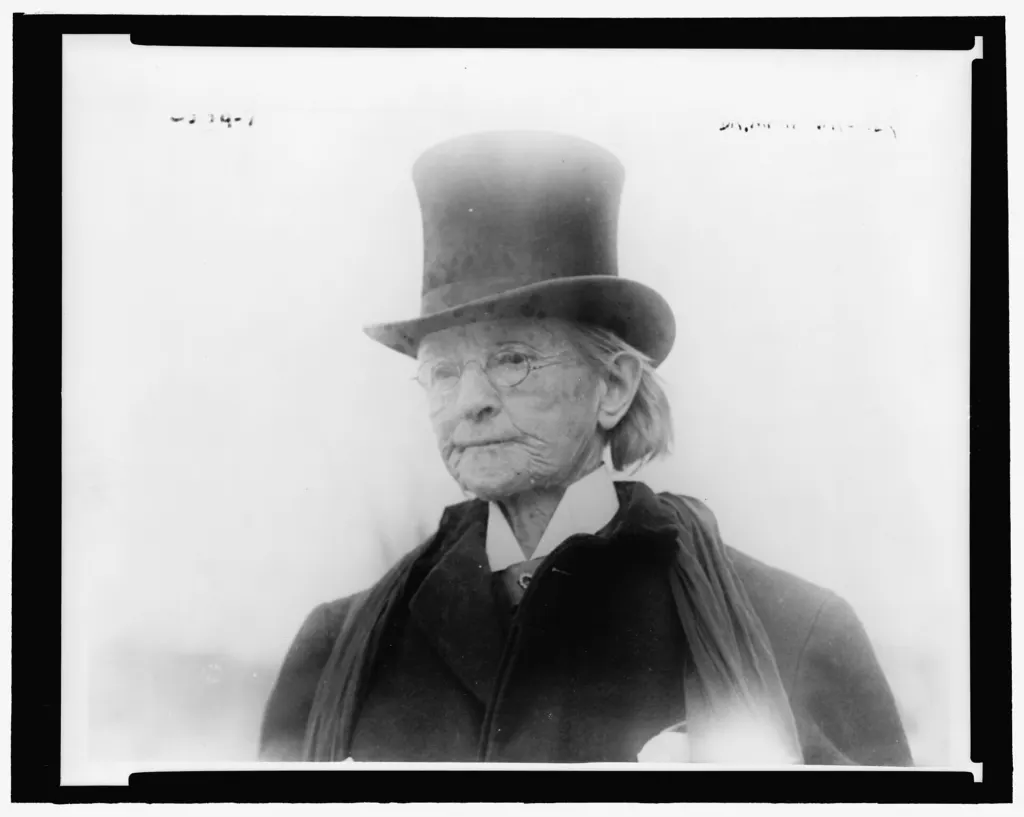
Dr. Mary Edwards Walker received the Medal of Honor on November 11, 1865, which makes today’s Veterans Day the 161st anniversary of the only time a woman has been given the nation’s highest military decoration. The Army later struck her name from the honor roll, and she kept wearing the medal anyway.
Walker was a civilian, not a soldier, and that fact shaped every chapter of the story.
A surgeon the Army would not hire
Born in Oswego, New York, in 1832, Walker graduated from Syracuse Medical College in 1855 as the only woman in her class. When the Civil War began in 1861 she tried to join the Union Army as a surgeon and was refused because she was a woman. Offered work as a nurse, she declined and volunteered as an unpaid surgeon instead.
She worked at the makeshift hospital in the US Patent Office in Washington, at the First Battle of Bull Run, near Fredericksburg, and in Chattanooga after the Battle of Chickamauga. In September 1863 the Army of the Cumberland finally took her on as a “Contract Acting Assistant Surgeon (civilian)”. The Army’s own history of her service describes the paid post as the equivalent of a lieutenant or captain.
Four months in a Confederate prison
Walker often crossed the lines to treat civilians. On April 10, 1864, Confederate troops captured her and arrested her as a spy. She was held at Castle Thunder in Richmond, Virginia, until August 12, 1864, when she was swapped for a Confederate surgeon from Tennessee. Rumors that she let herself be caught in order to spy for the North have little evidence behind them, according to the Army’s account.
Why a medal and not a rank
After the war Walker asked for a retroactive commission to recognize her service. Lawyers found no precedent for commissioning a woman, so President Andrew Johnson ordered a medal instead. His citation, dated “this 11th day of November, A.D. 1865”, spells out the workaround: because she was not a commissioned officer, “a brevet or honorary rank cannot, under existing laws, be conferred upon her”, and so “the usual medal of honor for meritorious services be given her.”
Struck off, then restored
The same civilian status cost her the honor. A review board sitting in 1916 and 1917 removed 911 names from the Army Medal of Honor Roll, Walker’s and Buffalo Bill Cody’s among them. Nobody was ordered to hand a medal back, and Walker wore hers until she died in Oswego on February 21, 1919.
Her name went back on the roll in 1977, and accounts differ on who did it. The Army’s 2017 profile credits President Jimmy Carter. Historians who have studied the case say that is probably wrong: the decision came from the Army’s Board for Correction of Military Records, acted on by an assistant secretary, and both the Ford and Carter administrations had opposed it.
The record at a glance
- Medal of Honor recipients: nearly 3,500, by the Army’s count, and one woman.
- Civilians awarded it: eight, Walker among them.
- Years off the roll: 60, from 1917 to 1977.
- Honors since: a 1982 postage stamp, a 2024 American Women quarter, and a Virginia base named Fort Walker in 2023, renamed again in 2025.
Walker also spent decades fighting for women’s suffrage and the right to dress as she chose, and was arrested more than once for wearing men’s clothing. Her answer became her best-known line: “I don’t wear men’s clothes, I wear my own clothes.” Badiyaa has traced other women’s words from the same century, including how Sojourner Truth’s 1851 Akron speech was first printed. For the war’s final chapter, read how the Civil War’s last battle came 34 days after Appomattox.
She died 544 days before the 19th Amendment gave American women the vote, and a 900-pound bronze statue of her has stood outside Oswego Town Hall since May 2012.
Further reading
Image: George Grantham Bain Collection, Public domain via Wikimedia Commons
This article was produced with AI assistance and reviewed by our Editorial Desk. How we work.