Glass beads, four-hole ceramic buttons, a bottle and a small rudder hinge sit at the foot of a steep hill on one of the most storm-lashed islands off South America. Archaeologists think they may mark the spot where Argentine captain Luis Piedrabuena and his stranded crew camped after their ship was wrecked in 1873.
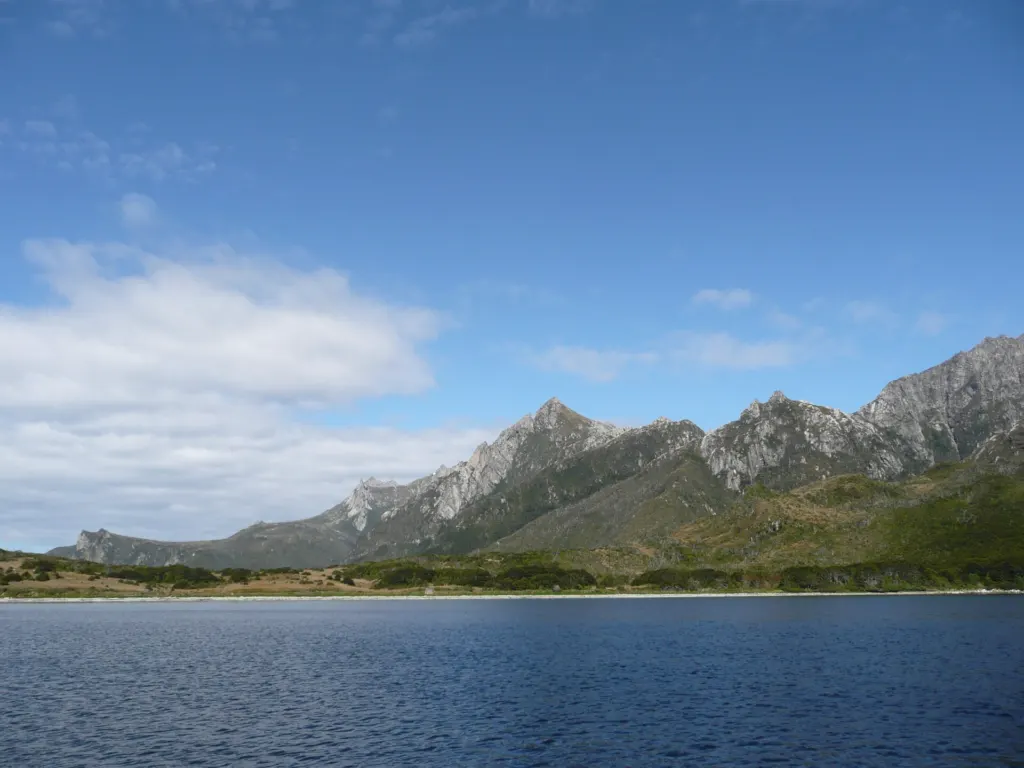
The finds come from Lacroix Inlet in Franklin Bay, on the far west of Isla de los Estados, the rugged island known in English as Staten Island that sits off the eastern tip of Tierra del Fuego. A six-member team led by Nicolas C. Ciarlo of the University of Cadiz and Argentina’s national research council, CONICET, described the site in a short report in the journal Antiquity, published on October 15 under the title “Castaways at the end of the world”.
The authors are careful. The material, they write, “attests to at least one naval accident that led to a temporary settlement”, but whose accident is still open: “The identity of the vessel/s and the castaways’ trajectories are the subject of ongoing inquiry.”
What the team found
The researchers reached the island in January 2026 aboard two sailboats, Pampa Mía and Galileo, as part of an expedition called Aquí hay dragones (“here be dragons”), with help from the Argentine Navy. At Lacroix Inlet, an exposed bay with cliffs on one side and open to south-west gales, they walked the shoreline at low tide and flew a drone over the site.
- Three wooden hull sections. One near the inlet mouth (labeled BF010) is the bottom of a hull, lying next to an iron chain. A second (BF005) sits just above the high-tide line and survives up to deck level. A third, smaller piece (BF004) lies on the north shore.
- A probable camp. Site BF008 sits at the foot of a steep hill, more than 12 meters above sea level, beside a small stream and roughly 150 meters from each of the two main wrecks.
- Everyday objects. Surface finds included glass beads, Prosser-style ceramic buttons, sheets of corrugated galvanized metal and a bottle, mixed with ship gear: a deck prism used to let daylight below deck and a small non-ferrous rudder hinge.
The team dug test pits and sampled the timbers. Only a detailed study of how the hulls were built will show whether they come from one ship or several.
Why Piedrabuena’s wreck is the prime suspect
Piedrabuena (1833-1883), whose name is also written Piedra Buena, is honored in Argentina as a Patagonian hero who rescued shipwrecked sailors and pressed his country’s claim to the far south. The government granted him Isla de los Estados in 1868. In 1873 he sailed there in the schooner brig Espora to take penguins for oil. A storm drove the ship onto rocks. From what was left, the crew built a small cutter, the Luisito, and sailed it to Punta Arenas in Chile.
The Antiquity report adds a detail American readers may enjoy: the Espora began life as the Nancy, a single-decked, 157-ton brig built in Maryland.
Piedrabuena’s own diary and other documents point to Franklin Bay as the wreck site, though the authors note there is “still no common agreement” on that. The physical evidence also complicates the old story. Written accounts disagree on how thoroughly the Espora was broken up, yet hull BF005 still stands to deck height, which is not what a picked-apart wreck should look like. And the team has so far found no trace of the makeshift shipyard where the Luisito was built.
Timeline: four centuries of wrecks and refuges
The new site is one chapter in a long record of ships coming to grief around this island and the Le Maire Strait that separates it from the mainland, a passage that is notorious for its winds and currents.
1526: The Spanish ship San Lesmes, blown away from its fleet, becomes the first European vessel known to sight the island.
1615: On Christmas Day, Dutch navigators Jacob Le Maire and Willem Schouten pass by and call it Staten Landt.
1775: James Cook names New Year’s Port on the north coast.
1787: A seal-hunting outpost there is abandoned after its supply ship, the Duke of York, is wrecked on September 11.
1849: A young Piedrabuena rescues 14 shipwrecked sailors off the island.
1862: He builds a small refuge for castaways, San Juan de Salvamento.
1873: The Espora is lost; the Luisito carries her crew to Chile.
1874: Back on the island, Piedrabuena helps save the crew of the wrecked Dr. Hanson, earning a telescope from the German emperor.
1884: The San Juan de Salvamento lighthouse opens on May 25. It later inspires Jules Verne’s 1905 novel The Lighthouse at the End of the World and shuts down in 1900.
1978: Argentina opens the Puerto Parry naval station, still the island’s only settlement, with four sailors on 45-day shifts watching shipping and conservation.
What comes next
The island is now a provincial reserve with tightly restricted access, and the authors argue that this isolation is why fragile camp debris has survived at all. Short-lived castaway camps are a young field in Patagonian archaeology; the same lead author published a study of another shipwreck survivors’ camp on the Buenos Aires coast in 2025. For Lacroix Inlet, the next test is the timber: dating the three hulls and tracing where they were built will decide whether this hillside really was Piedrabuena’s camp.
Further reading
- Antiquity: Castaways at the end of the world (Ciarlo et al. 2026)
- Wikipedia: Isla de los Estados
- Wikipedia: Luis Piedrabuena
Image: Serge Ouachée, CC BY-SA 3.0 via Wikimedia Commons
This article was produced with AI assistance and reviewed by our Editorial Desk. How we work.