When a deputy US marshal knocked on Susan B. Anthony’s door in Rochester, New York, on November 18, 1872, he tried to be polite about it. Commissioner Storrs, he said, would like to see her at his office. Anthony asked why. To arrest her, the deputy admitted. Anthony told him men were not arrested that way and insisted he do it properly, with the warrant.
Her crime, 154 years ago today: she had voted for president.
Fifteen ballots in the Eighth Ward
Anthony was already the best-known campaigner for women’s votes in the country when she walked with three of her sisters to a voter registration office set up in a barber shop on November 1, 1872. She read the Fourteenth Amendment aloud to the election inspectors and warned that she would sue them personally if they turned her away. A local lawyer advised the nervous inspectors to register the women. Nearly 50 Rochester women eventually signed up.
On election day, November 5, Anthony and 14 other women from her ward cast ballots after a poll watcher challenged them and they took the required oath. Inspectors in other wards turned their registered women away. Anthony, according to historian Ann D. Gordon, had expected to be refused at the polls so she could sue in federal court. She expected neither the vote nor the arrest.
The arrest she staged on her own terms
Once the warrant was out, the deputy suggested she come down to the office whenever she was ready. Anthony refused to deliver herself to court, so he had to wait while she changed her dress. She then held out her wrists for handcuffs. He declined to use them.
The other 14 women and three election inspectors were arrested too. Everyone posted $500 bail except Anthony, who refused. A commitment order sent her to the Albany County jail on paper, but she never spent a night there.
Instead she went on tour. She gave a speech titled “Is it a Crime for a U.S. Citizen to Vote?” in 29 towns and villages of Monroe County, where her jurors would be drawn. Its key line was a question she answered herself: “Are women persons? And I hardly believe any of our opponents will have the hardihood to say they are not.” Prosecutors moved the trial to Canandaigua in neighboring Ontario County. Anthony toured there too.
A guilty verdict the jury never voted on
The trial opened on June 17, 1873, before Ward Hunt, a newly appointed US Supreme Court justice sitting alone. Anthony was not allowed to testify. On the second day Hunt read an opinion he had written in advance and directed the all-male jury to find her guilty, refusing a request to poll the jurors.
Asked if she had anything to say, Anthony delivered a speech that ignored repeated orders to sit down. Hunt fined her $100. “I shall never pay a dollar of your unjust penalty,” she replied. She never did, and because Hunt chose not to jail her for it, she lost her route to the Supreme Court.
The timeline that followed shows how long the fight ran:
- March 3, 1874: President Ulysses S. Grant pardons the three jailed election inspectors, who are reelected the same day.
- 1875: the Supreme Court rules in Minor v. Happersett that the Constitution does not grant women the vote.
- 1895: the Supreme Court rules in Sparf v. United States that a federal judge cannot direct a jury to convict.
- 1920: the Nineteenth Amendment is ratified, 48 years after her ballot.
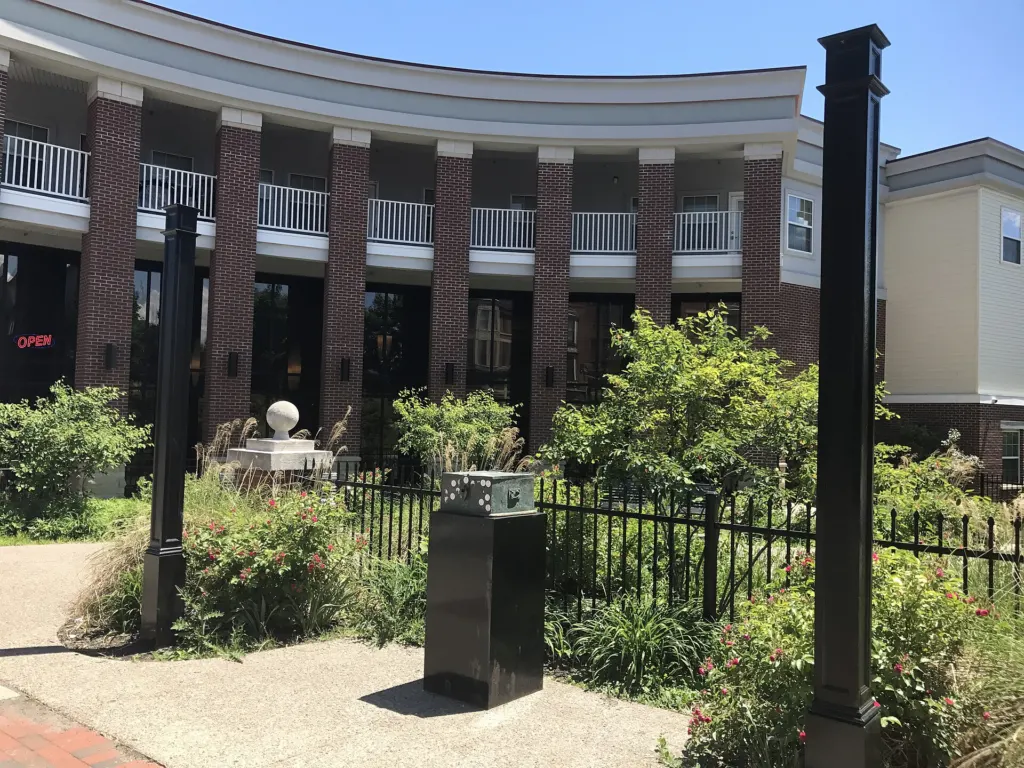
- August 2009: the 1872 Monument, a bronze locked ballot box, is dedicated where the women voted.
A month after the trial, a deputy marshal was sent to collect the $100. He found nothing to seize, and the court let it drop.
Badiyaa has told the stories of other women who forced the issue, including Dr. Mary Edwards Walker, the only woman awarded the Medal of Honor, and Sojourner Truth’s 1851 speech in Akron as it was first printed. The 1872 Monument now marks the polling place where Anthony and 14 neighbors voted.
Further reading
Image: Aaron Netsky, CC BY-SA 4.0 via Wikimedia Commons
This article was produced with AI assistance and reviewed by our Editorial Desk. How we work.