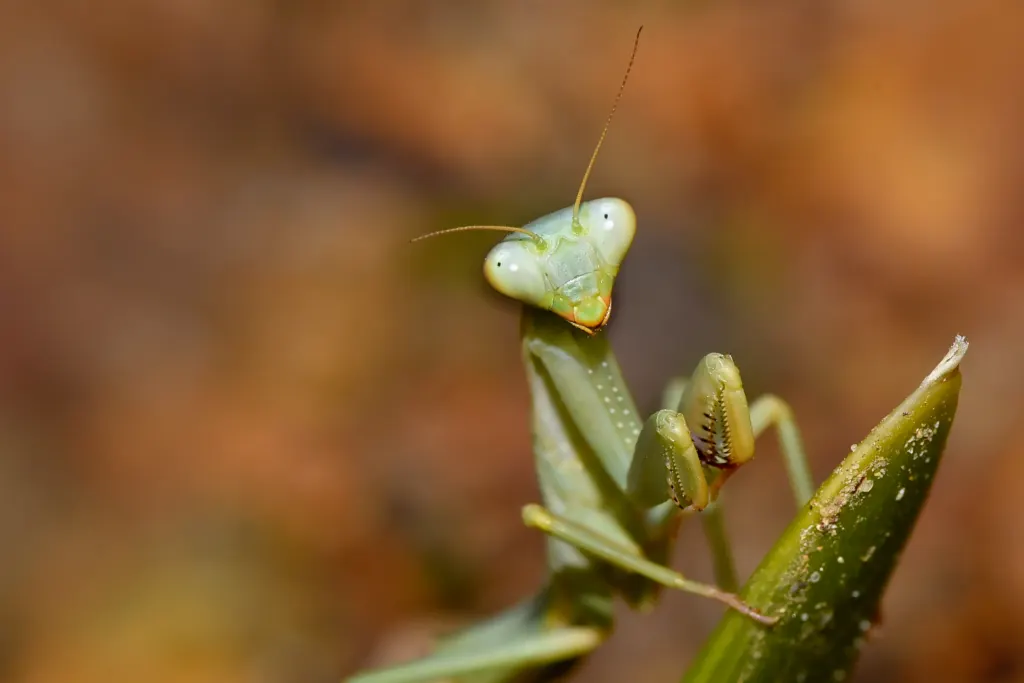
A praying mantis spotted by an amateur naturalist and posted online turned out to belong to a genus nobody had named. James Cook University researcher Matthew Connors described it, along with a second new mantis, in the journal Zootaxa, and he named the first one after the app that found it.
The mantis is called Inimia nat, or I. nat for short, a deliberate nod to iNaturalist, the citizen science platform where Glenda Walter’s observation first drew attention. It is not only a new species but a new genus, the rank above species. Worldwide, the mantis order holds more than 2,400 described species, so a whole new genus is a notable addition.
“It’s a tribute to a new way of doing natural science,” Connors said in the university’s announcement. According to JCU, Inimia is the first genus in its subfamily to be named since before the 1969 Moon landing, and the first new Australian mantis genus named since 2000.
A paperbark mantis that was really two
The second find, Ima corymbia, had been hiding in plain sight. For years it was lumped in with its close relative, the Paperbark Mantis (Ima fusca). When Connors compared the body structures of the two in detail, they did not match, and the lumped-together insect became two species. Photos and sightings logged by members of the public then filled in where the new species lives and how it behaves.
Connors argues that this kind of help closes a gap that used to take careers. “Data that might take a researcher years or even decades to collect is instead being collected by amateur naturalists through citizen science programs,” he said.
How much of Australia is still unnamed
The scale of the unknown is the striking part. Connors said fewer than a third of Australia’s species are estimated to have been discovered and named. Put another way, for every species already in the books, roughly two more may be waiting. He suggested that anyone who steps outside and finds three different insects has a fair chance that one of them is new to science.
The work was funded by the Australian Biological Resources Study, the national program that pays for taxonomy, and the paper can be read via its DOI, 10.11646/zootaxa.5380.3.1.
Three more mantises since then
Connors did not stop at two. In June 2026, JCU announced that he had named three new snake mantis species in the genus Kongobatha: K. serpens, K. spinosistyla and K. rufilinea. They are “leaf planking” mantises, which press themselves flat against leaves to hide, helped by a sensory organ on the chest. Before that study, Australia had one known species in the genus; it now has four, after Connors also found a Papua New Guinea species, K. papua, living north of Cairns.
One of them, the Southern Snake Mantis, turns up in suburban gardens around Brisbane and Sydney. “They seem to have adapted really well to living with humans,” Connors said, crediting citizen scientists for mapping where it lives.
The pattern is familiar from other recent finds, such as the Colobura butterfly that turned out to be three species, and from the backyard engineering of weaver ants that stitch leaf nests with silk. More stories like these live in our Pets & Animals section.
How to add your own sightings
Mantises are predators of flies and other small insects and are food for birds, bats and lizards, so they are easy to find in gardens through the warm months. A clear photo with a date and location, uploaded to a platform such as iNaturalist, is exactly the kind of record that led to Inimia nat. Connors has put it plainly: “There’s just so much that we don’t know that it’s almost certain that citizen scientists will continue to discover countless new species.”
Further reading
Image: Jean and Fred from Perth, Australia, CC BY 2.0 via Wikimedia Commons
This article was produced with AI assistance and reviewed by our Editorial Desk. How we work.