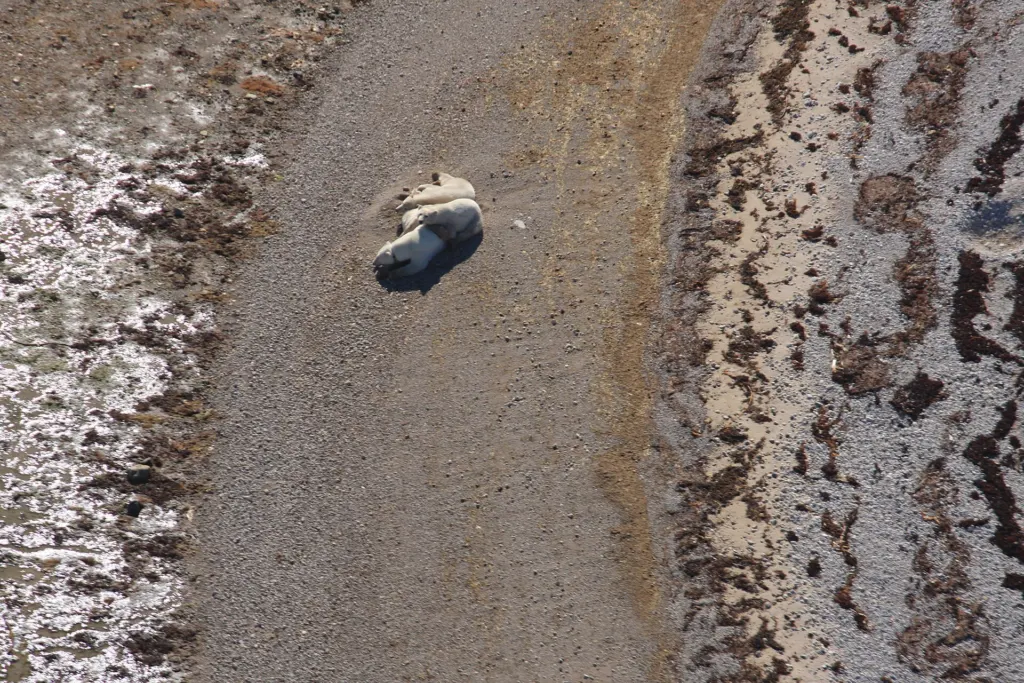
A doorbell camera built to spot polar bears is now watching the garbage dump in Churchill, Manitoba, the small Hudson Bay town where the world’s most famous bear gathering is under way.
The device, called Bear-vision, is an experiment by the conservation group Polar Bears International. Its first installation went up at Churchill’s waste facility, and the idea is simple: an affordable camera that uses AI to recognize an approaching bear and warn nearby homes and businesses before anyone walks into one.
It joins electric fencing and a radar-and-camera system named Bear-dar at the same site. The dump became a problem in 2024, when a fire destroyed the facility and left bears picking through exposed trash, raising fears that animals would swallow harmful waste or keep coming back for the smell of food.
Drones, ultrasound and a new bear spray
Bear-vision is not the only tool on trial. Polar Bears International says it is working with Brigham Young University and the town’s Polar Bear Alert Program on drones that could push bears away from people without hurting them. Ultrasonic sound, conductive materials and an odor-based bear spray formula are on the same research list.
Krista Wright, the group’s executive director, said the organization is grateful for its long partnership with Churchill, and that peaceful coexistence between people and polar bears is becoming part of daily life in more and more places.
The timing is deliberate. The trials were announced as Polar Bear Week 2026 got under way at the end of October, the stretch of the calendar when bears crowd the coast around the town.
Why the bears come to Churchill every autumn
Churchill sits on the west shore of Hudson Bay, roughly 1,000 kilometers north of Winnipeg, with no road to the rest of Canada and a population of just 870 people at the 2021 census.
Polar bears hunt ringed seals from the sea ice. When the shallow bay melts in summer, the bears are stranded on land and mostly fast. Each fall they drift from inland toward the coast, because Churchill’s stretch of shoreline is where the ice tends to form first. The town simply happens to sit in the waiting room.
That wait is getting longer. Polar Bears International says climate-driven ice loss means today’s bears spend about a month more on land than their grandparents did. A hungrier bear with more time on its paws is a bear more likely to wander into a dump, a back yard or a hotel parking lot.
The gathering is also the town’s biggest business. Churchill draws 10,000 to 12,000 eco-tourists a year, and the October-November bear season is the largest draw of all, bigger than the summer beluga whales.
How the town has managed bears for 40 years
Churchill did not invent bear-proofing with cameras. The Polar Bear Alert Program, run by Manitoba’s wildlife staff, has a public phone line, 204-675-2327, that residents and visitors call the moment they see a bear in or near town.
Bears that come into the core of Churchill are hazed out with loud noisemakers, sometimes paintballs or rubber bullets, so they keep their fear of people. If you hear cracker shells go off, the federal park service’s advice is to get inside at once.
Repeat offenders, mostly young bears, are tranquilized and put in the Polar Bear Holding Facility, known locally as the polar bear jail. They stay there until they can be flown out by helicopter or released straight onto Hudson Bay once the ice has formed.
A rough timeline of the tools, drawn from the town’s own history:
- 1980s: Churchill builds a tourism industry around the bear migration; by the end of the decade, public safety education has sharply cut lethal confrontations.
- Ongoing: The Polar Bear Alert line, hazing and the holding facility handle bears that come too close.
- 2024: Fire destroys the waste facility; bears get into the trash.
- 2025-2026: Electric fencing and Bear-dar go up at the rebuilt dump site.
- October 2026: The first Bear-vision camera is switched on, with drone trials in development.
The real test comes in the next few weeks. Churchill’s winter runs from early October to May, and the average November temperature is minus 12 degrees Celsius. Once the bay freezes, the bears leave town, the holding facility empties, and the dump cameras get their first quiet night.
Further reading
Image: TravelingOtter, CC BY 2.0 via Wikimedia Commons
This article was produced with AI assistance and reviewed by our Editorial Desk. How we work.