In the 1790s, German writers warned that a dangerous habit was spreading through homes, ruining families and wrecking young minds. The culprit was reading novels. They called it Lesesucht, “reading mania,” or Lesewut, “reading rage,” and from about 1780 it was one of the loudest debates in the German-speaking world.
The panic was serious enough that one critic, Johann Georg Heinzmann, compared it to the French Revolution in 1795. In Badiyaa’s translation of his German, he wrote that since the world began “no phenomena have been as remarkable as novel-reading in Germany and the Revolution in France,” and that novels may have made as many people and families unhappy in private as the revolution did in public.
A dictionary entry for a new addiction
Arguments about good and bad reading are as old as reading, but the word itself was new. One of the earliest known uses turns up in 1773, in Rudolf Wilhelm Zobel’s letters on the education of women. By 1809 the educator Joachim Heinrich Campe had put it in his German dictionary, defining it, in our translation, as an immoderate, unregulated desire to read for pleasure, satisfied at the cost of other necessary work.
Critics came at the problem from every angle: political, medical, educational and psychological. One writer, Johann Adam Bergk, declared that reading a book just to kill time was “high treason against humanity,” because it cheapened a tool meant for higher purposes. Another, Beneken, borrowed the language of diet, arguing that memory works like a stomach and that cramming it with books breeds illness.
Who was supposed to be at risk
Women and young people were treated as the danger zone. Men were thought safer because they mostly read factual works such as newspapers and political writing. Women and girls, who were largely confined to the home, read fiction, and critics claimed it would lead them to neglect housework and children. Campe wrote pamphlets reminding young women that their calling was to be wives, mothers and managers of the household.
The spark, many accounts say, was Goethe’s 1774 novel The Sorrows of Young Werther. Young readers identified so strongly with its hero that people spoke of a “Werther fever.” Goethe himself complained of the old prejudice that a printed book must teach a lesson.
The numbers behind the panic
Something real was changing. Figures compiled by the scholar Jentzsch for new German titles show it:
- 1740: 755 new titles, 38.5 percent of them religious, 5.8 percent fiction and fine arts.
- 1770: 1,144 titles, religious works down to 24.5 percent.
- 1800: 2,569 titles, religious works at 13.5 percent, fiction and fine arts up to 21.4 percent.
Work it through and the shift is dramatic. Total output grew about 3.4 times in 60 years, while the share of literary titles almost quadrupled. Religious publishing barely moved in absolute terms, from 291 titles to 348, as everything else exploded around it.
Yet the readers were fewer than the alarm suggested. The scholar Rudolf Schenda estimated that only about 15 percent of people could read in 1770 and 25 percent in 1800. Another estimate puts regular fiction readers in the late 18th century at under 100,000. The critics mostly lived in towns, home to roughly 10 percent of the population, and judged the whole country by what they saw around them.
The cure that never came
Few remedies were offered. The educator Johann Bernhard Basedow proposed a reader’s encyclopedia to steer young people toward approved books, but it was never produced. In 1805 the professor Karl Morgenstern told students to read only what their careers required, plus the classics.
Historians now point to the same pattern in later scares. Early cinema was attacked in the 20th century for overstimulating the nerves, and television in the 1950s for making viewers passive. The historian Hasso Spode argues that every new way of producing fiction triggers resistance from those whose cultural standing it threatens, until the old menace becomes respectable.
For more on old documents and misremembered history, see the medieval Dubrovnik register stamped with a cat’s inky paw prints and the famous free-speech line Voltaire never wrote.
Further reading
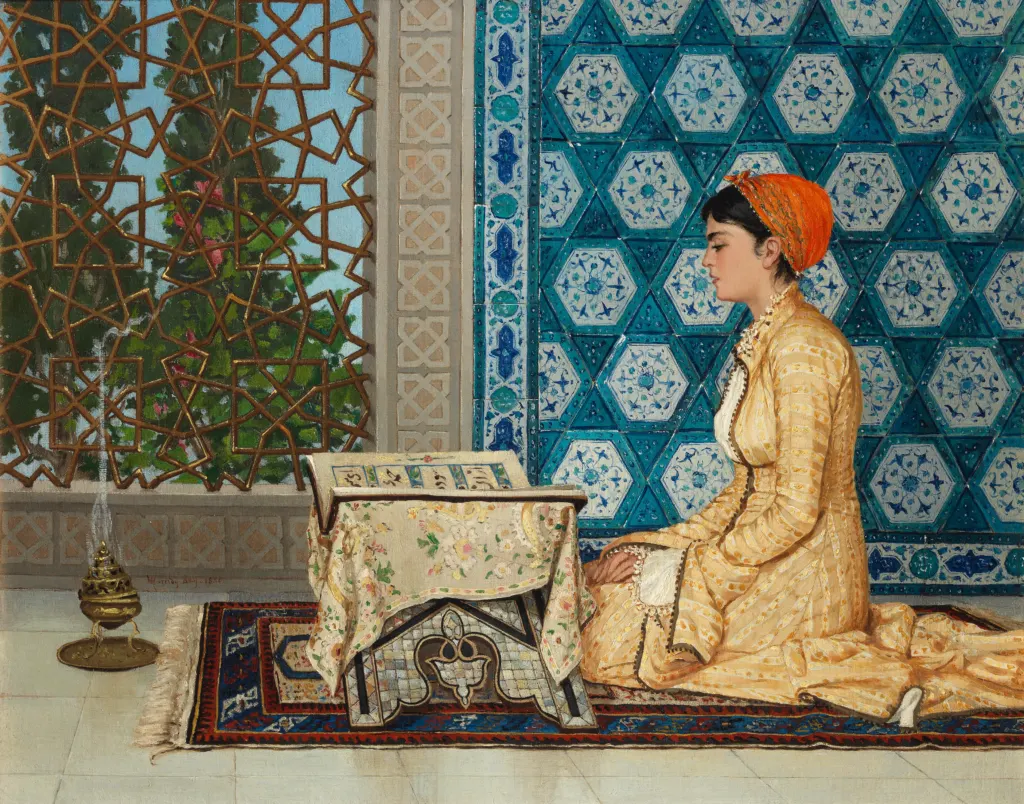
Image: Osman Hamdi Bey, Public domain via Wikimedia Commons
This article was produced with AI assistance and reviewed by our Editorial Desk. How we work.