Every seven years, the people of Fougoumba in central Guinea strip the roof off one round clay building and thatch it again exactly as before. The building is the coronation hut of the Almamys, the elected Muslim rulers of the Fouta Djallon, and its walls are said to be made of clay blocks brought from all nine provinces of their old kingdom.
In March 2025 Guinea’s delegation to UNESCO added the hut to the country’s tentative list for World Heritage status, describing it as the model for the traditional homes and mosques of the region’s Fulani people. Photos of those round, steep-roofed Fulani houses have been circulating in a popular Reddit community this week, and this hut is the grandest example of the style.
How the hut is built
According to Guinea’s submission, the hut went up at the end of the 18th century, after a battle at Talansan. Its features read like a map of the kingdom:
- Clay blocks from each of the nine traditional provinces, known as diwés.
- A circular plan with three doors, one for each of the first three provinces: Timbo, Timbi and Labé.
- A single cone-shaped roof framed with bamboo and forest vines, then covered in thatch.
- Carved patterns on the inside of the roof frame, which the filing credits to local craftsmen.
The roof is renewed every seven years, and the filing stresses that its materials and shape have not changed. If that cycle has held since about 1800, the hut has worn more than 30 roofs, each one a copy of the last.
A week of losing turbans
The Fouta Djallon state was a federation run by Muslim scholars, with Timbo as its political capital and Fougoumba as its religious one. Each new Almamy was chosen by an assembly of electors from the provinces, then crowned at Fougoumba before taking office in Timbo.
The ritual was unusual. The province of Bouriya supplied the turbans, two others supplied the royal drum, called a tabala, and the Quran. After the speeches, the ruler was led into the coronation hut to stay seven days. Each morning one turban was unwound from his head until a single one remained. Guinea’s filing also describes the hut as a place of nine days of spiritual preparation, and as the venue where delegates from the provinces met each year for three months to review the year’s business.
The eldest elector’s address to a new ruler included a line that still sums up the job. In Badiyaa’s translation from the French text of the filing: “The Fouta is on your head like a bowl of fresh milk. Do not stumble, or the milk will spill.”
The Fulani heartland
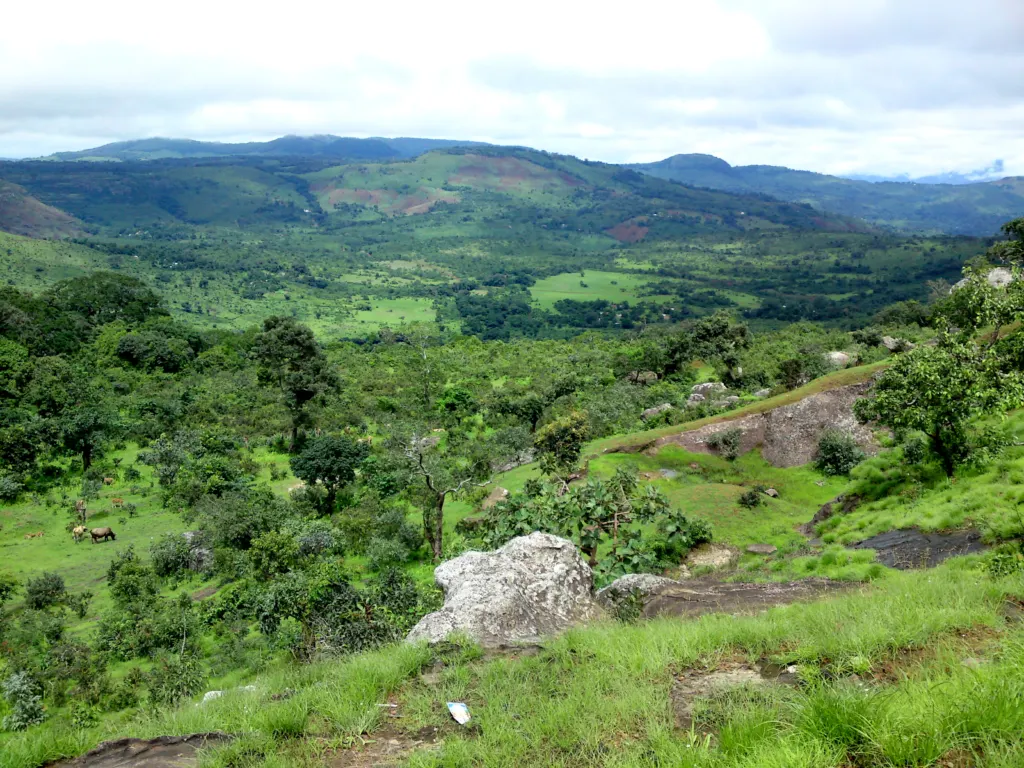
The Fouta Djallon is a highland plateau of rolling grassland averaging about 3,000 feet above sea level, with Mount Loura reaching 4,970 feet. It feeds the Gambia and Senegal rivers and a major tributary of the Niger, which is why it is called the water tower of West Africa. Fulani people, also called Fula or Fulɓe, make up most of its population, and since the 17th century it has been a center of Islamic learning, with scholars writing Pular poetry in Arabic script.
The Malian writer Amadou Hampâté Bâ called the region “the Tibet of West Africa” for its mystic Sufi clerics. The kingdom lasted until 1896, when the last Almamy, Bubakar Biro, lost to the French army at the Battle of Porédaka.
What happens next
A tentative listing is only the first step. Guinea must still prepare and submit a full nomination before UNESCO’s World Heritage Committee can consider the hut. For now the country has one World Heritage Site, the Mount Nimba Strict Nature Reserve it shares with Ivory Coast, and eight entries on the tentative list, including a separate 2026 bid for the Fouta Djallon massif itself.
For more African architecture and craft traditions, see our stories on Zanzibar’s carved Swahili doors in Stone Town and the lusona sand drawings of Angola’s Chokwe people.
Further reading
Image: Maarten van der Bent, CC BY-SA 2.0 via Wikimedia Commons
This article was produced with AI assistance and reviewed by our Editorial Desk. How we work.