At 2:47 a.m. on August 3, 1923, in a farmhouse with no electricity and no telephone, a Vermont notary public swore in the 30th president of the United States. The notary was John Coolidge. The new president was his son, Calvin.
Vice President Calvin Coolidge was visiting the family homestead in Plymouth Notch when a messenger brought word that President Warren G. Harding had died in San Francisco during a speaking tour of the West. Coolidge dressed, said a prayer and came downstairs, where reporters were already waiting.
His father, both a notary and a justice of the peace, gave him the oath in the family parlor under the light of a kerosene lamp. Then the new president went back to bed.
Why there was a second, secret oath
The parlor ceremony left a legal question hanging: could a state official administer a federal oath? Back in Washington, Coolidge was sworn in again, this time by Adolph A. Hoehling Jr., a justice on the District of Columbia’s highest local court, without any fanfare, at the Willard Hotel.
Almost nobody knew. The repeat oath stayed secret until 1932, when Harry M. Daugherty, attorney general at the time of the swearing-in, revealed it, and Hoehling confirmed his account. Hoehling said he never asked Daugherty why a second oath was needed and assumed it was meant to remove any doubt that the first one counted.
The house that refused to change
Plymouth Notch was home ground. Coolidge was born in the village on July 4, 1872, in the back of the general store, and lived at the homestead from age four until 1887, when he left for Black River Academy. His father had bought the house and enlarged it from a plain one-and-a-half-story farmhouse.
John Coolidge’s refusal to modernize turned out to be a gift to historians. Because he never updated the place, the parlor looks much as it did that night. Visitors now look through glass from a small alcove at the same lamp, Bible and table used in the ceremony, each set exactly where it stood.
Timeline: the Coolidge homestead
- July 4, 1872: Calvin Coolidge is born in Plymouth Notch.
- 1876 to 1887: He grows up in the homestead.
- August 3, 1923: His father swears him in as president at 2:47 a.m.
- 1924: Rooms in the village’s Coolidge Hall serve as a Summer White House.
- 1932: The second, secret oath becomes public.
- 1965: The homestead district is named a National Historic Landmark.
Coolidge spent most of his adult life in Northampton, Massachusetts, but kept returning to Vermont. Four generations of his family, the president among them, are buried in Plymouth Notch Cemetery near the house.
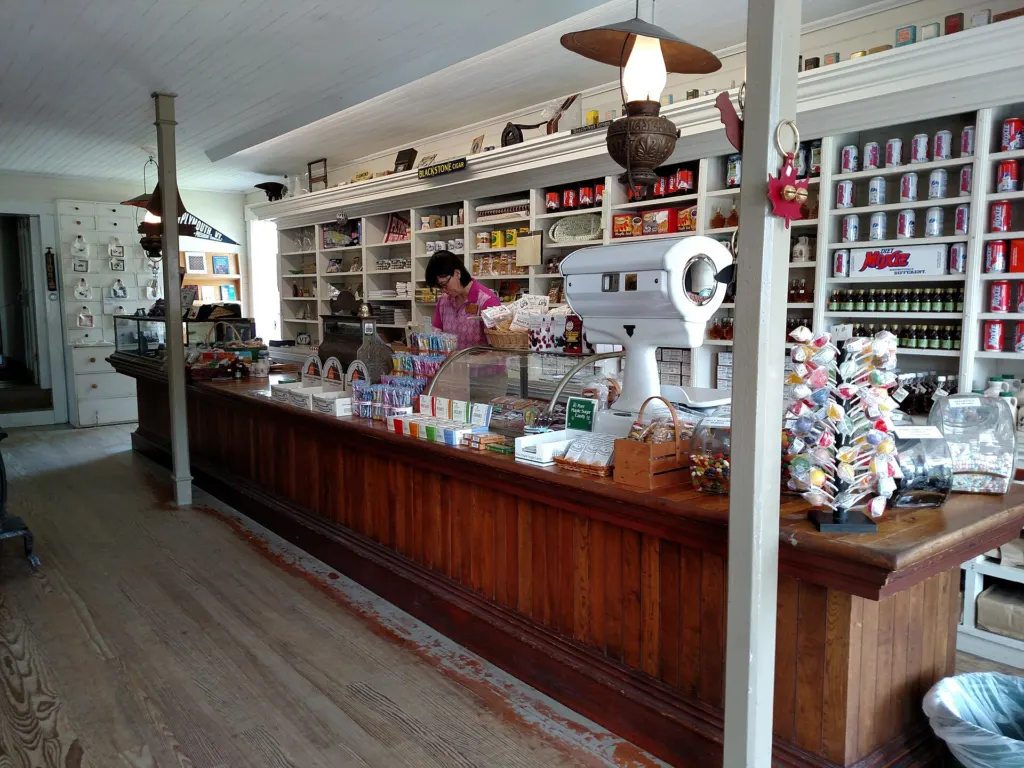
The village is now the President Calvin Coolidge State Historic Site, run by the state of Vermont, with a cheese factory, a one-room schoolhouse and tourist cabins from 1927 among its buildings. It joins other small places with outsized presidential stories, from the only presidential wedding held in the White House to Jimmy Carter’s family farm outside Plains, Georgia. Vermont also hosts the Haskell Free Library, whose stage sits in Quebec.
The historic site opens daily from 9:30 a.m. to 5 p.m. between late May and mid-October.
Further reading
Image: brewbooks from near Seattle, USA, CC BY-SA 2.0 via Wikimedia Commons
This article was produced with AI assistance and reviewed by our Editorial Desk. How we work.