Before a single car drove under the Hudson River, engineers lined up running automobiles inside a test tunnel in a Pennsylvania mine and had volunteer students breathe the exhaust. That experiment is the reason the Holland Tunnel, which opened to traffic on November 13, 1927, did not slowly poison the people driving through it.
It became the first mechanically ventilated underwater road tunnel in the world, and on its first full day, a Sunday, 52,285 vehicles squeezed through. Lines stretched for miles at both ends of the crossing between Lower Manhattan and Jersey City, New Jersey.
The problem nobody had solved
Tunnels under New York’s rivers already existed, but they carried trains. Those trains had to run on electricity, so their tubes stayed fairly clean. A road tunnel full of gasoline engines was a different beast: their exhaust carried carbon monoxide, an odorless gas that could have suffocated drivers stuck in a jam a mile from daylight.
London had road tunnels at Blackwall and Rotherhithe, but neither needed fans. A tube of the Hudson crossing’s length did. Chief engineer Clifford Milburn Holland, for whom the tunnel is named, died of a heart attack in October 1924, aged 41, days before the two halves were joined. His successor, Milton Freeman, died less than a year later. The ventilation problem landed with Ole Singstad, the engineer who saw the project through.
How the air system works
Singstad tested the idea with Yale University, the University of Illinois and the US Bureau of Mines. Besides the 400-foot mine tunnel at Bruceton, Pennsylvania, Illinois built a 300-foot duct on its Urbana campus to study airflow. Around two thousand tests followed.
His answer was transverse ventilation, meaning the air moves across the tube rather than along it:
- A channel under the roadway feeds fresh air in through vents at curb level.
- Slits in the ceiling pull the fouled air up into a second channel above.
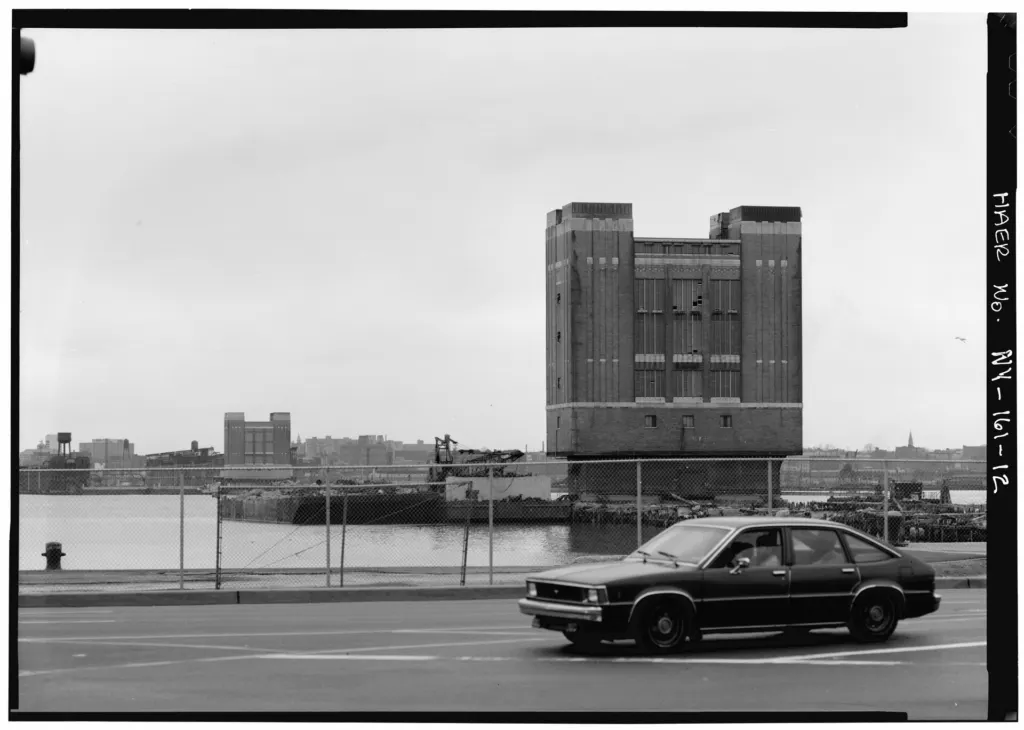
- Four brick ventilation towers, two on land and two standing in the river about 1,000 feet from each shore, house 84 fans, half pushing air in and half pulling it out.
The result: the fans can swap out every cubic foot of air in the tunnel every 90 seconds. Instead of one giant gust blowing end to end, each stretch of road gets its own steady supply, which is why drivers do not feel a wind tunnel.
Did it work?
Once traffic was flowing, average carbon monoxide inside the tubes measured 0.69 parts per 10,000 parts of air, against a permitted maximum of 4. That is roughly 17 percent of the limit. Even the worst reading, 1.60 parts per 10,000, stayed at 40 percent of it. Singstad said the tunnel air carried about half the carbon monoxide recorded on New York streets.
Demand was the bigger surprise. Planners put the maximum daily capacity at 46,000 vehicles. Divide that first Sunday’s 52,285 by 46,000 and the tunnel carried about 14 percent more than it was built for on day one, though many drivers were sightseers making a round trip just to see it.
The opening
President Calvin Coolidge opened the crossing at 4:55 p.m. on November 12, 1927, from his yacht, tapping the same telegraph key used to open the Panama Canal in 1915. The signal rang a huge brass bell at the entrances and parted American flags across the portals. About 20,000 people walked the full length of the tunnel that evening before it closed to pedestrians at 7 p.m. Cars rolled in from the next day.
The cost came to about $48 million in 1927 dollars. Horse-drawn carts, pedestrians and bicycles were banned from the start.
The same safety question haunted earlier tunnel builders. Read how Garrett Morgan wore his own safety hood into a gas-filled tunnel under Lake Erie in 1916, and how Roman engineers made water climb hills without pumps.
The Holland Tunnel became a National Historic Landmark in 1993. It turns 99 today, and its centenary falls on November 13, 2027.
Further reading
Image: Jet Lowe, Public domain via Wikimedia Commons
This article was produced with AI assistance and reviewed by our Editorial Desk. How we work.