“Injustice anywhere is a threat to justice everywhere” is one of the most quoted lines in American history, and its source is not a speech. Martin Luther King Jr. wrote it in a jail cell in Birmingham, Alabama, in a letter dated April 16, 1963, starting on the margins of a newspaper.
The quote is genuine, the attribution is right, and the date checks out. What usually goes missing is why he wrote it.
The exact wording
The sentence opens a short passage in the “Letter from Birmingham Jail.” As the letter is quoted, it reads:
“Injustice anywhere is a threat to justice everywhere. We are caught in an inescapable network of mutuality, tied in a single garment of destiny. Whatever affects one directly, affects all indirectly.”
A few lines later King adds: “Anyone who lives inside the United States can never be considered an outsider anywhere within its bounds.”
Why King wrote it
That last line is the key. The famous sentence was a rebuttal, not a slogan.
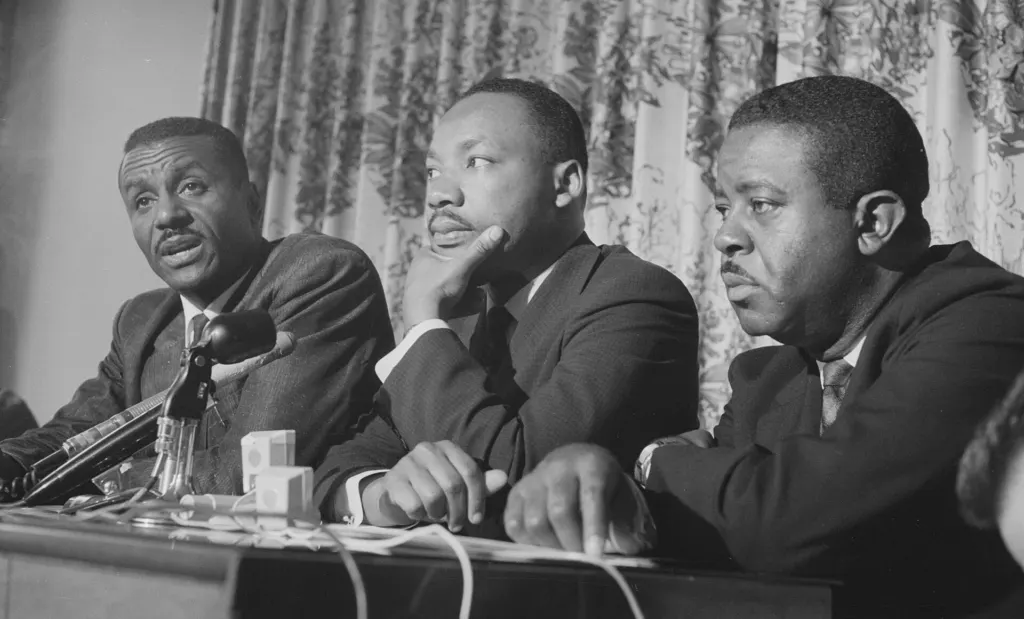
King’s Southern Christian Leadership Conference and local activists launched the Birmingham campaign on April 3, 1963, with marches and sit-ins against segregation. On April 10 a circuit judge banned “parading, demonstrating, boycotting, trespassing and picketing.” The leaders said they would defy the order. On April 12, Good Friday, King was arrested along with Ralph Abernathy, Fred Shuttlesworth and other marchers.
The same day, eight white Alabama clergymen published a statement, “A Call for Unity,” that called the protests “unwise and untimely” and cast King’s movement as the work of outsiders. Someone smuggled a newspaper carrying it into King’s cell.
King answered point by point. To the charge that he was an outsider, he replied that he had been invited by the group’s Birmingham affiliate, and “because injustice is here.” Then came the line about injustice anywhere: a moral argument that no American city’s racism was somebody else’s business.
Written on scraps
King later described how the letter came together in his 1964 book Why We Can’t Wait. He began in the newspaper’s margins, kept going on scraps passed to him by a friendly Black trusty, and finished on a pad his lawyers were eventually allowed to leave. Wyatt Tee Walker and his secretary, Willie Pearl Mackey, pieced the fragments together outside.
“Never before have I written so long a letter,” King wrote, joking that it would have been shorter if he had been at a comfortable desk instead of “alone in a narrow jail cell.”
He was released on April 20, 1963. The full letter first appeared as a pamphlet from the American Friends Service Committee in May 1963, was reprinted in several magazines that summer, and became a chapter of Why We Can’t Wait.
How to quote it accurately
- Author: Martin Luther King Jr.
- Work: “Letter from Birmingham Jail” (also printed as “Letter from Birmingham City Jail”)
- Date: April 16, 1963
- Place: Birmingham city jail, Alabama
- Context: his answer to critics who called him an outside agitator
The same letter is the source of other well-worn lines, including “freedom is never voluntarily given by the oppressor; it must be demanded by the oppressed” and the remark that “‘Wait’ has almost always meant ‘Never.'”
Famous lines often come loose from their stories. Badiyaa has traced others, from the idea that Rosa Parks was a tired old seamstress to the myth that Sun Tzu said “keep your enemies closer”. King’s line has the rarer distinction of being exactly what he wrote. Eight clergymen prompted it; King closed the letter hoping to meet them one day.
Further reading
- Wikipedia: Letter from Birmingham Jail
- King Institute, Stanford University: Letter from Birmingham Jail
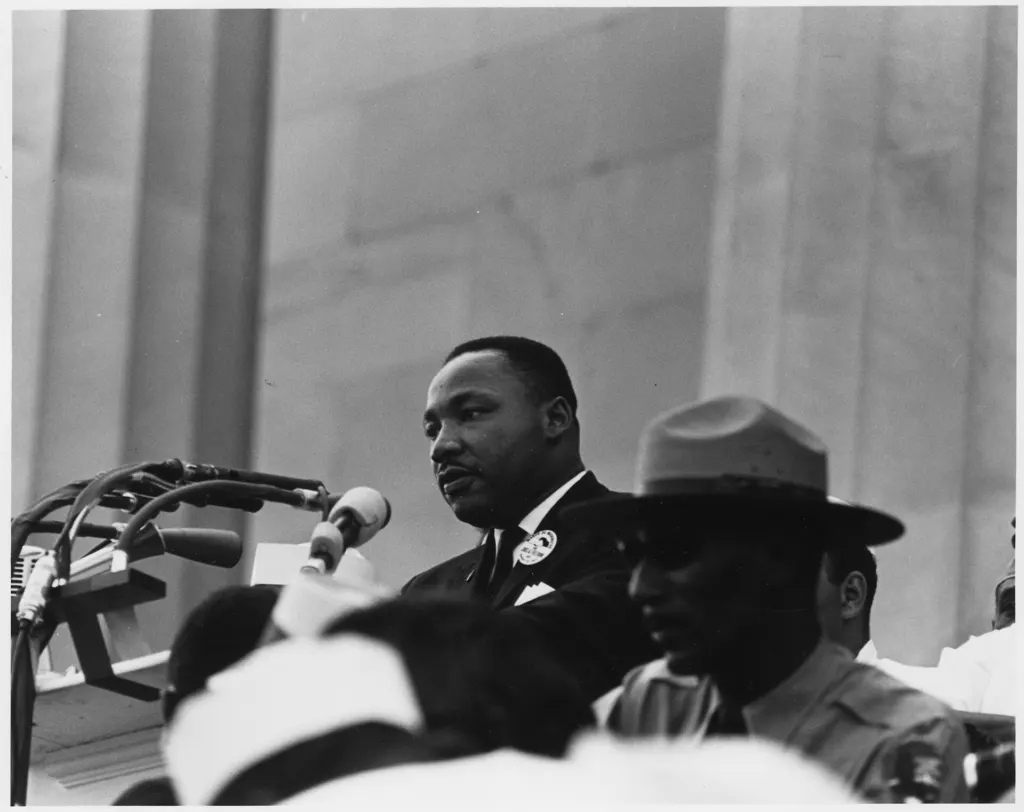
Image: Marion S. Trikosko, Public domain via Wikimedia Commons
This article was produced with AI assistance and reviewed by our Editorial Desk. How we work.