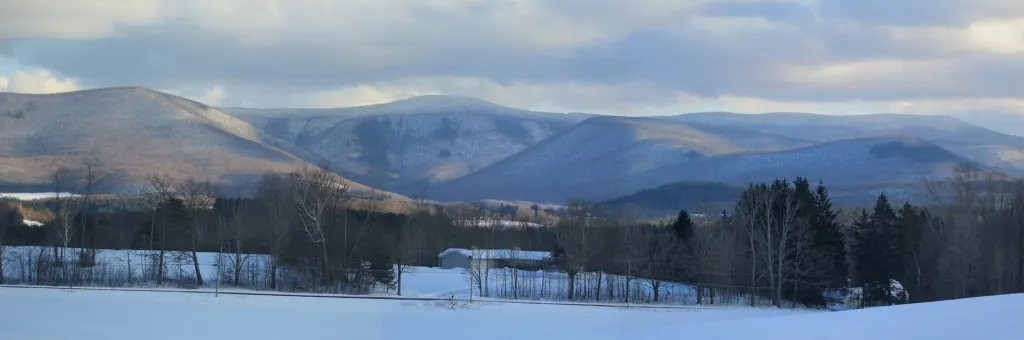
On November 13, 1946, a General Electric researcher in a plane over western Massachusetts dumped six pounds (2.5 kilograms) of dry ice into a cloud. Snow began to fall near Mount Greylock. Vincent Schaefer had just run the first field test of cloud seeding, the first attempt to change a natural cloud on purpose.
The flight had started at Schenectady County Airport in upstate New York and chased the target cloud about 60 miles (100 kilometers) east before the drop.
A freezer that was not cold enough
The discovery behind that flight began with an equipment problem. In July 1946 Schaefer was running experiments on supercooled clouds, water droplets that stay liquid below freezing, inside a deep-freeze unit at GE’s research lab in Schenectady. He had already tried dropping table salt, talcum powder, soils and dust into the chamber with little effect.
The freezer was not cold enough for the test he wanted, so he dropped in a chunk of dry ice, frozen carbon dioxide, just to chill it down. When he breathed into the box to form a cloud, a bluish haze appeared, then millions of tiny ice crystals glittering in the lamp beam.
He realized he had found a way to turn supercooled water into ice on demand. Repeating the trick, he pinned down about minus 40 degrees (the point where Celsius and Fahrenheit meet) as the lower limit for liquid water. Within a month his colleague Bernard Vonnegut found a second seeding agent, silver iodide, whose crystal structure is a close match for ice. Vonnegut’s brother was the novelist Kurt Vonnegut, whose book Cat’s Cradle later turned on the crystallography of ice.
The self-taught man behind it
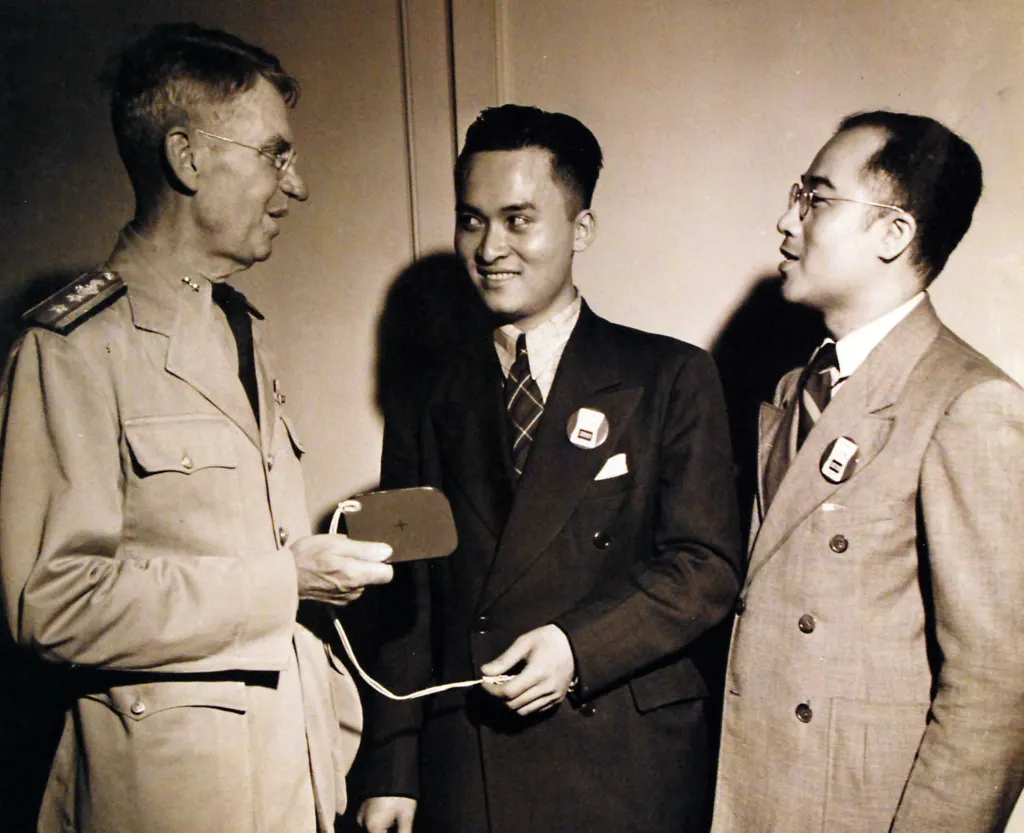
Schaefer, born in 1906, never finished high school. His parents asked him to leave school in 1922 to help with the family income, and he joined a GE apprentice machinist course instead. He worked his way from toolmaker and model maker to research assistant for Irving Langmuir, who won the 1932 Nobel Prize in Chemistry for his work in surface chemistry.
By 1940 Schaefer had become known for making plastic replicas of individual snowflakes. He was eventually granted 14 patents.
From one cloud to a weather program
The Greylock test triggered a flood of letters from people and businesses wanting snow or rain, and a debate over whether humans should tamper with the weather at all. It also helped Langmuir win federal money. Schaefer coordinated the lab side of Project Cirrus, with Air Force and Navy aircraft flying tests around Schenectady, Puerto Rico and New Mexico. The final Cirrus report came out in March 1953.
Here is how the idea traveled over the next eight decades:
- July 1946: Dry ice turns a breath cloud to ice crystals in a GE freezer
- November 13, 1946: First field seeding, near Mount Greylock
- 1947 to 1952: Australian government scientists drop dry ice into cumulus clouds
- 1961: Schaefer founds the Atmospheric Sciences Research Center at what is now the University at Albany
- 2003: A US National Research Council report says science cannot yet say with assurance which seeding techniques work
- Today: Programs run from the western United States to the United Arab Emirates and China
That 2003 report put it bluntly: “Yet scientifically acceptable proof for significant seeding effects has not been achieved.” Results since then are still mixed. A Wyoming pilot project concluded that seeding could add at most about 3% to a season’s snowpack.
Snow and cold-weather oddities are a running theme here, including our look at almanac Thanksgiving snow calls versus NOAA’s outlook and the Old Farmer’s Almanac White Christmas forecast.
Schaefer kept chasing cold clouds into the 1970s, leading winter research trips to Yellowstone, where geysers like Old Faithful throw up supercooled fog at temperatures of minus 20 to minus 50 degrees Fahrenheit.
Further reading
Image: Ericshawwhite, CC BY-SA 3.0 via Wikimedia Commons
This article was produced with AI assistance and reviewed by our Editorial Desk. How we work.