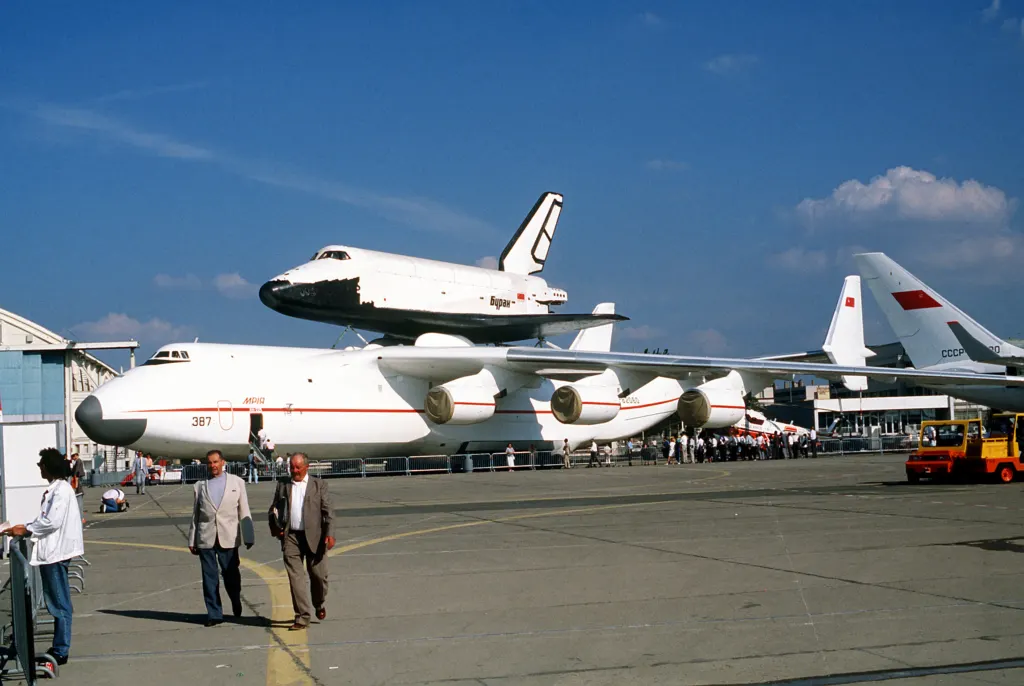
Thirty-eight years ago today, a Soviet space shuttle called Buran rode a giant rocket into orbit, looped the planet twice and glided back to a runway at Baikonur with not one person aboard. The entire mission, from liftoff to wheels stopped, took 206 minutes. It was the only time Buran ever flew.
The name means “blizzard” or “snowstorm” in Russian. The flight, coded 1K1, lifted off at 03:00:02 UTC on November 15, 1988, from launch pad 110/37 at the Baikonur Cosmodrome in what is now Kazakhstan. It was the first time any spaceplane had flown an uncrewed mission and landed itself in fully automatic mode.
A shuttle that looked very familiar
Western readers who saw photos of Buran in 1988 did a double take. The delta-winged orbiter looked almost exactly like NASA’s Space Shuttle, and the Smithsonian’s National Air and Space Museum says that was no accident: Soviet espionage had delivered the design specifications of the American craft.
Under the skin, the two machines worked differently. NASA’s orbiters burned their own main engines during launch, fed from a big external tank and helped by solid boosters. Buran carried no main launch engines at all. The Energia super heavy-lift rocket did the heavy work, and the orbiter fired its own thrusters only for a short burn to settle into orbit and later to come home.
Its belly wore 38,600 carbon-carbon heat tiles, built to survive 100 reentries. After its single trip, engineers counted the damage: Buran had lost just eight of them.
The computer that chose its own landing
The most startling moment came at the very end. Buran’s automatic landing system was meant to approach the runway at Site 251 from the south with two left turns. Instead, with ground winds gusting up to 20 meters per second, the computer judged that the orbiter still had too much energy. It picked a maneuver that planners had rated at only about a 3% chance, swinging in both directions, flying over the field to its north side and then banking right onto the final approach.
It touched down at 06:24:42 UTC in a crosswind of 61.2 kilometers per hour (38 mph) and rolled to a stop at 06:25:24. It landed within 3 meters of the target line sideways and 10 meters lengthwise.
Why it never flew again
The launch came at an awkward moment for the Soviet Union. Under Mikhail Gorbachev’s openness policy, critics could speak up, and they did. Konstantin Feoktistov, who had designed the Vostok capsule, sent Gorbachev a 19-page letter arguing that the shuttle would drain money from other space programs.
Planners in 1989 still hoped for a second uncrewed flight of 15 to 20 days by 1993. The collapse of the Soviet Union ended that plan, and the program was officially canceled in 1993.
Buran then sat in a hangar at Baikonur, the huge MIK 112 building first put up in the late 1960s for the Soviet Moon program. On May 12, 2002, the roof of that building gave way and destroyed the orbiter along with an Energia test article. The wreckage was later scrapped.
Buran by the numbers
- Construction began: 1980; final assembly finished on November 15, 1987, exactly a year before launch
- Length and wingspan: 36.37 meters (119.3 ft) and 23.92 meters (78.5 ft)
- Maximum payload: 30 tonnes, for a top launch mass of 105 tonnes
- Flights: one, two orbits, zero crew
Set side by side with its American look-alike, the record is lopsided: Buran’s whole spaceflight career fits inside one long afternoon. That single flight still marks the first time a winged spacecraft flew to orbit and back with no human hand on the controls. Its American rivals now sit in museums, as our story on Space Shuttle Endeavour standing in launch position in Los Angeles shows, and the race that drove both programs began with promises like the one in JFK’s 1962 Rice University Moon speech.
A Buran-style test vehicle, OK-GLI, still exists and is on display at the Technik Museum Speyer in Germany. The orbiter that actually reached space survives only in fragments, such as a piece of window glass now shown in the Baikonur Cosmodrome museum.
Further reading
Image: Master Sgt. Dave Casey, Public domain via Wikimedia Commons
This article was produced with AI assistance and reviewed by our Editorial Desk. How we work.