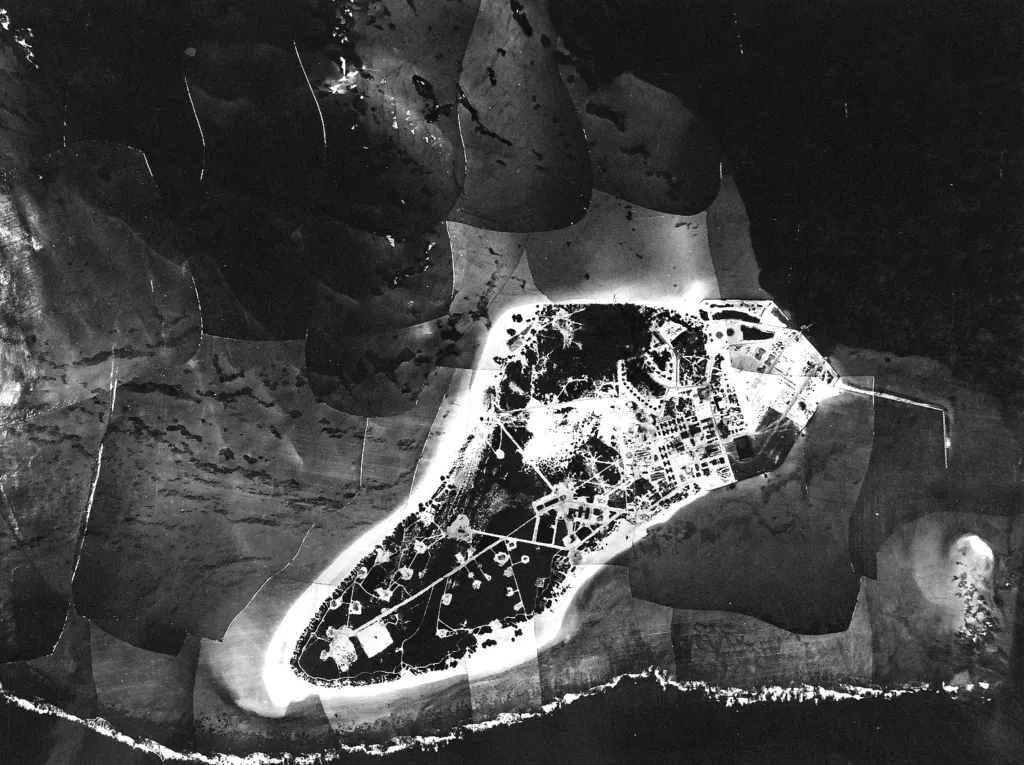
Hollywood director John Ford was filming from a power plant on Midway’s Sand Island in June 1942, a handheld 16mm camera in his hands, when a machine gun bullet struck his left arm. He kept filming. The footage became The Battle of Midway, an 18-minute color documentary that won one of the first four Academy Awards ever handed out for Best Documentary.
How the Oscar fits Ford’s record
Line up his trophies and the wartime work stands out. Ford collected four Oscars for directing features, a record, plus two more for wartime documentary work: The Battle of Midway and December 7th (1943). That gives him six Academy Awards in all, and two of them came from films he made in uniform rather than on a studio lot.
Records released in 2008 show his superiors cited him for bravery, noting that he survived “continuous attack and was wounded” while still filming. He stayed in the Navy Reserve after the war and was promoted to rear admiral the day he left the service.
Smuggling the film past the censors
Back in Los Angeles, Ford feared military censors would bury the footage. He handed it to Robert Parrish, an editor from How Green Was My Valley, to cut in secret. Ford also spliced in shots of James Roosevelt, the president’s son and a Marine officer. When Franklin D. Roosevelt watched the film at the White House, he told his chief of staff William Leahy: “I want every mother in America to see this film.” That settled the censorship question.
Filming from the highest point on the island
The base commander sent Ford to the power plant, which stood on the island’s highest ground, the night before the attack. He woke to the noise of the raid and started shooting with a handheld 16mm camera alongside cameraman Joseph August. Both men were hit by enemy fire while they worked. Jack MacKenzie Jr. and Kenneth Pier also shot footage.
Ford’s own reaction was humility rather than bravado. Watching men he had met and filmed lose their lives shook him, and he said of himself, compared with the fighters: “I am really a coward.”
A director in Navy uniform
Ford was already a Hollywood heavyweight. He had won Best Director Oscars for The Informer (1935), The Grapes of Wrath (1940) and How Green Was My Valley (1941), the last of which also took Best Picture. When the United States entered World War II, he joined the Navy Reserve as a commander and led the photographic unit of the Office of Strategic Services, the wartime intelligence agency.
The Navy sent him to Midway in 1942 with an unglamorous brief: shoot film for the record and for intelligence analysis. He started with relaxed footage of sailors and Marines going about their day. Two days before the fighting began, he learned that a Japanese attack was coming and that the base was bracing for it.
What audiences saw
The finished short was released on September 14, 1942, by 20th Century Fox. Donald Crisp, Henry Fonda and Jane Darwell supplied the narration, with music by Alfred Newman. About five minutes cover the battle itself; the rest follows life on the island and a pilot from Springfield, Ohio, whose family appears back home. It closes with a poster slashed by a red painted “V” for victory.
Midway still draws attention for other reasons too, including the albatross pair George and Geraldine nesting on the atoll. For more forgotten corners of the past, browse Badiyaa’s history stories. The Academy Film Archive preserved The Battle of Midway in 2006, and the film is now part of its Academy War Film Collection.
Further reading
Image: U.S. Navy, Public domain via Wikimedia Commons
This article was produced with AI assistance and reviewed by our Editorial Desk. How we work.