The Old Farmer’s Almanac has called it: a White Christmas for the Northeast, the Intermountain West and Alaska, snow on the ground for most of Canada, and bare lawns for Florida, Texas, the Deep South and the entire Pacific Southwest on December 25, 2026.
The region-by-region map went up on the Almanac’s website on Friday, October 30, written by executive digital editor Catherine Boeckmann. It carves the United States into 18 forecast zones and gives each one of three verdicts: A White Christmas, Chance of a White Christmas, or Not a White Christmas.
The US map, zone by zone
Three zones get a plain yes: the Northeast, the Intermountain region and Alaska.
Five zones get a maybe: the Lower Lakes, the Ohio Valley, the High Plains, the Pacific Northwest and the southern Appalachians (the northern Appalachians are listed as a no).
The rest get a no, and the list is long. The Atlantic Corridor, the Southeast, Florida, the Deep South, the Upper Midwest, the Heartland, Texas and Oklahoma, the Desert Southwest, the Pacific Southwest and Hawaii are all forecast to wake up without an inch of snow on the ground.
The Almanac points out how sharply the verdicts change between neighbors. The Northeast is a yes while the Atlantic Corridor next door, home to New York City, Philadelphia and Washington, is a no. The Upper Midwest, usually a safe bet for snow, is also marked as a no this year.
Canada mostly gets its snow
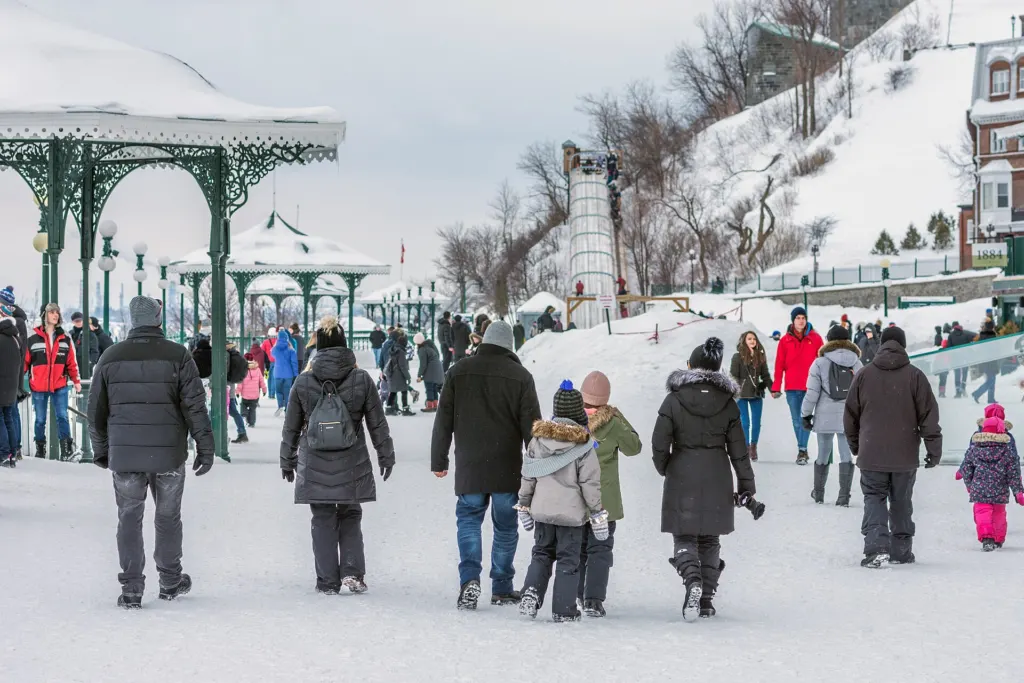
North of the border the picture is far whiter. Southern Quebec, the western half of southern Ontario, the western half of Atlantic Canada and the Southern Prairies are all forecast to have A White Christmas. The three territories get the same verdict, and so does the northern half of every province from British Columbia across to Newfoundland and Labrador.
Eastern Atlantic Canada, eastern southern Ontario and southern British Columbia are rated a Chance. The one Canadian no is the coastal strip of northern British Columbia running up to the Alaska Panhandle.
For the record, the Almanac uses the US National Weather Service definition: a White Christmas means at least one inch of snow on the ground on Christmas morning, whether or not any falls that day.
What the official forecasters say instead
Here is the comparison the Almanac’s map does not show. The US Climate Prediction Center, part of the National Weather Service, issued its own seasonal outlook on October 15, and it points in a warmer direction for much of the snow belt.
For November through January, the center favors above-normal temperatures across the northern tier of the country, the western third, the Ohio Valley and the mid-Atlantic. Its highest odds for a warm winter sit over the upper Mississippi Valley, the Great Lakes, the Pacific Northwest to the northern Plains and the interior Northeast, which is the Almanac’s one firm yes in the lower 48. The driver, the center says, is a very strong El Nino that it expects to keep building into early 2027.
Precipitation is a different story. The center favors a wetter-than-normal season for California, the Southwest, the central and southern Plains, the Southeast and the Eastern Seaboard, and a drier one for the northern Rockies, parts of the Great Lakes and interior Alaska. Wet does not mean white, though: in a warm pattern, extra precipitation in the East tends to fall as rain.
Neither document is a day-level prediction. The government outlook gives probabilities for three-month averages and says plainly that short and medium range forecasts should be consulted once the season starts. The Almanac, by its own account, builds its forecasts up to 18 months ahead from a formula its founder Robert B. Thomas devised in 1792, refined with sunspot and solar-cycle data. Its accuracy claims are its own; a university review of five years of monthly forecasts found just over half of the temperature and precipitation calls landed in the right direction, barely better than a coin toss.
The Almanac itself once admitted in its bicentennial edition that nobody has yet learned enough about the universe to predict weather with anything like total accuracy.
So should you book the sleigh?
Treat the map as a conversation starter, not a travel plan. If you want a real number for your town, the Almanac’s own page links to a NOAA map of historical White Christmas odds, built from 1991 to 2020 climate normals, which tells you how often your area actually had an inch of snow on December 25 over three decades. That history, not any almanac, is the better bet for a trip you are booking in November.
The Climate Prediction Center’s next seasonal update is due on November 19, 2026, five weeks before Christmas morning.
Further reading
- Wikipedia: Old Farmer's Almanac
- NOAA Climate Prediction Center: Prognostic Discussion for Long-Lead Seasonal Outlooks
Image: Wilfredor, CC BY-SA 4.0 via Wikimedia Commons
This article was produced with AI assistance and reviewed by our Editorial Desk. How we work.