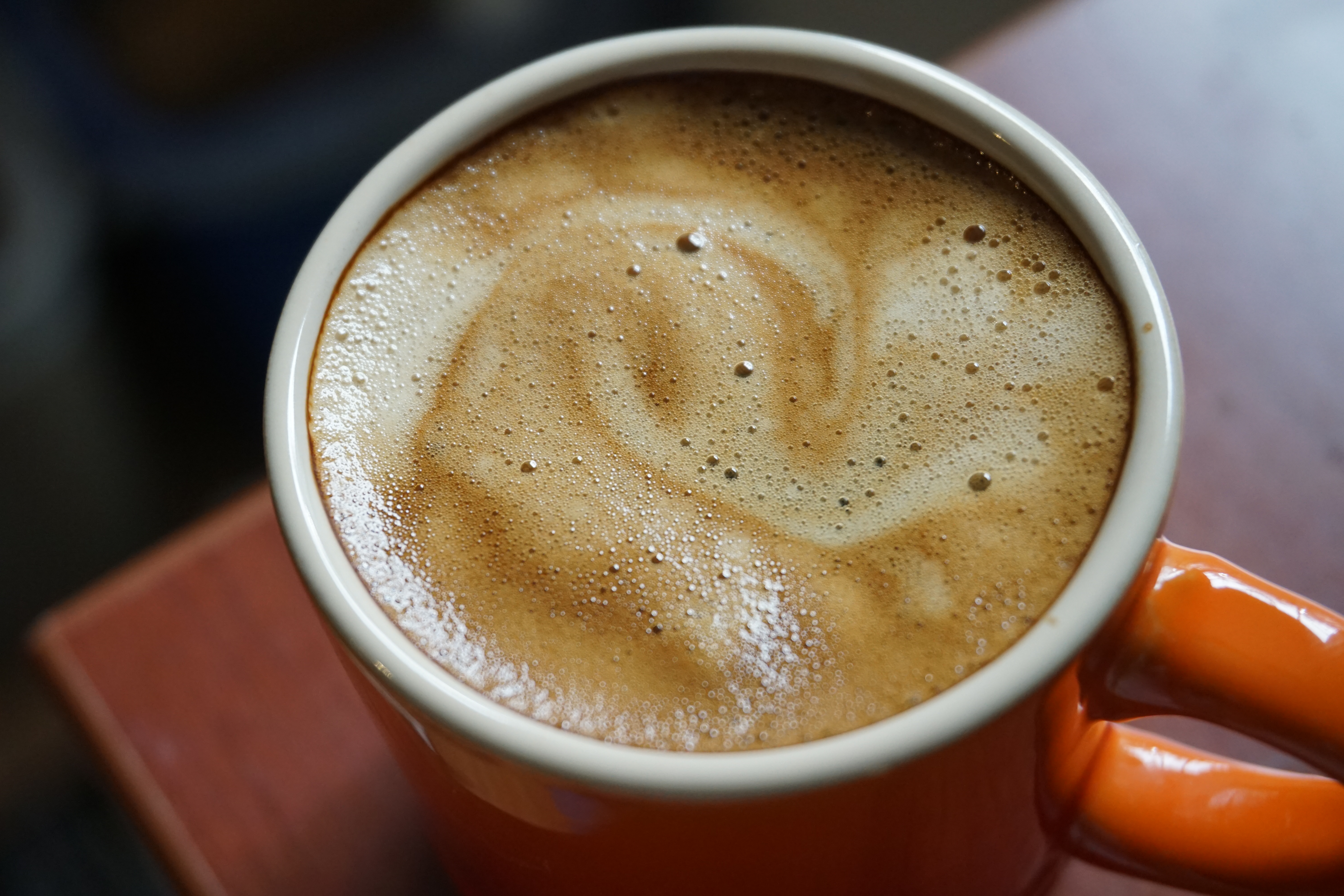
National Espresso Day lands on Monday, November 23, and the tiny drink it honors has a surprisingly industrial backstory. Before anyone pulled a shot, a Turin inventor named Angelo Moriondo patented a steam-driven coffee machine in 1884, and it took another six decades of Italian tinkering to get the thick, crema-topped cup Americans now order by the double.
The informal American food holiday is a good excuse to look at how a bulk brewer for busy cafes turned into a 25-second, one-ounce ritual.
From a Turin patent to a Milan workshop
Moriondo's device, granted Italian patent 33/256 on May 16, 1884, controlled steam and water separately as they passed through the coffee, but it brewed in bulk rather than cup by cup, according to the Wikipedia history of the espresso machine. The single serving arrived in 1901, when Milan's Luigi Bezzera filed a patent for a boiler-driven machine with heads that took a portafilter of packed coffee. In 1903 Desiderio Pavoni bought Bezzera's patents, and his La Pavoni company started out building one machine a day in a small workshop on Milan's Via Parini.
Those early machines were fast, turning out up to 1,000 coffees an hour, but they ran at only about 1.5 bar of pressure. The result was a black, bitter, slightly burnt drink with no foam on top, and each cup took close to a minute, roughly double a modern shot, as Wikipedia's espresso article puts it.
Gaggia and the birth of crema
The real turning point came after World War II. In 1947, Achille Gaggia refined a lever-operated, spring-loaded piston that pushed water through the coffee at up to 12 atmospheres. That pressure pulled oils and gases out of the grounds and left a layer of foam on top, which Gaggia marketed as crema caffè. These are generally treated as the first modern espresso machines.
In 1961 the Faema E61 swapped the lever for an electric pump running at 9 bar and drew water straight from the plumbing, so baristas no longer had to wait for a boiler to recover between shots. The historian Jonathan Morris traces how the drink became a national symbol in his paper Making Italian Espresso, Making Espresso Italian, published in Food and History in 2010.
What counts as a certified Italian espresso
There is no single global rule, but Italy's Espresso National Institute publishes a tight recipe. Here are its key numbers:
- 7 grams of ground coffee, give or take half a gram
- Water leaving the machine at about 88°C (190°F)
- Entry pressure of 9 bar, plus or minus 1
- Percolation time of 25 seconds, plus or minus 5
- About 25 milliliters in the cup, crema included
Put those side by side with Pavoni's 1905 machines and the progress is easy to see. Pressure rose about sixfold, from 1.5 bar to 9, while brewing time roughly halved, from close to a minute to around 25 seconds.
Why Americans sometimes say expresso
The word comes from the Italian esprimere, meaning to press out, though it also carries the sense of something made quickly and expressly for one customer. English speakers have used the spelling expresso since at least the 1940s, and it remains common in France, Portugal and Spain. In Italy, an espresso is usually just called caffè.
For more coffee-adjacent reading, see how Waterloo chemists built a plant-based coffee cup lining, the story of Japan's custard-filled cream pan, and why Jason Mraz's avocado farm now grows coffee.
The next chance to toast the shot comes on November 23, 2027, which falls on a Tuesday.
Sources
- Espresso machine, Wikipedia, 2026
- Espresso, Wikipedia, 2026
- Making Italian Espresso, Making Espresso Italian (Food and History, vol. 8), Jonathan Morris, University of Hertfordshire, 2010
Image: HSwaff, CC BY-SA 4.0 via Wikimedia Commons
This article was produced with AI assistance and reviewed by our Editorial Desk. How we work.