Japan’s cream pan, a soft sweet bun stuffed with custard, traces back to a single Tokyo bakery owner who fell for cream puffs. Aizo Soma, founder of the Nakamuraya bakery, began baking and selling the bun in 1904, and Japanese reference works credit him as its inventor.
The idea was a straight swap. Soma was taken with how good choux cream puffs tasted and wondered what would happen if the same custard went inside bread instead of pastry. The result became a fixture of Japanese bakeries and convenience-store shelves, where it still sits beside its cousin, the jam bun.
A nutritious snack for its time
Timing helped. The bun appeared in the Meiji era, when Japan was pushing to build up the population’s physical strength, and the custard filling was welcomed as a nourishing food. From Tokyo it spread across the country over the following decades.
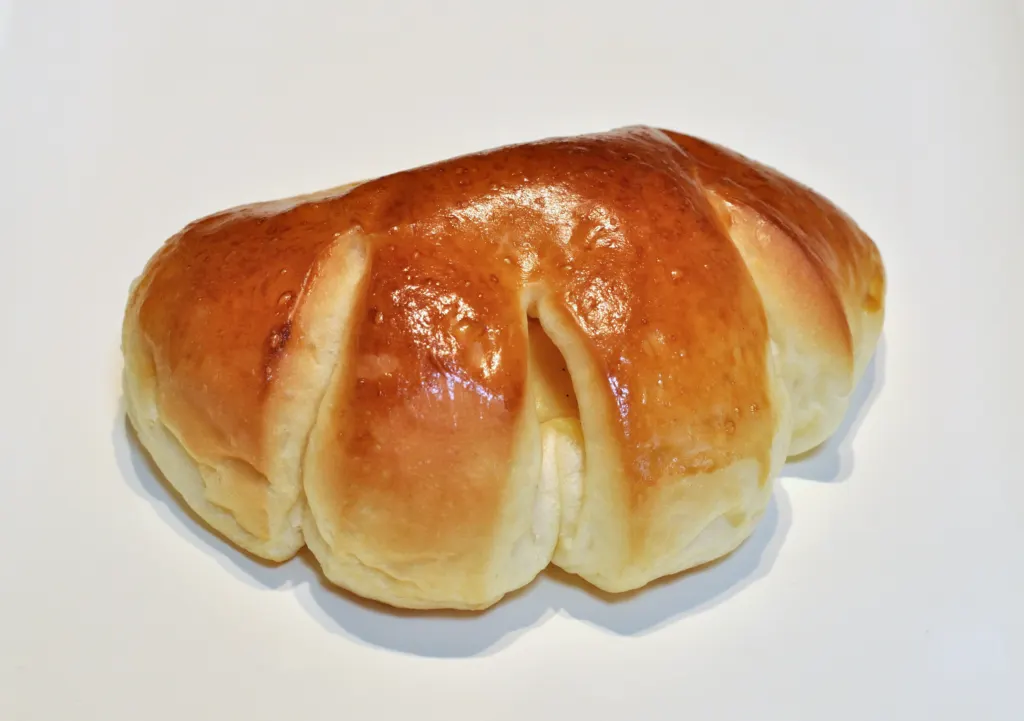
Today the classic version is a milk-enriched bread roll with custard either sealed inside before baking or piped in afterward with a nozzle, the way a cream puff is filled. Bakeries also sell versions with whipped fresh cream, chocolate cream or coffee cream.
Why so many look like a baseball glove
Pick up a cream pan in Osaka, Tokyo or Sapporo and there is a good chance it has a row of cuts along one edge, giving it the look of a baseball mitt. Nobody is certain why. One explanation is practical: the slashes stop a big air pocket forming inside the filled dough as it bakes. Another is marketing: the gaps let shoppers glimpse the custard. Neither has been settled, and Nakamuraya itself says the slits seem to have appeared only after World War II.
How it compares with cream buns elsewhere
Japan is far from alone in putting cream inside bread. A quick tour of the family shows how different the results can be:
- Japan, cream pan: custard baked or piped inside a closed bun, often glove-shaped.
- Hong Kong cream bun: a split roll with buttercream or whipped cream down the middle and coconut on the outside.
- Italy, maritozzo: an enriched bun from the Lazio region, sometimes with dried fruit, split and packed with whipped cream.
- Sweden, semla: a cardamom bun with almond paste and whipped cream, eaten on Shrove Tuesday.
- England, the Devon or Cornish split: a yeasted bun filled with clotted cream.
The key difference is where the cream goes. Most Western cream buns are split open after baking and filled like a sandwich. The Japanese version keeps the filling hidden inside a closed bun, so the first bite is the surprise.
Where it fits in Japan’s bakery culture
Cream pan belongs to the category the Japanese call kashi pan, or sweet bread, a range that also includes melon pan and the jam bun. These breads mixed Western baking with local tastes in the late 19th and early 20th centuries, and they remain cheap, everyday snacks rather than special-occasion pastries.
For more food stories with surprising origins, read how the Twinkie was invented in 1930 at an idle Illinois bakery, or how Indonesia’s black rawon soup depends on a seed that is poisonous until treated.
Nakamuraya, the bakery where it began, has been making the bun for 122 years as of 2026, counting from that first batch in 1904.
Further reading
Image: Ocdp, CC0 via Wikimedia Commons
This article was produced with AI assistance and reviewed by our Editorial Desk. How we work.