The tears that come with chopping onions for Thanksgiving stuffing are caused by a single enzyme that nobody knew existed until 2002. Japanese researchers found it, named it lachrymatory-factor synthase, and showed it is the step that turns a harmless onion into an eye-stinging one.
Before that, scientists assumed the irritant formed on its own as a side effect of the chemistry that gives onions their flavor. The team, led by S. Imai of the food company House Foods with colleagues from the University of Tokyo and Kyoto University, showed otherwise in their 2002 paper in Nature, "An onion enzyme that makes the eyes water". The irritant, they wrote, "is specifically synthesized by a previously undiscovered enzyme."
How the onion's chemical trap works
An intact onion keeps its ingredients apart. The trap only springs when a knife breaks the cells open. Here is the chain reaction, step by step:
- Step 1: Cutting ruptures onion cells and releases enzymes called alliinases.
- Step 2: The alliinases break down sulfur-containing amino acid compounds, chiefly one called isoalliin, into 1-propenesulfenic acid.
- Step 3: Lachrymatory-factor synthase rearranges that acid into syn-propanethial S-oxide, a volatile liquid.
- Step 4: The vapor drifts up, reaches the eyes, and triggers stinging and tears.
The final compound is described on Wikipedia's entry for syn-propanethial S-oxide as a lachrymatory agent, meaning a substance that makes eyes water. It belongs to a family of sulfur compounds, and a close relative turns up in Allium siculum, a cousin of the onion, made by the same kind of reaction.
The tearless onion idea
The 2002 finding came with a tempting promise. Because the tear compound is made by its own dedicated enzyme, separate from the flavor chemistry, the authors suggested it "may be possible to develop a non-lachrymatory onion" that keeps its taste and nutritional value, by turning down that one enzyme.
That is the useful twist. The onion flavor and the onion sting share a starting point but split at the last step, so in principle a cook could keep one without the other.
What the knife has to do with it
More recent work looked at the physical side of the problem. Engineers at Cornell University filmed onion cutting with high-speed cameras and reported in a 2025 study in the Proceedings of the National Academy of Sciences, "Droplet outbursts from onion cutting", that the juice escapes in two stages: a fast initial outburst, then slower threads of liquid that break into droplets.
By changing blade sharpness and cutting speed, the Cornell team found that faster or blunter blades significantly increase both the number and the energy of the droplets thrown into the air. The reason is the onion's tough outer skin layer, which resists the blade long enough for the soft tissue beneath to be squeezed hard before it finally bursts.
What that means at the cutting board
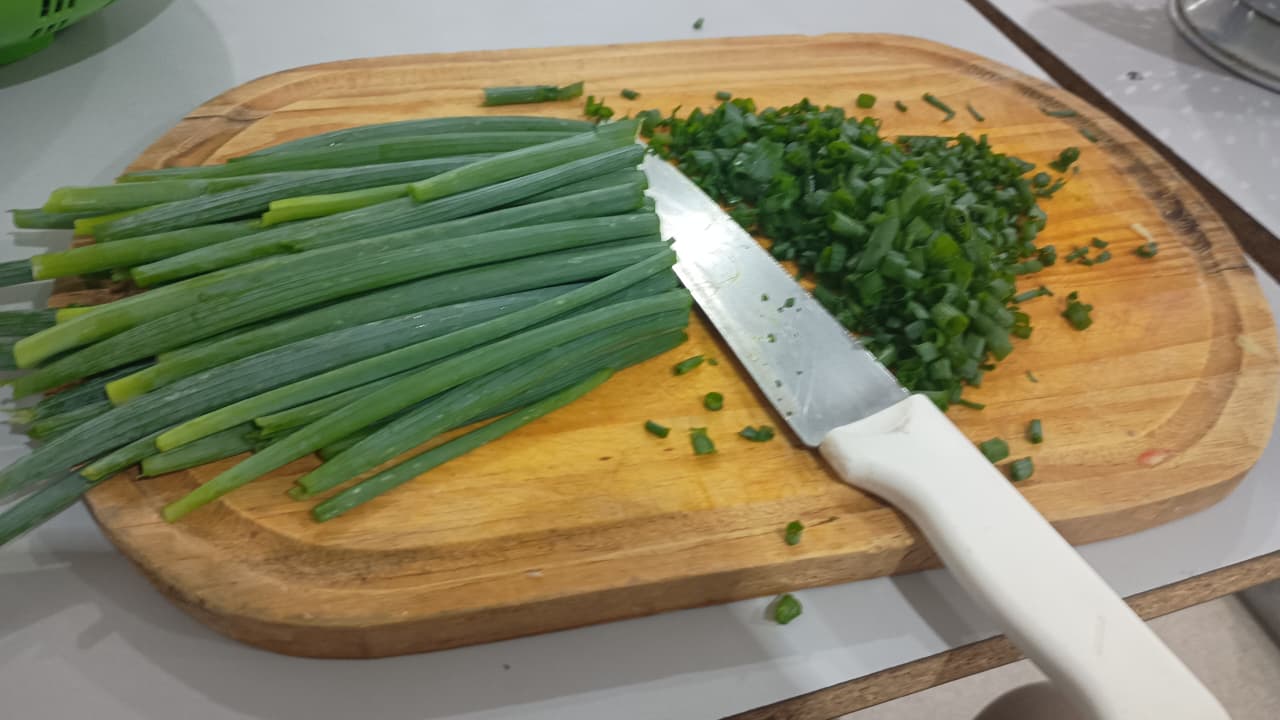
Put the two studies together and the kitchen logic is straightforward. The chemistry starts the moment cells break, so every cell crushed instead of cleanly sliced adds to the cloud. A sharp knife cuts more cells cleanly, and a slower stroke throws fewer droplets, so a careful cook with a well-honed blade gives the enzyme less to work with.
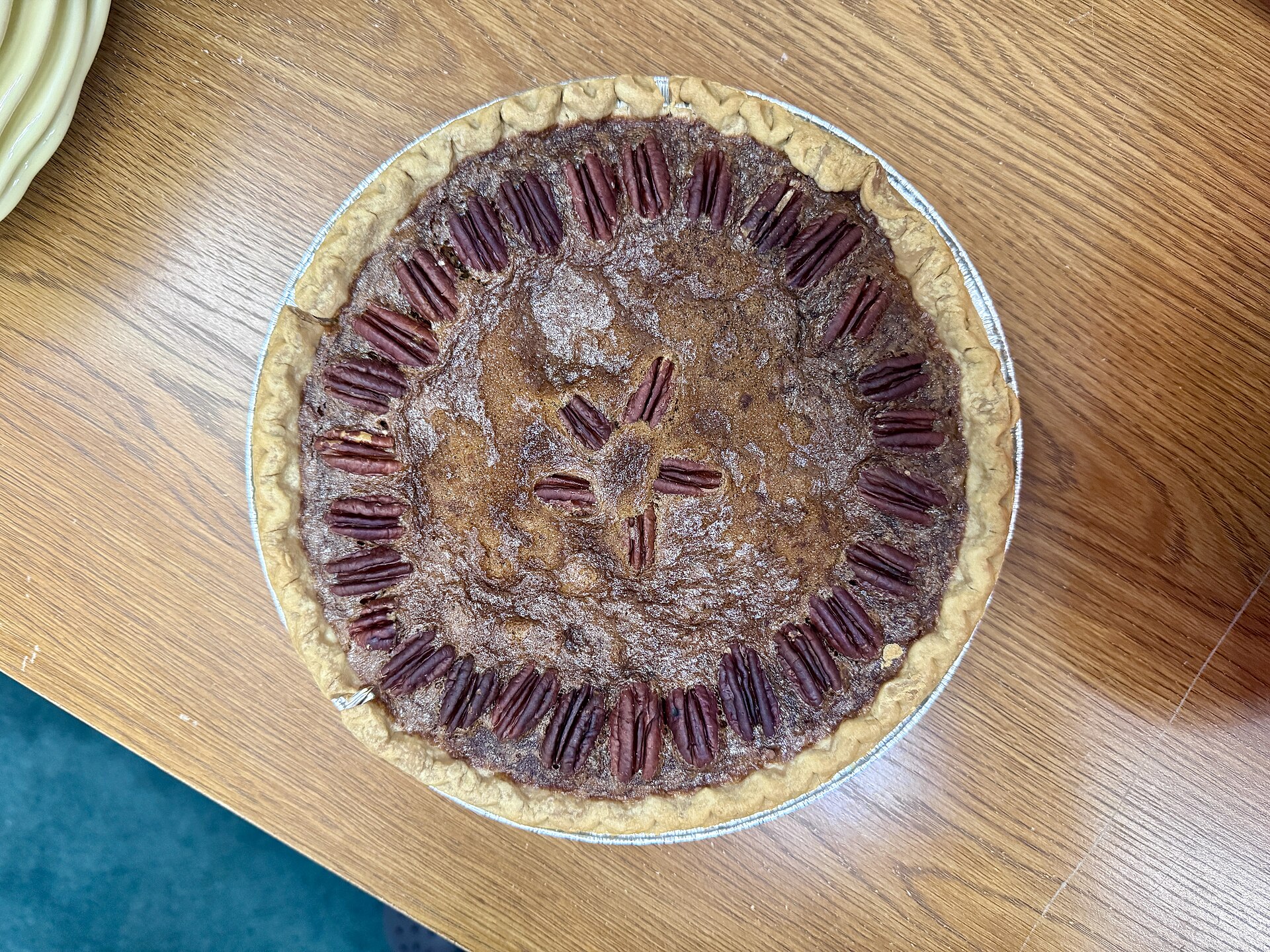
Onions are on plenty of Thanksgiving menus this week. For more kitchen history, see Badiyaa's look at how Dorcas Reilly invented green bean casserole at Campbell's and our story on how pecan pie got its Karo corn syrup filling.
Sources
- An onion enzyme that makes the eyes water (Imai et al.), Nature, 2002
- Droplet outbursts from onion cutting (Wu et al.), Proceedings of the National Academy of Sciences / Cornell University, 2025
- Syn-Propanethial-S-oxide, Wikipedia, 2026
Image: Sarah5252, CC BY-SA 4.0 via Wikimedia Commons
This article was produced with AI assistance and reviewed by our Editorial Desk. How we work.