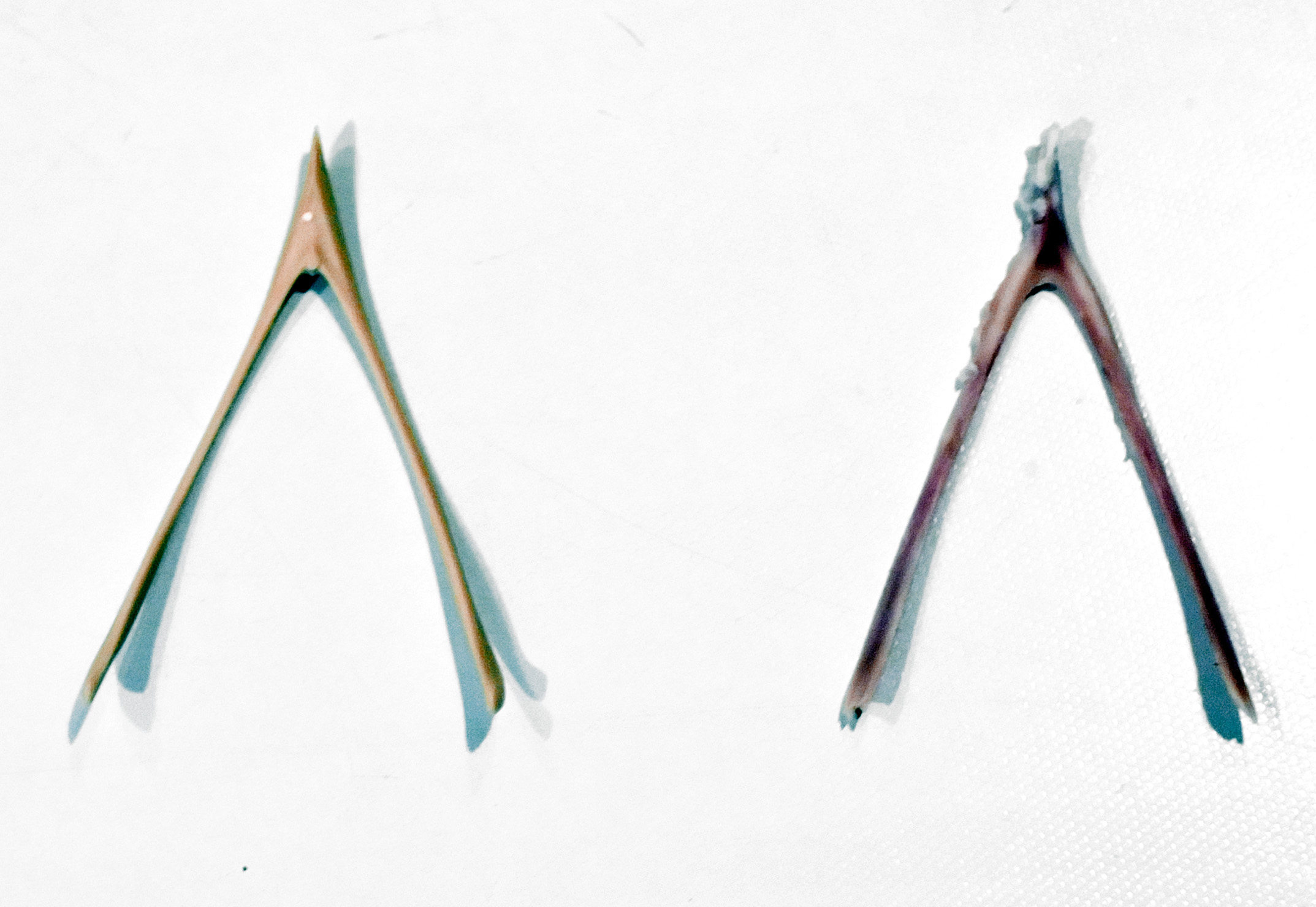
The wishbone that families will pull apart after Thanksgiving dinner on November 26 was once used to forecast the weather. In 1455, a Bavarian court physician wrote down how people read a goose's breastbone to predict whether winter would be harsh or mild, nearly two centuries before anyone recorded the two-person tug for a wish.
A goose bone that predicted winter
The writer was Johannes Hartlieb, a physician who served the dukes of Bavaria and wrote a 1456 book on forbidden arts, superstition and sorcery, according to Wikipedia's biography of Hartlieb. He described a custom tied to St. Martin's Day, when a goose was traditionally eaten. Afterward, he wrote, "the oldest and most sagacious keeps the breast-bone," lets it dry overnight, and studies it from every side.
From that inspection people judged whether the coming winter would be "severe or mild, dry or wet," Hartlieb reported, adding that they trusted the forecast enough to bet their possessions on it. He also described a military captain who pulled a goose bone from his doublet to predict a hard frost after Candlemas. The officer claimed that the Teutonic Knights in Prussia "waged all their wars by the goose-bone," as quoted in Wikipedia's article on the furcula.
From forecast to wish
The game most Americans know came later. The custom of two people pulling the bone, with the holder of the larger piece making a wish, developed in the early 17th century. Back then the bone went by a cheerier name: the merrythought. Some families flipped the rule and gave the wish to whoever ended up with the smaller piece.
The word "wishbone" itself is surprisingly young. It is first recorded in 1860, which puts 405 years between Hartlieb's weather-reading goose bone and the name we now use, and roughly 250 years between the first recorded tug-of-war and the word.
What the bone actually does
Inside the bird, the wishbone is anything but decorative. Its scientific name, furcula, is Latin for "little fork," and it forms when the two collarbones fuse. It braces the shoulders and helps hold the chest together through the strain of flight.
It also works like a spring. X-ray films of flying starlings showed the furcula widening as the wings beat down, by as much as 50% of its resting width, then snapping back on the upstroke, storing and releasing energy from the breast muscles, the furcula entry explains.
Not every bird has one. Some owls, parrots and toucans, along with scrubbirds, turacos and mesites, lack a furcula entirely and still fly well. In strong fliers such as cranes and falcons it has grown large and rigid. The bone is older than birds, too: tyrannosaurids, dromaeosaurids and other theropod dinosaurs had furculae.
Before you pull
For Thanksgiving tables, the tradition has simply moved from goose to turkey. Badiyaa's look at how many turkeys US farms will raise in 2026 shows how many wishbones are in play this year, and our guide to wild turkeys that fly at up to 50 mph explains what a working wishbone is built for. The date question is settled in our explainer on why Thanksgiving falls on the fourth Thursday.
Sources
- Johannes Hartlieb, Wikipedia, 2026
- Furcula, Wikipedia, 2026
Image: David Goehring from New York, NY, USA, CC BY 2.0 via Wikimedia Commons
This article was produced with AI assistance and reviewed by our Editorial Desk. How we work.