A coating built entirely from plant cellulose stayed intact through five days of immersion in acids, bases and solvents, while ordinary polyethylene-lined paper cups pitted and flaked under abrasion testing, chemists at Canada’s University of Waterloo report. Their aim is a hot-drink cup with no petroleum-derived plastic film inside it at all.
The recipe has two ingredients: cellulose acetate, reinforced with cellulose nanocrystals, the tiny rigid rods that can be pulled out of plant fiber. Spread over paper, the mix bridges the pores and bonds partly into the top layer of fibers.
“Learning how easily some plastic liners can shed particles was eye-opening,” said Shirley Tang, the Waterloo chemistry professor whose lab did the work. “The fact that we have created such a high-performance all-cellulose coating that doesn’t rely on conventional plastics is what makes this work particularly exciting because there are so many possibilities.”
What the team did to the cups
The researchers blade-coated paper with versions of the blend and then tried to wreck the results. The university says the coating stayed stable after long exposure to boiling water and food oil as well as solvents. The published paper adds numbers. Strength and stiffness climbed steadily with more nanocrystals, topping out at 5 percent by weight, while toughness improved up to 3 percent.
Oxygen passing through dropped by more than tenfold compared with uncoated paper when cellulose acetate alone was applied, and fell further with the nanocrystals added. Oxygen barriers matter less for a latte than for packaged food, which is where the team expects further uses.
Next to the commercial cups, the contrast showed up under the microscope. Polyethylene linings developed pits, opening boundaries and flakes after extended abrasion. The cellulose surface stayed cohesive and low in defects.
The material began as something else entirely. The group was investigating lightweight renewable materials for aircraft when it noticed the coating’s promise on paper.
Why the lining is the whole problem
A paper cup is only waterproof because of what lines it. Early versions used clay and later wax, before polyethylene film took over, and that thin film is the reason most cups are neither composted nor recycled: the plastic is hard to separate from the fiber.
Waterloo’s argument is that a cellulose coating on a cellulose cup leaves nothing foreign to pull apart. Earlier fixes have attacked the same step from other directions. A Finnish board maker launched a plastic-free cup stock in 2017, and a US firm sells a mineral-blended polyethylene coating engineered to go through paper mills. Coatings of polylactic acid compost in industrial plants but can contaminate other recycling streams.
The thinner-paper angle may matter most to manufacturers. “The coating allowed us to use much thinner paper while still achieving the durability needed for beverage containers,” said Sayan Ganguly, a research associate in the lab and the paper’s first author. The coating held its protective properties even on lightweight stock such as brown paper towels, and he argues the material savings could lower costs.
The limits of the study
“Plant-based” does not mean plastic-free in every sense. Cellulose acetate is itself a bioplastic, made by chemically treating wood pulp or cotton, and it has been used for photographic film and the first LEGO bricks. It does break down far more readily than polyethylene once its acetate groups start to come off, with fibers disappearing in 4 to 9 months in biologically active soil, though cigarette filters made of it take years in the open. Whether a worn cup lining would shed its own tiny fragments is a separate question from whether it flakes less.
The evidence about drinks is also indirect. The university describes surface damage and particle release from plastic-lined cups as suggesting microplastics could reach what is inside. The published abstract reports abrasion and surface results for the cups, with no measured count of particles in a beverage and no finding about human health.
Scale is the largest unknown. These were coated samples made in a lab with a sealed dispersion and blade process, and the announcement offers no cost per cup, no seam-sealing data and no recycling-plant trial. Ganguly’s cost argument is a projection so far.
The paper appeared in the August 10, 2026 issue of ACS Sustainable Chemistry & Engineering, volume 14, pages 13924 to 13939.
Further reading
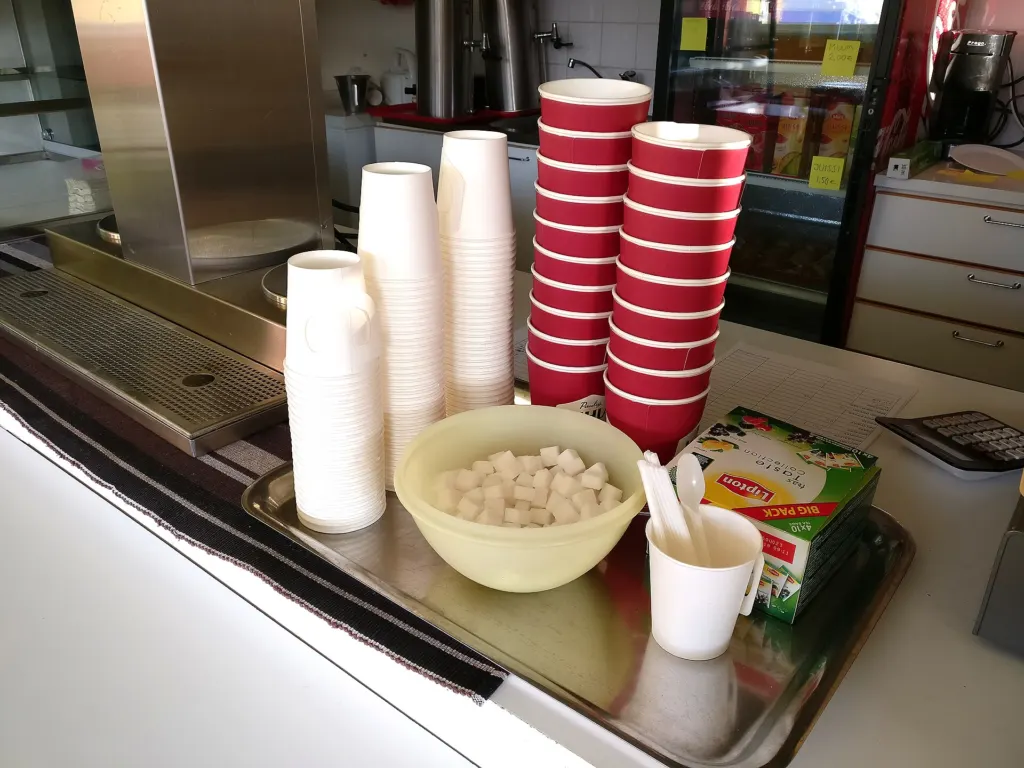
Illustrative image. Image: Santeri Viinamäki, CC BY-SA 4.0 via Wikimedia Commons
This article was produced with AI assistance and reviewed by our Editorial Desk. How we work.