The fields and pine woods where Jimmy Carter worked peanuts beside his father are headed for public hands. The Conservation Fund, a national land trust, announced on November 9, 2026, that it has bought the Carter family farm, about 2,458 acres just outside Plains, Georgia.
The group plans to hand the land to the Georgia Department of Natural Resources in 2028, folding it into the neighboring Lanahassee Creek Wildlife Management Area. People could be hunting, fishing and walking there as soon as 2027.
The farm behind the famous farmhouse
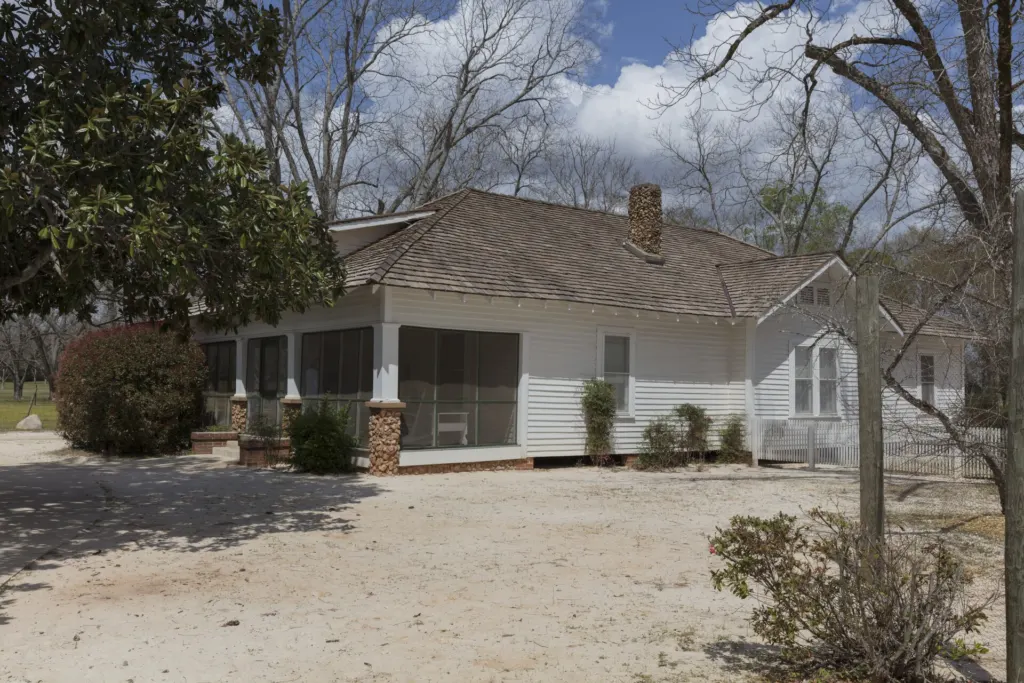
Most visitors to Plains know the Boyhood Farm, the National Park Service site that preserves the Carter house. The Conservation Fund says the newly bought property is something different: the larger working landscape around that childhood. Young Jimmy worked there alongside his father, Earl, in a family operation that grew peanuts, corn and sugarcane, and spent free hours exploring the woods.
Stacy Funderburke, the group’s vice president for the central Southeast, said in an interview published this week that it was the first land the Carters bought after moving to Plains in the early 1900s. Much of it is now wooded, with creeks running into the Flint River watershed.
“Long before Jimmy Carter protected millions of acres across America, he was a boy working the fields and roaming the woods of southwest Georgia,” Funderburke said in the announcement. “This land shaped him and his legacy, and he never stopped coming home to it.”
Carter kept coming back as an adult. He hunted on the property, walked its woods with his wife, Rosalynn, and near the end of his life made one last fishing trip on its pond.
“For our family, this land was always about more than a farm. It was home — a place my grandparents treasured,” said his grandson Jason Carter.
Longleaf pine and gopher tortoises
At Carter’s request, the family kept a stand of mature longleaf pine. In one of his last land decisions, much of the property was replanted with young longleaf, the native forest that once covered the region. That makes it a natural match for Lanahassee Creek, which The Conservation Fund helped Georgia set up in 2019 to protect longleaf habitat and the threatened gopher tortoise. Creeks next to the property also hold rare freshwater mussels.
By the numbers
The wildlife area will grow to nearly 7,000 acres once the farm is added. Subtracting the farm’s 2,458 acres means the existing area is roughly 4,500 acres, so the purchase enlarges it by more than half. In other units, 2,458 acres is about 3.8 square miles, or close to 10 square kilometers.
The new land also sits apart from the original Boyhood Farm in time. According to the National Park Service, Earl Carter took ownership of that farm in 1928, and Jimmy lived there from age four until he left for college. The park restored it in 2000 to look as it did before electricity arrived in 1938, and it still keeps goats, mules, chickens and honeybees.
What happens next
- November 9, 2026: The Conservation Fund announces the purchase.
- As soon as 2027: the land is expected to open for hunting, fishing and other recreation.
- 2028: transfer to the Georgia Department of Natural Resources and the Lanahassee Creek Wildlife Management Area.
Badiyaa has covered other family lands turned into public space, from the Vann family ranch that became Texas’s Post Oak Ridge State Park to a Brazilian cattle farm replanted with a million trees.
The same group bought Oak Hill, the 1,200-acre Virginia estate of President James Monroe, and on June 30, 2026, it announced that Virginia had authorized the estate as a state park.
Further reading
Illustrative image. Image: Carol M. Highsmith, Public domain via Wikimedia Commons
This article was produced with AI assistance and reviewed by our Editorial Desk. How we work.