The most quoted sentence Booker T. Washington ever wrote about success was born in a chapter about a boy who moved clock hands at a salt furnace so he could get to school on time.
The line is real, and it is his. It appears in chapter two, titled “Boyhood Days,” of Up From Slavery, the autobiography Washington published in 1901. Checked word for word against that text, it reads:
“I have learned that success is to be measured not so much by the position that one has reached in life as by the obstacles which he has overcome while trying to succeed.”
Many reprints of the quote drift slightly. One circulating variant, which turns up even in reference biographies of him, says “the obstacles which he has had to overcome.” The 1901 chapter has no “had to.” The meaning barely shifts, but the original is tighter, and it is the wording to use if you are carving it into a plaque or a graduation card.
Where the sentence sits
Context changes how the line lands. Washington was born enslaved in 1856 on the Burroughs farm in Franklin County, Virginia, where his mother Jane was the cook, according to the federal agency that now preserves his birthplace as a national monument. After emancipation the family walked several hundred miles to Malden, a salt town near Charleston, West Virginia.
In “Boyhood Days” he describes starting work in a salt furnace as a small child, sometimes at four in the morning. He taught himself the alphabet from a blue-back speller. When a school finally opened for Black children in the valley, his stepfather kept him at work, so he took night lessons. Later he won a few months of day school, and to make the nine o’clock start he quietly pushed the furnace clock forward each morning until the boss locked it in a case.
The famous sentence arrives near the end of that chapter. Washington writes that as a youth he envied white boys whose ambitions faced no barrier of race, then says that in later years he no longer did. The success line is his reason. He goes on to argue that a hard road gives a young person “a strength, a confidence” that an easy start does not.
A timeline of the line
- 1856: Washington is born enslaved in Franklin County, Virginia.
- 1865 onward: the Malden years he later describes: salt furnace, coal mine, night school.
- 1881: he becomes the first leader of the new Tuskegee Institute in Alabama, which opens on July 4.
- 1901: Up From Slavery is published, with the success sentence in chapter two. It becomes a best seller.
- 1915: Washington dies at Tuskegee on November 14, and the book keeps selling; it stayed the most widely read Black American autobiography for decades.
- 1965: the book is reprinted in the paperback collection Three Negro Classics, one of the editions scholars still cite.
- 1999: a publisher’s ranking of the century’s greatest nonfiction puts Up From Slavery at No. 3.
Why it is not a simple pep talk
Read alone, the sentence sounds like generic motivation. In the book it is part of an argument about race. Washington says the Black child of his era starts with “the presumption against him,” and that people are surprised when such a boy does not fail. Measuring success by obstacles cleared, rather than rank reached, was his way of reframing who had actually achieved more.
That framing fits the wider debate about him. Critics led by W. E. B. Du Bois accused Washington of accommodating segregation, while later historians point to the legal challenges he funded in secret. The success line belongs to the public Washington: patient, self-made, focused on effort.
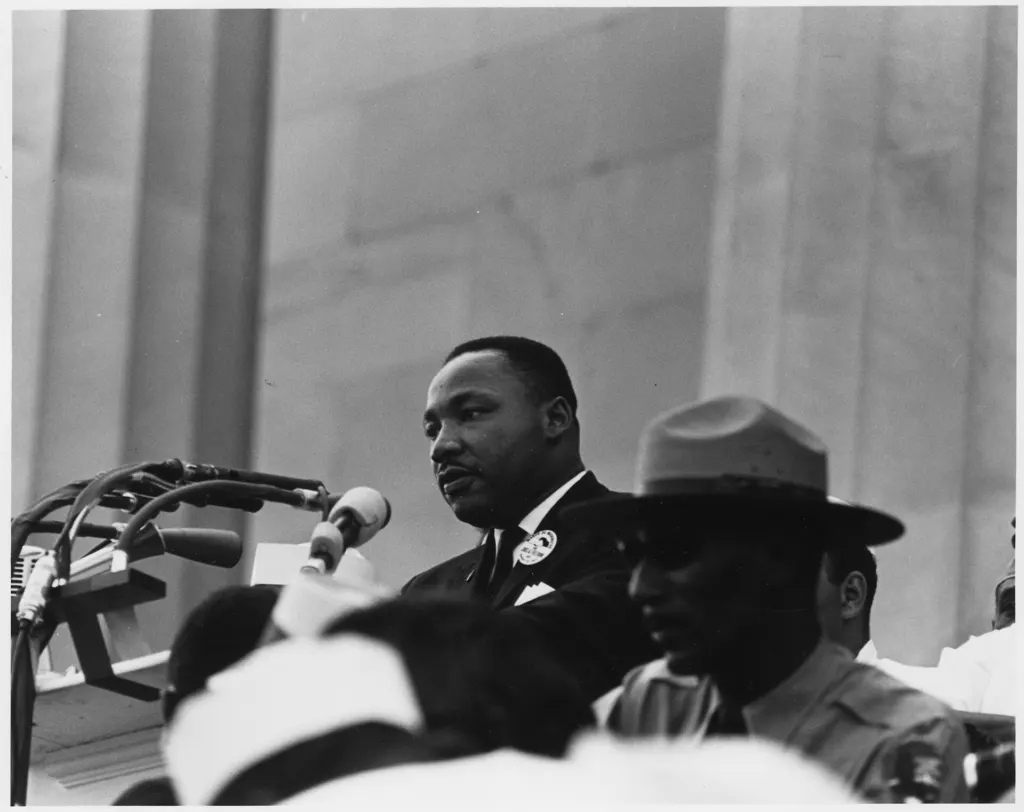
Last month Badiyaa traced another famous civil rights line, King’s “arc of the moral universe,” back to an 1853 sermon; you can read that piece here.
Washington was 59 when he died. In 1940 he became the first African American pictured on a US postage stamp, a 10-cent issue released on April 7.
Further reading
- Wikisource: Up From Slavery, Chapter 2
- Wikipedia: Up from Slavery
- Wikipedia: Booker T. Washington
- National Park Service: Booker T. Washington National Monument history
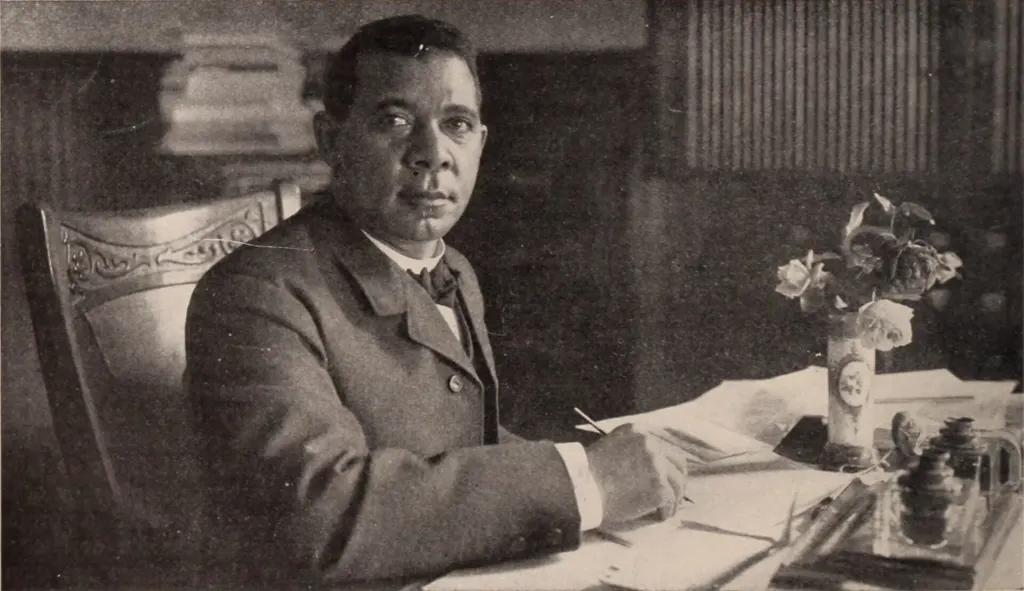
Image: Unknown photographer, Public domain via Wikimedia Commons
This article was produced with AI assistance and reviewed by our Editorial Desk. How we work.