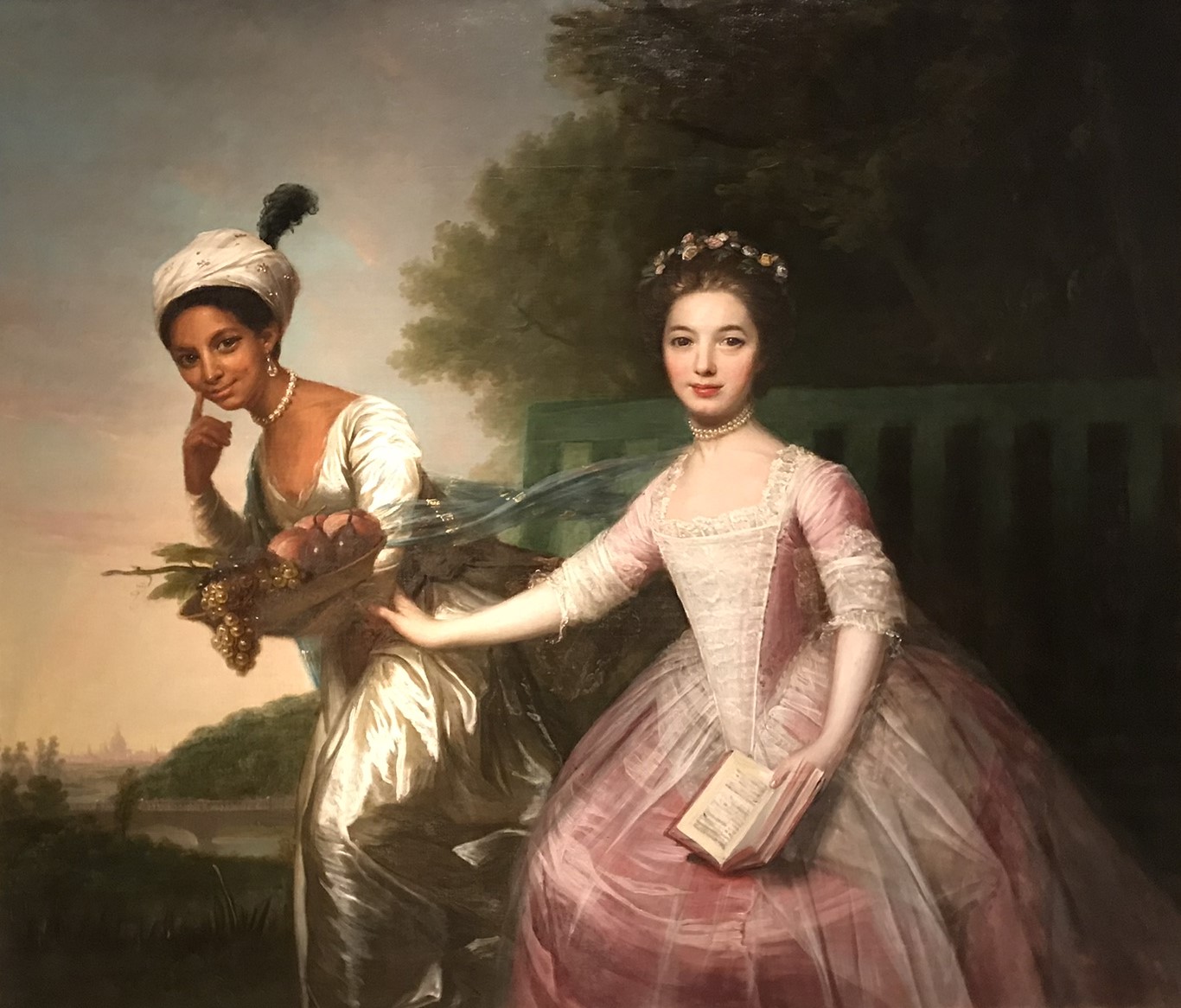
Dido Elizabeth Belle was born into slavery in the British West Indies in 1761 and grew up as a gentlewoman inside one of the grandest houses in London, raised by the most powerful judge in England. A visiting American governor saw her there in 1779 and left behind a diary line that has fuelled gossip ever since.
The visitor was Thomas Hutchinson, the exiled Loyalist governor of Massachusetts. He wrote that Lord Mansfield "knows he has been reproached for showing a fondness for her," then added, "I dare say not criminal." As Belle's Wikipedia biography explains, Mansfield seems to have hidden from his guest that the young woman was his own great-niece, which left Hutchinson hinting at something far more scandalous.
A naval officer's daughter at Kenwood
Her father was Sir John Lindsay, a Royal Navy captain who later became an admiral. Her mother, Maria Belle, was an enslaved African woman. Lindsay brought the girl to England and left her with his uncle, William Murray, 1st Earl of Mansfield, and his wife at Kenwood House in Hampstead, the villa that Kenwood House's Wikipedia entry says Robert Adam remodelled for Mansfield from 1764.
She was raised alongside a motherless cousin of almost the same age, Lady Elizabeth Murray. She ran the dairy and poultry yard, took dictation of Mansfield's letters and lived at Kenwood for about 30 years.
The painting that put them side by side
Around 1778 the family commissioned David Martin to paint the two cousins together. Elizabeth is posed as formal and bookish; Dido, in a feathered turban, touches a finger to her cheek. Historic England has called it unique in 18th-century British art for showing a Black woman and a white woman as near equals. You can study the canvas on the portrait's Wikimedia Commons page; the original hangs at Scone Palace in Scotland.
The judge, the ruling and the rumour
Mansfield was Lord Chief Justice when he decided the 1772 case of James Somerset, an enslaved man his owner wanted shipped to Jamaica for sale. The Somerset v Stewart case record on Wikipedia quotes his ruling that slavery was "so odious, that nothing can be suffered to support it, but positive law," and that "the black must be discharged."
People at the time suspected Dido had softened him. One Jamaican planter grumbled that Mansfield "keeps a Black in his house which governs him and the whole family."
Unequal money, a late marriage
The household's love had limits. Dido received an allowance of £20 a year; Lady Elizabeth got £100. Mansfield's will confirmed Dido's freedom and left her £500 plus a £100 annuity, against £10,000 for Elizabeth.
After Mansfield died in 1793, Dido, then 32, married a French servant, Jean Louis Charles Davinière, at St George's, Hanover Square. They had at least three sons and lived in Pimlico. She died in 1804, aged 43.
Her story reached cinemas in 2013. The Wikipedia entry for the film Belle notes that Gugu Mbatha-Raw played Dido and that the plot was heavily fictionalised, including an invented romance with a young lawyer.
For more on Britain's anti-slavery fight, read how sugar bowls marked 'not made by slaves' fuelled a boycott, and the story of the Chevalier de Saint-Georges, who played for Marie Antoinette.
Sources
- Dido Elizabeth Belle, Wikipedia, 2026
- Kenwood House, Wikipedia, 2026
- Dido Elizabeth Belle and Lady Elizabeth Murray, David Martin, c. 1778, Wikimedia Commons, 2024
- Somerset v Stewart, Wikipedia, 2026
- Belle (2013 film), Wikipedia, 2026
Image: David Martin, Public domain via Wikimedia Commons
This article was produced with AI assistance and reviewed by our Editorial Desk. How we work.