He could shoot a coin out of the air, outfence the best swordsmen in Europe, lead the orchestra Marie Antoinette slipped in to hear, and leave the women in his audience swooning. Then three stars of the Paris Opera told the queen they would never take orders from him because of his race.
His name was Joseph Bologne, the Chevalier de Saint-Georges, and he was the first classical composer of African descent to win wide acclaim in Western music.
The man John Adams wrote about
Bologne was born on December 25, 1745, in Guadeloupe. His father was a wealthy white plantation owner; his mother was a Senegalese woman his father held in slavery. At 7 he was sent to France, and by his teens he was beating fencing masters.
His fame crossed the Atlantic. On May 17, 1779, John Adams, then a diplomat in France, wrote in his diary that the Chevalier was "the most accomplished Man in Europe in Riding, Running, Shooting, Fencing, Dancing, Musick." Adams added: "He will hit a Crown Piece in the Air with a Pistoll Ball." The entry can be read in the Massachusetts Historical Society's edition of the Adams diary.
Swooning fans and a royal audience
As a violinist he was electric. When he played his first two concertos in 1772, he was said to be admired less for the writing than for the performance, "enrapturing especially the feminine members of his audience," according to Wikipedia's biography of the Chevalier de Saint-Georges.
The queen noticed. Marie Antoinette sometimes turned up unannounced at his concerts at the Hôtel de Soubise, so the players dressed in court finery every night: embroidered suits, lace cuffs and swords at their sides. She also kept him among the handful of musicians admitted to her private musical evenings at Versailles. He later conducted the first performances of Joseph Haydn's Paris symphonies.
The petition that cost him the Opera
In 1776 he looked certain to take over the Paris Opera. Instead, three of the house's star women, the dancer Marie-Madeleine Guimard and the singers Rosalie Levasseur and Sophie Arnould, sent the queen a petition. Their "honor and delicate conscience," they wrote, "could never allow them to submit to the orders of a mulatto." The job went to someone else.
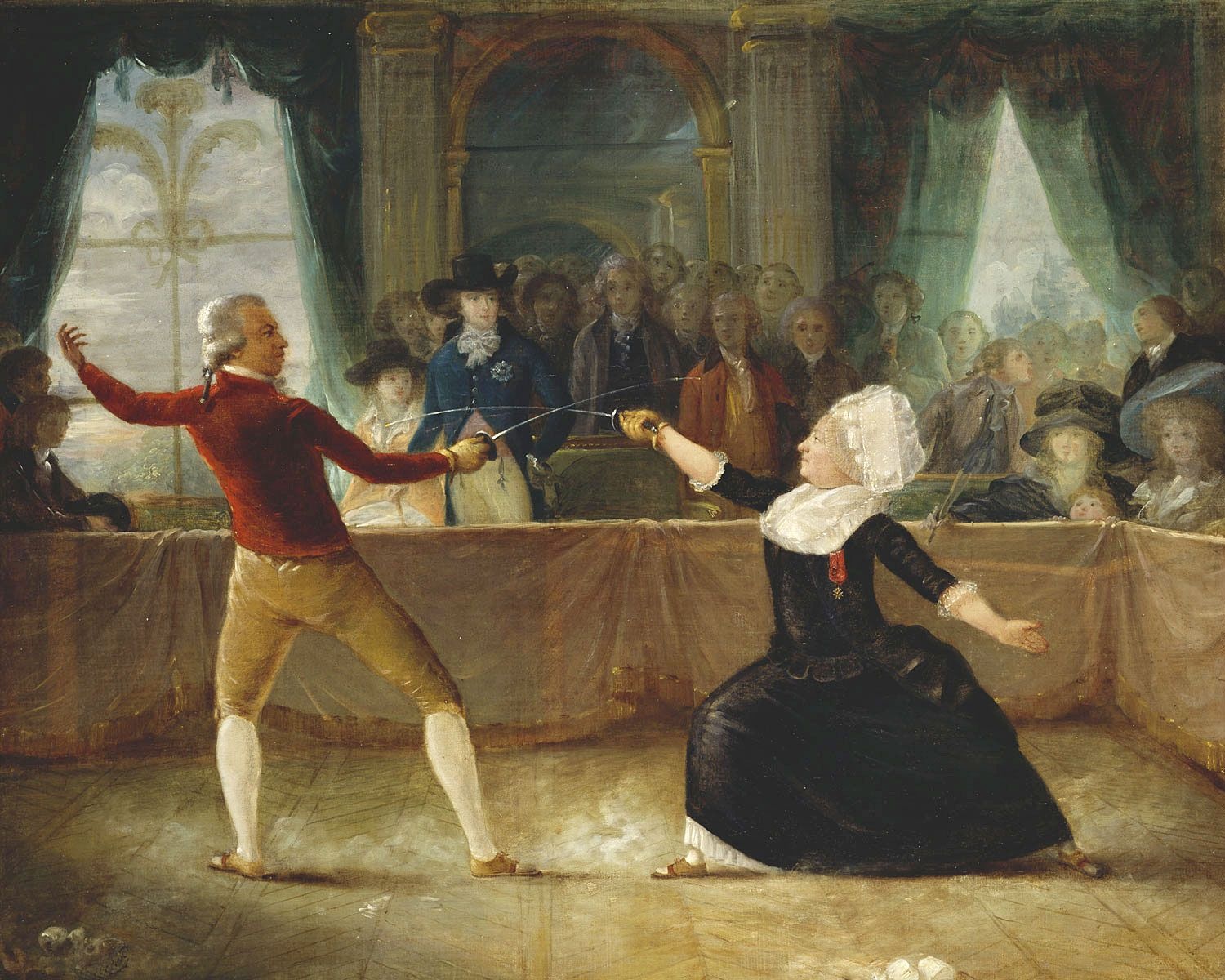
The drama never stopped. In 1787, at Carlton House in London, he fenced before the Prince of Wales against the Chevalière d'Éon, then 59 and wearing a full black dress. A painting of the bout shows d'Éon landing a hit, which set gossips whispering that Bologne let a lady win.
The Revolution brought darker turns. He commanded a regiment of "citizens of colour," then spent at least 11 months in prison because of his ties to the queen and the Duke of Orléans. He died in Paris in 1799.
Back in the spotlight
Hollywood rediscovered him with Chevalier, which premiered at the Toronto festival on September 11, 2022, with Kelvin Harrison Jr. as Bologne. The film's Wikipedia entry describes it as a biographical drama, and its plot adds a steamy affair with a married singer, Marie-Joséphine, so watch it as drama rather than a documentary.
Badiyaa has followed other Black artists who conquered Europe's stages, including Ira Aldridge, the Shakespeare star of London's Royal Coburg, and Phillis Wheatley, who had to prove she wrote her own poems.
One nickname has stuck to Bologne: the "Black Mozart." The violinist Randall Goosby turned it around: "I prefer to think of Mozart as the white Chevalier."
Sources
- Joseph Bologne, Chevalier de Saint-Georges, Wikipedia, 2026
- Diary of John Adams, volume 2, May 17, 1779, Massachusetts Historical Society, 1961
- Chevalier (2022 film), Wikipedia, 2026
Image: Alexandre-Auguste Robineau, Public domain via Wikimedia Commons
This article was produced with AI assistance and reviewed by our Editorial Desk. How we work.