Marie Antoinette was guillotined in Paris 233 years ago today, on October 16, 1793, and the line most people still pin on her is one she is not recorded as ever saying. The oldest known text of “let them eat cake” is in French, mentions brioche rather than cake, credits an unnamed “great princess,” and was written by Jean-Jacques Rousseau while the future queen was a girl in Vienna.
What Rousseau actually wrote
The passage sits in Book 6 of Rousseau’s Confessions, the autobiography that covers his life up to 1765. In the French text on Wikisource, he recalls a year spent in Lyon as tutor to the children of M. de Mably, the city’s grand prévôt. He had been quietly helping himself to bottles of his employer’s white Arbois wine and could not drink without eating. Sending a footman for bread would give him away, and a gentleman wearing a sword could hardly walk into a bakery himself. Then he remembered a remedy:
“Enfin je me rappelai le pis-aller d’une grande princesse à qui l’on disait que les paysans n’avaient pas de pain, et qui répondit : Qu’ils mangent de la brioche.”
In plain English, he recalled the last resort of a great princess who, told that the peasants had no bread, answered, “Let them eat brioche.” His next sentence is “J’achetai de la brioche,” I bought some brioche. The anecdote is a joke at his own expense, about a vain young man too proud to be seen buying bread, and the princess is a borrowed punchline. He never names her.
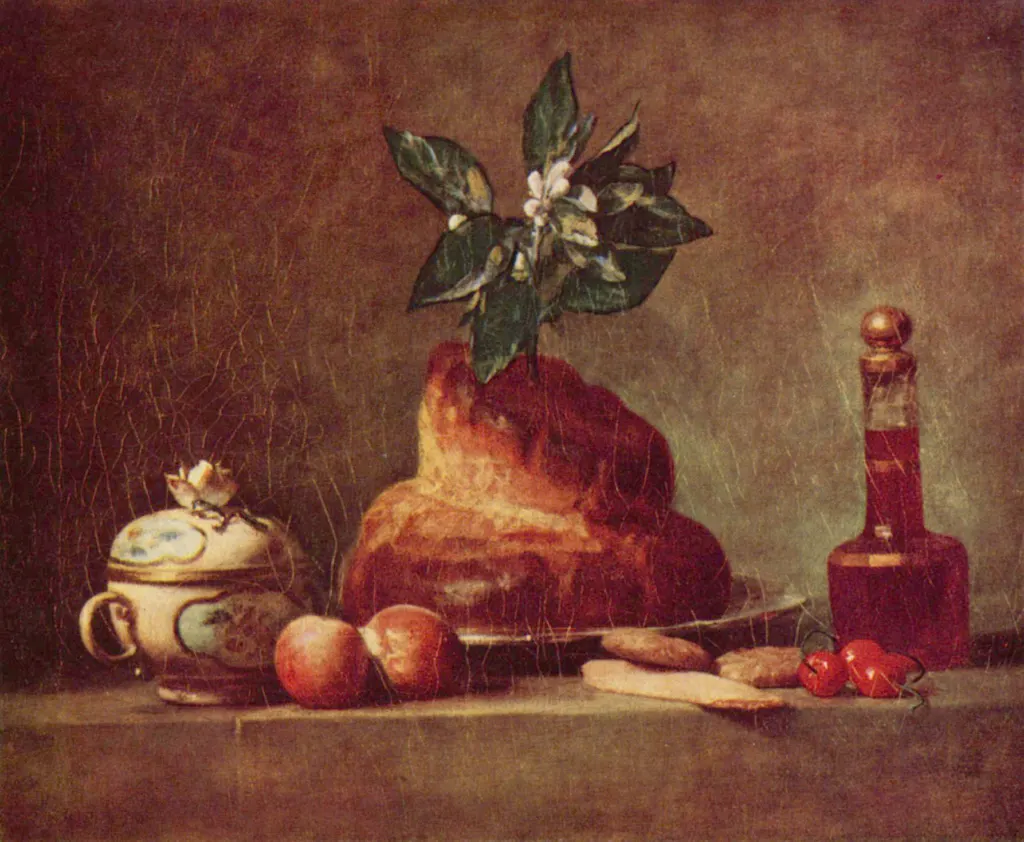
Brioche matters here. It is a bread enriched with butter and eggs, a luxury rather than a staple, which is why the remark reads as cluelessness. Older English versions chose different words: the translation hosted on English Wikisource gives it as “Then let them eat pastry!” and later calls his purchase “the dear little cake.”
The dates do the debunking
Marie Antoinette’s own timeline rules her out as Rousseau’s princess. Set side by side, the dates look like this:
- November 2, 1755: Maria Antonia is born at the Hofburg in Vienna, the 15th child of Empress Maria Theresa.
- 1765 to 1767: Rousseau writes the first six books of the Confessions, the usual dating for Book 6. She is between 9 and 12 years old and has never been to France.
- May 1770: At 14, she meets the dauphin at Compiègne and marries him at Versailles on May 16. By then Rousseau had completed the whole manuscript, finished in 1769.
- May 10, 1774: She becomes queen.
- 1782: Books 1 to 6 are published, four years after Rousseau’s death. She is 26.
- October 16, 1793: She is executed at the Place de la Révolution.
- March 1843: The French writer Alphonse Karr attributes the phrase to her in print, 50 years after her death.
Rousseau could not have been describing a teenager he had never heard of, and the revolutionaries who attacked her relentlessly in pamphlets never used this story against her. The most damaging nickname of those years was “Madame Déficit,” blaming the country’s debts on her spending.
Who was the princess?
Nobody knows, and Rousseau may have made her up; his dates and details are often unreliable. Louis XVIII offered a rival version in a memoir of his 1791 journey to Brussels and Koblenz, crediting an older princess, Maria Theresa of Spain, wife of Louis XIV, who died in 1683, with the words “Que ne mangent-ils de la croûte de pâté?” (roughly, why don’t they eat pastry crust?) The biographer Antonia Fraser cites his account, which treats the story as an old legend that the family believed began with that earlier queen. Other retellings handed it to two of Louis XV’s daughters, and Alexandre Dumas gave it to the Duchess of Polignac in his 1853 novel Ange Pitou.
The real bread crises of her reign also cut against the legend. There were two serious shortages, in April and May 1775, which set off the riots known as the Flour War, and again in 1788. Writing to her family in Austria in 1775, she wrote, in English translation, “It is quite certain that in seeing the people who treat us so well despite their own misfortune, we are more obliged than ever to work hard for their happiness.”
The sentence that lasted is Rousseau’s, set in Lyon, where he sometimes passed thirty pastry shops before daring to step into one. It can be read in the original on page 223 onward of the 1889 Launette edition, Book 6, which French Wikisource reproduces in full.
Further reading
Image: Jean-Baptiste-Siméon Chardin, Public domain via Wikimedia Commons
This article was produced with AI assistance and reviewed by our Editorial Desk. How we work.