W.C. Handy hid a tango inside his biggest blues. When “St. Louis Blues” was first played in 1914, the tango was the dance craze of the moment, so Handy opened the tune with a tango rhythm and then lurched into the blues. “I tricked the dancers by arranging a tango introduction, breaking abruptly into a low-down blues,” he wrote. “The dancers seemed electrified.”
The trick worked. Published in September 1914, the song became one of the first blues to succeed as a pop hit and has been recorded by everyone from Bessie Smith and Louis Armstrong to Count Basie, Glenn Miller and Eartha Kitt. Musicians nicknamed it “the jazzman’s Hamlet.”
A heartbroken woman on a St. Louis street
Handy, born November 16, 1873, in Florence, Alabama, said the song began with a stranger. On a St. Louis street he met a woman distraught that her husband was gone, who said, “Ma man’s got a heart like a rock cast in de sea.” That lament became one of the song’s key lines. His autobiography also recalls hearing a tune in St. Louis back in 1892 that had “numerous one-line verses and they would sing it all night.”
By 1914 Handy already had a hit behind him. Badiyaa’s earlier story on W.C. Handy, the Father of the Blues, and the $100 sale of ‘The Memphis Blues’ tells how he let the rights to that tune go cheaply. “St. Louis Blues,” issued by his own firm with Harry Pace, Pace & Handy Music Co., was the song that paid off.
Why it sounds different
The structure is what sets it apart. Its verses use the standard twelve-bar blues, with three lines of lyrics and the first line repeated. In the middle sits a 16-bar bridge in the habanera rhythm, which Handy called tango and Jelly Roll Morton called the “Spanish tinge.” Like a ragtime piece, it moves through several contrasting strains instead of looping one. Handy said he wanted “to combine ragtime syncopation with a real melody in the spiritual tradition.”
Ragtime was the obvious model; Scott Joplin, whose ‘Maple Leaf Rag’ earned him about $1 in its first year, had shown how multi-strain pieces could sell as sheet music. Not everyone approved of the result. Bluesman T-Bone Walker grumbled, “You can’t dress up the blues,” adding that the song “just isn’t blues.”
A century of recordings, compared
- 1917: Ethel Waters becomes the first woman to sing it in public, during an engagement in Baltimore.
- 1922: Handy’s own Memphis Blues Band recording, added to the Library of Congress National Recording Registry in 2023.
- 1925: Bessie Smith sings it with Louis Armstrong on cornet; inducted into the Grammy Hall of Fame in 1993.
- 1929: Armstrong’s orchestra version, inducted into the Grammy Hall of Fame in 2008. The same year, Bessie Smith stars in a short film named after the song.
- 1998: Herbie Hancock’s version with Stevie Wonder on vocals, which won two Grammys in 1999.
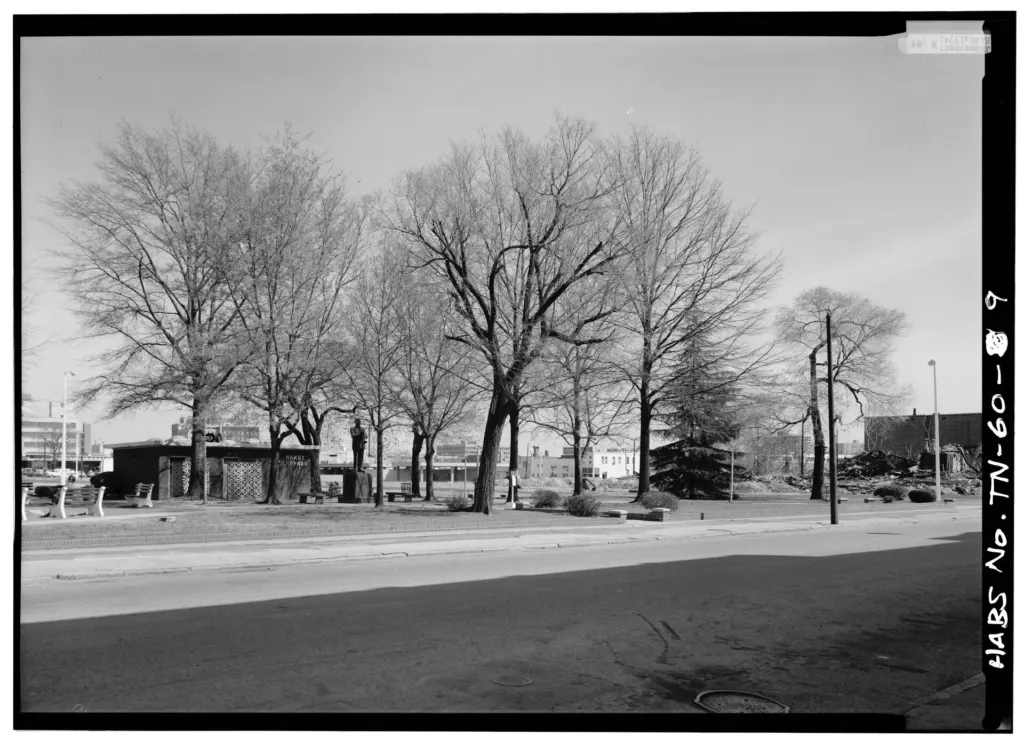
The dance-floor instinct never left the song: its habanera section shares DNA with the tango Badiyaa traced in the story of Por una Cabeza. Handy lived to see Memphis open Handy Park at 200 Beale Street in 1931; his statue went up there in 1960, two years after his death.
Further reading
Image: Historic American Buildings Survey (photographer unknown), Public domain via Wikimedia Commons
This article was produced with AI assistance and reviewed by our Editorial Desk. How we work.