Two years after she walked away from slavery, Sojourner Truth took a white man to court for her son and won. In 1828, after months of proceedings, the woman then known as Isabella got five-year-old Peter back from the Alabama owner who had bought him illegally, becoming one of the first Black women to beat a white man in an American courtroom.
The case is far less famous than her 1851 Akron speech, which Badiyaa examined in its piece on how the original 1851 text of Sojourner Truth’s Akron speech never asks ‘Ain’t I a woman?’. But the lawsuit came first, and it shaped the preacher and activist she became.
Walking off, not running
Truth was born into slavery around 1797 in Swartekill, in Ulster County, New York, and grew up speaking Dutch. New York had been phasing out slavery since 1799, with full emancipation set for July 4, 1827. Her enslaver, John Dumont, had promised to free her a year early, then went back on his word.
Late in 1826 she left with her infant daughter, Sophia. Her other children had to stay behind, because under the state’s law they were bound to serve into their twenties. She later explained the departure in her own terms: “I did not run off, for I thought that wicked, but I walked off, believing that to be all right.” Isaac and Maria Van Wagenen of New Paltz took her in, and Isaac paid Dumont $20 for her services until emancipation arrived.
The sale that broke the law
Then came the news that Dumont had sold her son Peter, and that Peter had been resold to an owner in Alabama. Taking an enslaved child out of New York in that way was illegal. With the Van Wagenens’ help, she brought the matter before the New York Supreme Court, filing under the name Isabella van Wagenen against Solomon Gedney, the man who now held Peter.
The fight dragged on for months. When it ended in 1828, Peter came home to his mother, bearing the marks of abuse from his owners.
How the case was nearly forgotten, and found again
For generations the story lived mostly in Truth’s own dictated memoir, published in 1850. The paperwork itself resurfaced only recently: staff at the New York State Archives rediscovered the court documents around 2022. Michigan had already honored the case in 1987, when the State Bar of Michigan included it in a monument to “Michigan Legal Milestones.”
From Isabella to Sojourner Truth: a short timeline
- c. 1797: Born Isabella Bomefree in Swartekill, New York.
- Late 1826: Leaves Dumont’s farm with her baby daughter.
- July 4, 1827: New York’s emancipation of enslaved adults takes full effect.
- 1828: Wins her son Peter back through the New York Supreme Court.
- June 1, 1843: Renames herself Sojourner Truth and sets out to preach, telling friends, “The Spirit calls me, and I must go.”
- May 1851: Speaks at the women’s rights convention in Akron, Ohio.
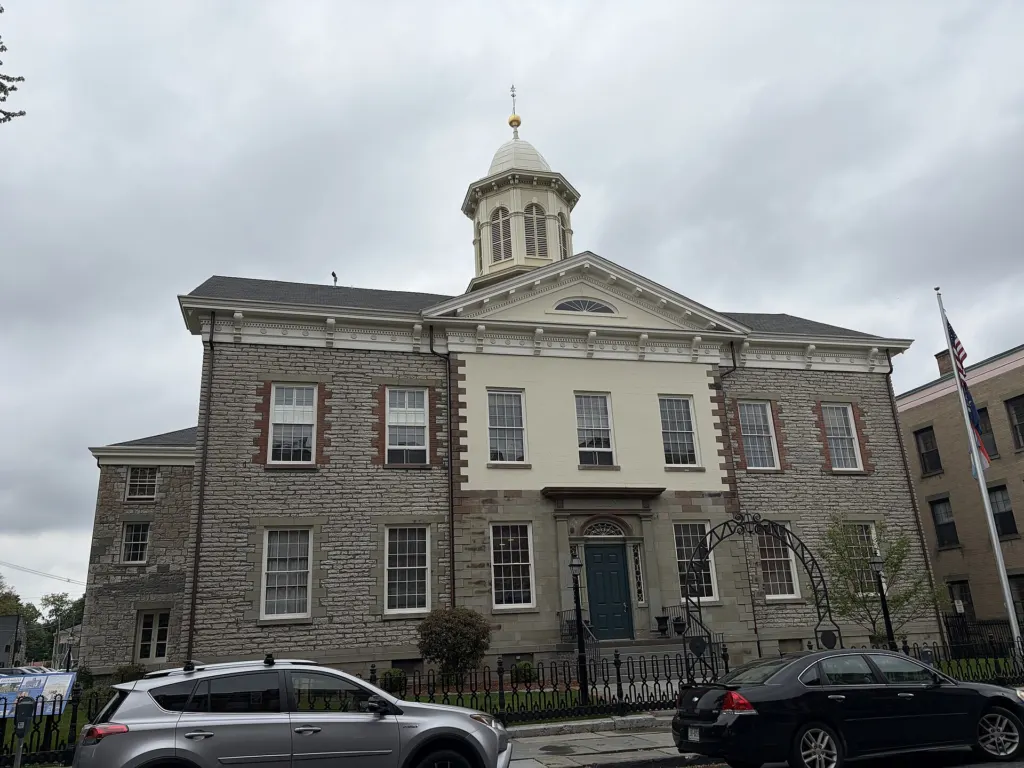
Truth went on to share platforms with the leading reformers of her day, among them Susan B. Anthony, whose own arrest for voting in Rochester in 1872 came the same year Truth was turned away from the polls in Battle Creek, Michigan. In 1983, on the centennial of her death, a plaque honoring her was unveiled in front of the Ulster County Courthouse in Kingston, New York, the building shown above.
Further reading
Image: lostplanetcomics1, CC BY-SA 4.0 via Wikimedia Commons
This article was produced with AI assistance and reviewed by our Editorial Desk. How we work.