The sentence “If there is no struggle there is no progress” is genuine Frederick Douglass. He spoke it in Canandaigua, New York, in early August 1857, at a celebration of the 23rd anniversary of the end of slavery in the British West Indies, and it was printed that same year in a Rochester pamphlet, Two Speeches by Frederick Douglass, issued by C. P. Dewey.
What most posters leave out is the paragraph the line lives in, and the much harder paragraph that comes after it.
An Emancipation Day crowd in upstate New York
Britain’s abolition law took effect on 1 August 1834, and Douglass told his listeners it had returned “eight hundred thousand lost members of the human family” to freedom. The 1857 gathering met at the Ontario County fairgrounds, and he opened by recalling a similar meeting he had addressed in the same town ten years before.
For most of its length the address praises Britain’s decision as an act of conscience and mocks Americans who judged it by one test, in his words: “will it pay?” The famous passage arrives late. Douglass was answering an objection from Dr. J. M’Cune Smith, a Black colleague he praised for his learning, who had argued that Black Americans should celebrate achievements of their own rather than British ones. Douglass partly agreed, then argued that the enslaved people of the islands had helped win their own freedom: “Though slaves, they were rebellious slaves.”
The passage, word for word
In the full transcription of the 1857 pamphlet, the lines read:
“Let me give you a word of the philosophy of reform. The whole history of the progress of human liberty shows that all concessions yet made to her august claims, have been born of earnest struggle. The conflict has been exciting, agitating, all-absorbing, and for the time being, putting all other tumults to silence. It must do this or it does nothing. If there is no struggle there is no progress. Those who profess to favor freedom and yet depreciate agitation, are men who want crops without plowing up the ground, they want rain without thunder and lightning. They want the ocean without the awful roar of its many waters.”
The next paragraph holds his second most-quoted sentence:
“This struggle maybe a moral one, or it may be a physical one, and it may be both moral and physical, but it must be a struggle. Power concedes nothing without a demand. It never did and it never will. Find out just what any people will quietly submit to and you have found out the exact measure of injustice and wrong which will be imposed upon them, and these will continue till they are resisted with either words or blows, or with both. The limits of tyrants are prescribed by the endurance of those whom they oppress.”
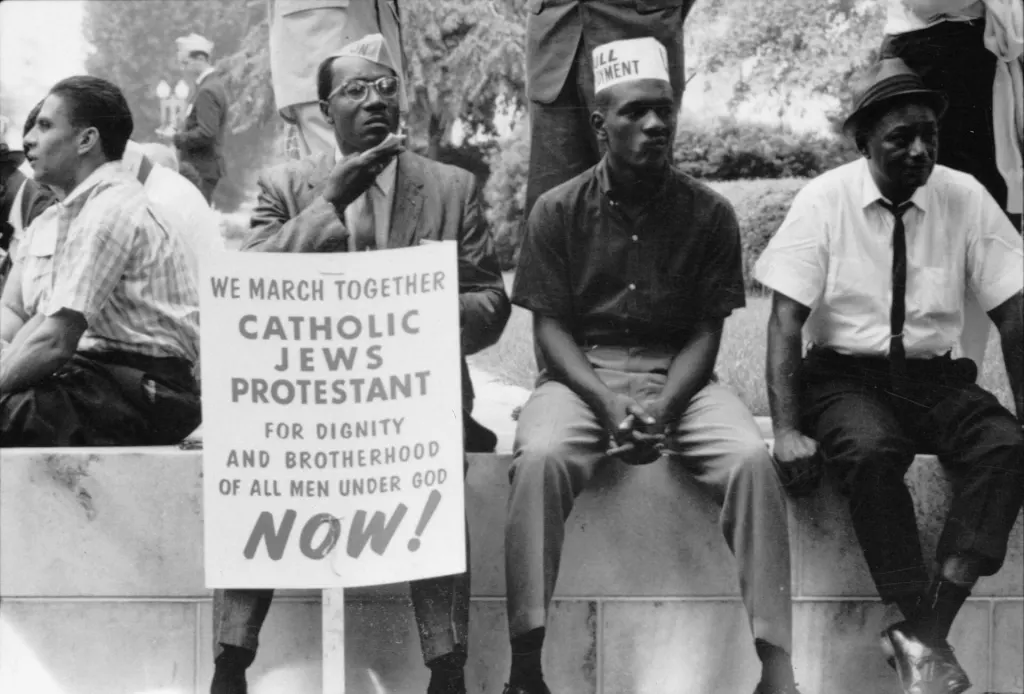
Douglass did not stop at metaphor. Straight afterward he said that those who resisted slave catchers deserved honor, and he named them: Margaret Garner; “Parker and his noble band of fifteen at Christiana”; Joseph Cinque of the Amistad; Madison Washington of the Creole. He closed the argument with Nat Turner’s revolt in Southampton, Virginia. The struggle he meant was concrete and dangerous, not a motivational slogan.
How the wording drifted
Versions circulating today often differ from the 1857 text in small ways. A widely reproduced excerpt, posted on a City University of New York teaching site, has:
- “deprecate agitation” where the pamphlet text has “depreciate agitation”
- “plowing the ground” for “plowing up the ground”
- “the roar of its mighty waters” for “the awful roar of its many waters”
- “It never has and it never will” for “It never did and it never will”
The transcription also prints the famous sentence without the comma most modern versions add. None of these changes shifts the meaning, but for a plaque, a speech or a classroom handout the 1857 wording is the one to use.
3 August or 4 August?
The sources also disagree by a day. The transcription’s headnote dates the speech Monday, 3 August 1857. The pamphlet’s own title, as catalogued by Dickinson College’s House Divided project, says it was “Delivered at Canandaigua, Aug, 4th”. Douglass himself left a clue. He said it was “just ten years and three days” since his earlier Canandaigua speech, and he counted the decade’s changes from “the first of August, 1847”. If that earlier meeting fell on the anniversary itself, ten years and three days later is 4 August 1857, which matches the printed title.
Douglass, who lived from 1817 to 1895, had escaped slavery, became a leader of the antislavery movement in the North, edited his own abolitionist newspaper and, after the Civil War, served the US government as a diplomat. The British emancipation he was celebrating in Canandaigua next reaches its anniversary on 1 August 2027, its 193rd.
Further reading
- Wikisource: West India Emancipation (1857), Frederick Douglass
- SHEC Resources for Teachers (CUNY): Frederick Douglass Declares There Is "No Progress Without Struggle"
Image: Parzeus, CC BY 4.0 via Wikimedia Commons
This article was produced with AI assistance and reviewed by our Editorial Desk. How we work.