Until the last day of 2022, the United States ran on two different feet. One was the ordinary foot on every ruler. The other, the U.S. survey foot, was a hair longer and was still used to map land across much of the country. Federal measurement scientists only declared it obsolete on January 1, 2023, a fact that has surprised plenty of readers on a popular Reddit community for things people just learned.
Two feet, almost the same length
The split goes back more than a century. Since 1893 the American foot has been legally defined in terms of the meter, using a ratio Congress set in 1866: one foot equals 1200/3937 of a meter. That works out to about 0.3048006 meters.
In 1959 the United States and several Commonwealth countries agreed on a tidier number. The new “international foot” became exactly 0.3048 meters, which settled a long-running mismatch between definitions used at home and abroad. That made the American foot about two parts per million shorter than before.
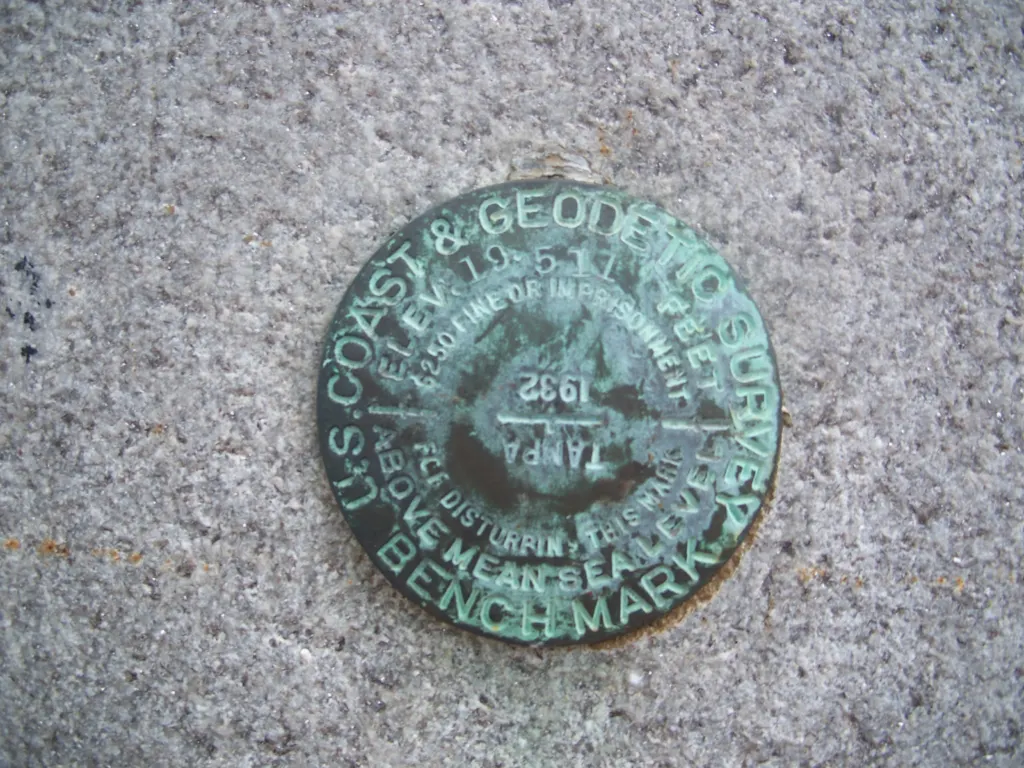
There was one exception. Surveyors doing geodetic work, which maps the shape of the Earth and the official coordinates of points on it, were allowed to keep the old value for the time being. To tell them apart, the old one became the “U.S. survey foot.” It was supposed to vanish once the national survey networks were readjusted. That readjustment was finished in 1986, yet the survey foot hung on for another 36 years.
Why a tiny gap caused real errors
Two parts per million sounds like nothing, and on a single house lot it is. Over a mile, the gap between the two feet is only about an eighth of an inch.
The trouble is that US state plane coordinate systems measure positions from an origin that can sit hundreds of miles away, so coordinates often run into hundreds of thousands of feet. At 500,000 feet, the difference between the two definitions grows to about one full foot. Mix the two units in one dataset and a boundary, pipe or bridge footing can land a foot from where the plan says it should be. The National Institute of Standards and Technology (NIST) said the overlap had “led to confusion and errors that continue to this day.”
How it was retired
NIST and NOAA’s National Geodetic Survey worked together to phase the survey foot out alongside a modernization of the National Spatial Reference System, the framework behind official US coordinates. Key dates:
- October 2019: a federal notice proposed deprecating the U.S. survey foot and invited public comment.
- December 31, 2022: the last day the survey foot was meant to be used.
- January 1, 2023: the survey foot became obsolete, replaced by the international foot of exactly 0.3048 meters for all applications except historic and legacy data.
The change rippled through other old units. Before it, the chain, rod, furlong, fathom, league and even the acre and acre-foot were defined only through the survey foot. Now they are tied to the international foot, which NIST says can simply be called the “foot.” The agency still says the preferred US unit of length is the meter.
The old unit is not entirely gone. Many states had written the survey foot into their own surveying laws: out of 50 states and six other jurisdictions, 40 specified it, six chose the international foot and ten said nothing. Existing coordinate systems will keep supporting it so old records still line up.
Unit mix-ups have caused bigger dramas than a misplaced fence. Badiyaa has told the story of the Air Canada jet that ran out of fuel over a pounds-for-kilograms error, and how French feet made Napoleon look short. For an early American surveyor, see Benjamin Banneker’s 1791 survey of Washington, D.C.
Further reading
Image: Ebyabe, CC BY 2.5 via Wikimedia Commons
This article was produced with AI assistance and reviewed by our Editorial Desk. How we work.