The largest known lump of rumanite, Romania’s rare dark amber, weighs 3,480 grams (about 7.7 pounds) and sits in the central collection of the Buzău County Museum in Romania. The story that keeps sending it back around US feeds is how it got there: it was used for decades as a doorstop in a house in Colți, a village of about 800 people in the Carpathian foothills, before anyone realized the brown rock was fossilized resin reported to be worth more than $1 million.
The museum itself states the headline fact plainly on its page for the Colți amber museum: it holds “the largest piece of rumanite in the world,” a nugget of 3,480 grams, on display at its headquarters in the city of Buzău. The doorstop detail comes from the wave of coverage in September 2024 that first carried the find abroad, and the piece has been resurfacing online ever since.
What makes rumanite different
Rumanite is a kind of amber found only in Romania, in the sandstone of the Buzău River system around Colți. It is known for deep red to brown tones, and the museum credits the geologist Gheorghe Munteanu-Murgoci with showing that, of the 162 amber shades known at the time, the Colți stone, unique for its black coloring, was the most valuable because of its rarity. Munteanu-Murgoci’s monograph on the deposits was the first higher doctoral thesis at the University of Bucharest, in 1903.
Most amber on the market comes from the Baltic coast, where about 90% of the world’s extractable supply is found. Ordinary amber runs from pale lemon yellow through orange and brown; red “cherry” amber, green and especially blue amber are the uncommon colors collectors chase. A 2000 study by chemists at Vassar College and Argonne National Laboratory tested 13 authentic rumanite specimens and concluded the resin is really succinite, the Baltic type, that was partly cooked by heat as the Oligocene Kliwa sandstone around it folded, which helps explain its darker palette.
Why a lump this big is unusual
Here is the scale, worked out by Badiyaa. The Colți museum’s own prize exhibits were long described as pieces weighing over 1.5 kilograms, so the doorstop nugget is more than twice the mass of what the amber museum used to call its biggest. Between the two world wars, systematic digging at Colți produced roughly 2,000 kilograms of amber in total; a single 3.48-kilogram stone equals about 0.17% of that entire interwar output in one piece. The mine closed in 1948, so nothing comparable is coming out of the ground.
The village museum behind the story
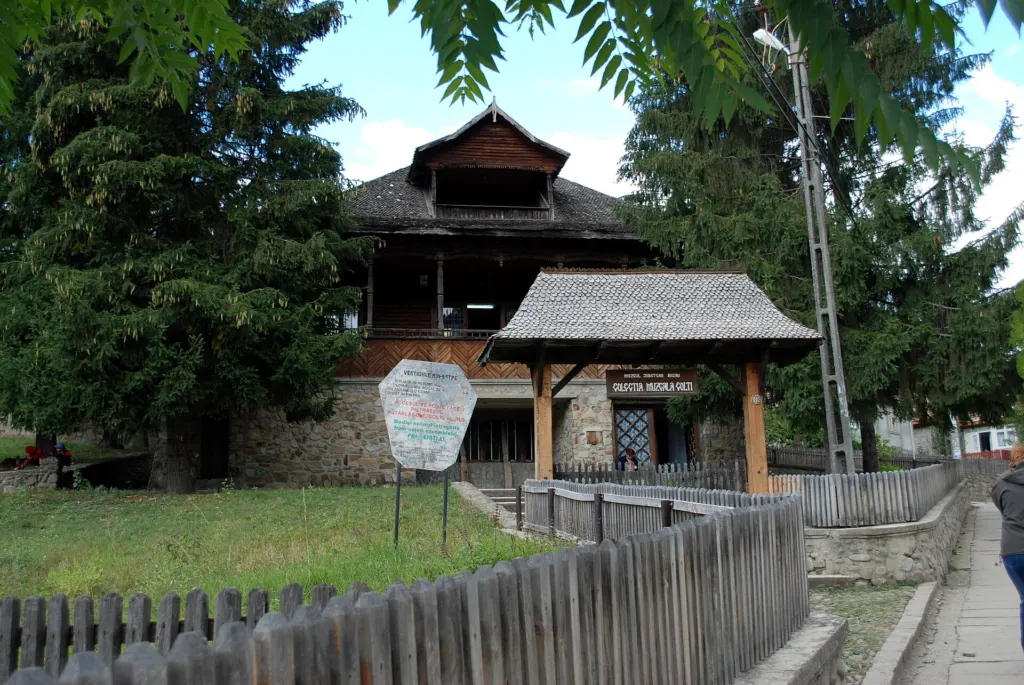
Colți is the only place in Romania where amber was ever mined, and it has the country’s only amber museum. The collection was first assembled from 1973, opened on June 14, 1980 and reopened in August 2020 after a renovation costing 100,000 euros. Upstairs, three rooms hold 266 objects: raw nuggets, rings, earrings, bead strings and the wooden lathe, hammers, pick and miners’ lamps once used to dig and polish the stone. Archive film from 1934 shows the old extraction methods.
Older exhibits include an earring holding a piece of amber with a 3-million-year-old ant inside it and a nugget that kept the shape of the tree it oozed from. Locals still wear amber as a good-luck charm.
How a doorstop gets authenticated
Telling real amber from the rock it resembles is routine for a museum lab. Amber is light, with a specific gravity of about 1.06 to 1.10, so it floats in strong salt water while stone sinks; it is soft, between 2 and 2.5 on the Mohs scale; and when rubbed it builds a static charge, the property that gave the world the word “electricity” from the Greek “elektron.” Infrared spectroscopy can then confirm the type of resin and even its relative age. Open references on rumanite and Colți give the basics; the museum’s record of the 3,480-gram nugget is the one fact that matters.
The Colți amber museum sells tickets online, and the record nugget is on view at Aleea Castanilor 1 in Buzău.
Further reading
- Wikipedia: Rumanite
- Wikipedia: Colți
- Wikipedia: Amber
- Stout, Beck & Anderson (2000), Identification of rumanite as thermally altered succinite
Image: Andrei Stroe, CC BY 3.0 via Wikimedia Commons
This article was produced with AI assistance and reviewed by our Editorial Desk. How we work.