Jodee Berry thought she had won a new Toyota. What waited for her in the parking lot of a Florida Hooters in May 2001 was a toy Yoda, the green Jedi master from Star Wars.
The mix-up was no accident of hearing. Berry, a waitress at the restaurant in Panama City Beach, had spent April 2001 selling beer in a contest that, by her account, promised a new Toyota to the winner. The manager then treated the prize as a pun.
How the contest worked
According to Berry’s lawsuit, as summarized in a 2003 law review article by Keith A. Rowley of the University of Nevada, Las Vegas law school, the waitress who sold the most beer at each participating location would go into a drawing for the car. As the month went on, she said, her manager told staff he could not say if the prize would be a Toyota sedan, pickup or van, only that the winner must pay the registration fees herself.
In early May she was told she had won. She was blindfolded and walked out to the parking lot. The blindfold came off in front of a Yoda doll. The manager laughed. She did not.
From punchline to court case
Berry sued Gulf Coast Wings Inc., the local franchisee that ran the restaurant, for breach of contract and fraud. The restaurant’s answer was that the whole thing had been a joke, tied to April Fool’s Day. The case, Berry v. Gulf Coast Wings Inc., eventually settled on terms favorable to Berry, according to the law review article. The terms were not part of its published summary.
The story drew far more attention than a small contract dispute usually does, and it ended up as a teaching case for law students.
Why lawyers still talk about it
Rowley’s article, titled “You Asked for It, You Got It … Toy Yoda,” used the case to test three ideas that sit at the heart of contract law. In plain terms:
- Was it obviously a joke? A promise made clearly in jest cannot be accepted. The question is whether a reasonable waitress hearing about a Toyota, a fee for registration and talk of trucks or vans would have taken it as one.
- Was it an offer at all? Even a serious-sounding statement has to amount to an offer that someone can accept by doing the work, here by selling the most beer.
- Did she give something in return? Contracts need consideration. The extra month of beer sales is the obvious candidate.
The detail about registration fees is what makes the case bite. A manager telling staff they would pay to register the vehicle makes the promise sound like an actual car, not a gag. Because the case settled, no court ever ruled on any of the three questions.
Star Wars still turns up in odd corners of the news, from Adam Driver saying the ship has sailed on his shelved Ben Solo film to George Lucas’s Presidio campus in San Francisco. And for drivers whose Toyota was real, Badiyaa explained how one Tundra owner got a free engine under Toyota’s V6 recall.
The case citation lives on in the 2003 Nevada Law Journal, volume 3, page 526.
Further reading
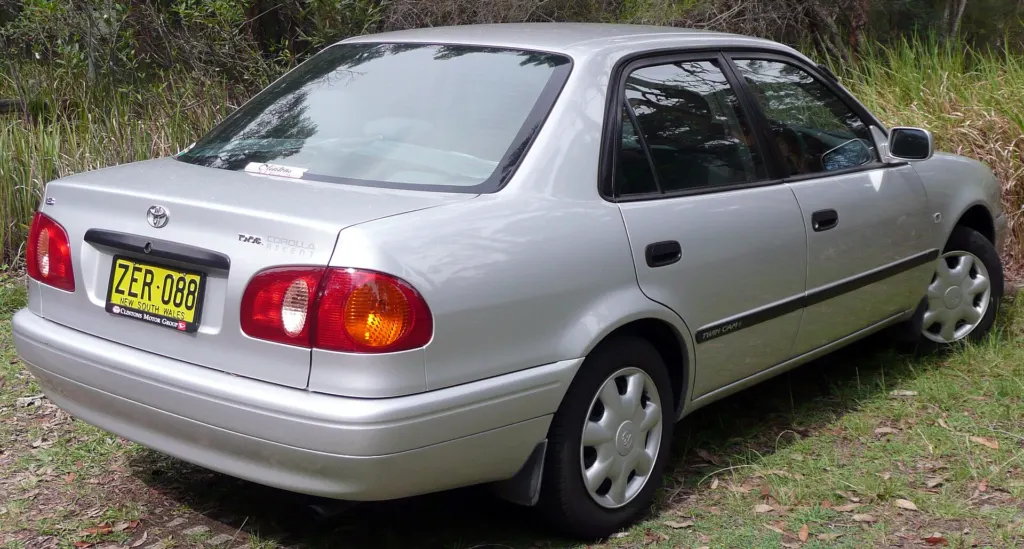
Illustrative image. Image: OSX, Public domain via Wikimedia Commons
This article was produced with AI assistance and reviewed by our Editorial Desk. How we work.