Charlotte Meyer pulled a folder out of a drawer of family keepsakes at her home in Zutphen, in the eastern Netherlands, and found 35 etchings by Rembrandt van Rijn that her grandfather had picked up for a few guilders apiece.
The find dates to 2020, when pandemic lockdowns sent Meyer sorting through heirlooms she had inherited from her mother. The story first surfaced in February this year, when the prints were announced for a museum show, and it is circulating again this week on art and science sites across Europe and the US.
“Nobody was interested in etchings back then. They were nothing special. For just a few guilders, my grandfather bought 35 different ones,” Meyer said in an interview with a Dutch regional broadcaster.
Bought between 1900 and 1920, forgotten for a century
Meyer’s grandfather assembled the set between roughly 1900 and 1920, a period when Rembrandt’s works on paper could still be had cheaply by a collector with a good eye. The folder then sat in family storage, kept in the dark, for most of a century. Some of the prints are only a few centimeters across. Experts who later examined them described the condition as exceptional.
Meyer was not sure the sheets were genuine and hesitated before calling in specialists from Amsterdam, partly because works attributed to Rembrandt so often turn out to be copies or fakes. When the experts spread the prints out at her home, the reaction was immediate.
“They said, ‘Charlotte, you have no idea what you’ve got!'” she recalled.
From a drawer to a museum wall
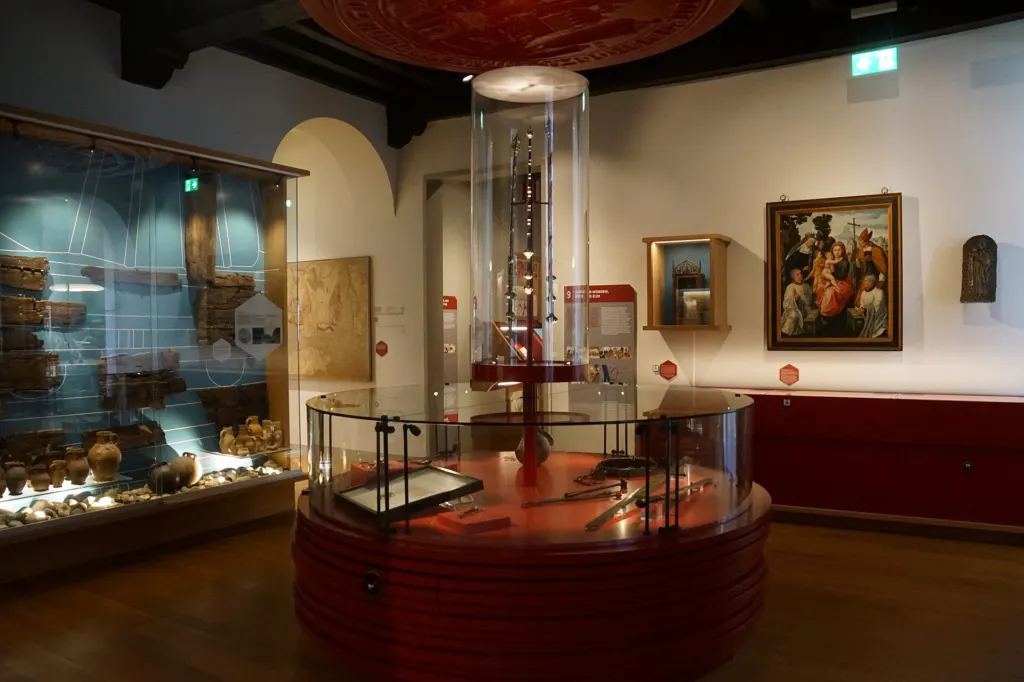
The 35 prints became the core of “Rembrandt: From Dark to Light,” an exhibition at the Stedelijk Museum Zutphen that ran from March 21 to June 14, 2026. More than 70 works went on show, including etchings by Rembrandt’s predecessors and followers from the museum’s own holdings and loans from the nearby Museum Henriette Polak, plus further pieces Meyer has bought since the discovery. The show included a hands-on display on how Rembrandt worked his copper plates and a scent station recreating the smells of 17th-century Amsterdam. Meyer led a guided tour on March 29 focused on symbolism in the etchings.
Among the prints on view were a 1630 self-portrait in a fur cap and “The Pancake Woman” from 1635. Meyer has since nearly doubled her collection with etchings by Rembrandt and his contemporaries.
What is a folder like this worth?
Meyer has declined to put a figure on the collection, and no auction house has valued it publicly. Two recent sales give a rough yardstick, though they involve far rarer sheets. A circa 1656 Rembrandt etched portrait of Arnout Tholinx sold at Christie’s in London in December 2025 for 3.1 million pounds, about 4.1 million dollars, the highest price ever paid at auction for an old master print. In February 2026 a chalk drawing, “Young Lion Resting,” fetched 17.9 million dollars at Sotheby’s in New York.
Most Rembrandt etchings are not in that league, because many impressions were pulled from each plate and later printings exist. Condition, rarity of the state and provenance drive the price, which is why a century in a dark folder matters: light and handling are what usually fade and wear a print. That is the Badiyaa calculation for why experts reacted as they did: 35 clean, early impressions bought before the market woke up are a very different proposition from 35 ordinary prints.
The Zutphen show has closed, but Meyer’s collection is still growing, and the folder that started it has already been on a museum wall for 86 days.
Image: Otter, CC BY-SA 4.0 via Wikimedia Commons
This article was produced with AI assistance and reviewed by our Editorial Desk. How we work.