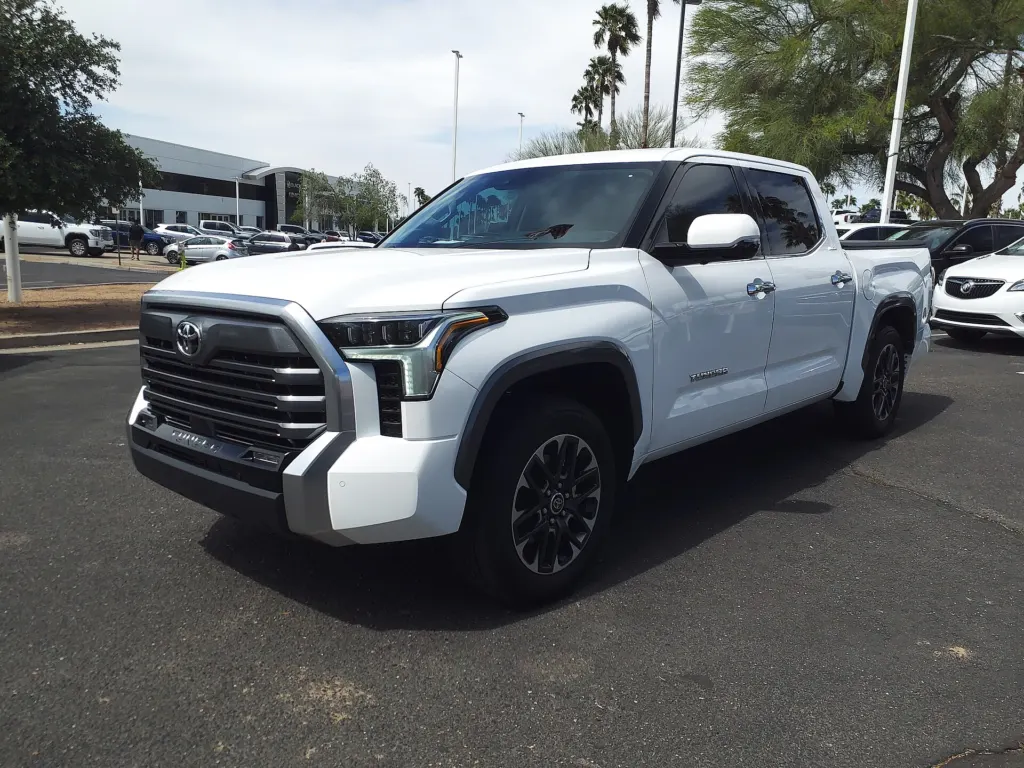
A 2023 Toyota Tundra owner in the US booked his pickup in for nothing more than a wheel alignment this month and walked out with a rental car and a free replacement engine on order. The non-hybrid truck had about 45,000 miles on it and had been delivered to him by an online used-car seller on October 1, yet a service advisor running its VIN found four open recalls, including Toyota’s campaign against debris inside the twin-turbo V6.
“Brought the truck in to get an alignment after the leveling kit, and 10 minutes later they walked in and told me they’re giving me a new motor,” the owner wrote in a public Facebook group for Tundra owners. He added that the dealer told him to expect a few weeks in the rental.
For anyone driving, or shopping for, a 2022 to 2024 Tundra, his post is a useful reminder that a recall can sit unrepaired through a change of ownership. The recall has grown twice since it was announced, and checking a specific truck takes about a minute.
What goes wrong inside the V35A
The engine at the center of the recall is the V35A, the 3.5-liter twin-turbo V6 that serves as the base gasoline engine in the current-generation Tundra. It also powers the Lexus LX600 and, in 2024 form, the Lexus GX. The hybrid i-FORCE MAX version of the Tundra is not part of the recall.
In its filings with the National Highway Traffic Safety Administration (NHTSA), Toyota says leftover machining debris from the factory can contaminate the engine and damage the main bearings that the crankshaft spins on. Toyota told regulators the bearing pressure in this design is high enough that, with debris stuck to the bearings and the engine working hard over time, they can fail. Owners might notice knocking, rough running or a no-start, and the worst case is a stall at speed, which NHTSA’s summary says raises the risk of a crash because the truck loses drive power.
Three filings so far
The problem has grown in stages. NHTSA’s records show three separate campaigns for the same debris defect:
- 24V381, filed May 30, 2024: 102,092 vehicles, 2022 and 2023 Tundra and Lexus LX600. Fix: a new engine assembly, free. Owner letters went out between December 17, 2024 and February 19, 2025.
- 25V767, filed November 6, 2025: 126,691 vehicles, made up of 113,079 Tundras from 2022 to 2024, 9,895 Lexus LX and 3,717 Lexus GX from 2024. Fix: dealers check the No. 1 main bearing with inspection software and drive data, then replace the engine if needed. Owner letters were mailed August 28, 2026.
- 26V320, filed May 20, 2026: 43,566 more 2024 Tundras, with the same inspect-then-replace approach.
Add the three together and the paperwork covers 102,092 + 126,691 + 43,566 = 272,349 trucks and SUVs, nearly 2.7 times the size of the first recall. The practical difference for owners is in the remedy: the 2024 campaign promised every truck a new engine, while the two later filings only guarantee an inspection, with a swap only when the bearing check calls for it.
How to check a specific truck
Start with the 17-character VIN, which NHTSA says sits on the lower left of the windshield and also appears on the registration card. Enter it in the free lookup at nhtsa.gov/recalls; a clean truck returns the message “0 unrepaired recalls associated with this VIN.” The agency warns that very new campaigns may not yet have every VIN loaded, so a clean result is worth repeating later. Toyota’s own codes for the Tundra campaigns are 24TA07 and 24TB07 for the first recall and 25TA14 and 25TB14 for the later two, and Toyota customer service can be reached at 1-800-331-4331.
Buyers of used trucks should run that check before signing. Federal rules bar dealers from selling new vehicles with unrepaired safety recalls, but no equivalent federal rule covers used ones, which is how a truck can reach a new owner with an engine recall still open. Asking for dealer paperwork that shows the engine was replaced or cleared protects the next sale too.
Expect a wait
Engine supply sets the pace. Another member of the same owners’ group said Toyota worked through the 2022 trucks before the 2023 ones, and that roughly a year passed between her husband’s engine swap and hers. NHTSA says recall repairs are free, and manufacturers must notify registered owners by first-class mail within 60 days of reporting a recall to the agency.
The newest group is still waiting on its fix: Toyota mailed only interim letters about the 43,566 trucks in the May 2026 filing on July 23, 2026, and has said a second letter will follow once the final remedy is ready.
Further reading
Image: HJUdall, CC0 via Wikimedia Commons
This article was produced with AI assistance and reviewed by our Editorial Desk. How we work.