In the early 1970s, freight trains rolled out of Ohio carrying brand-new Chevrolet Vegas parked on their noses, 30 to a rail car, each one standing upright like a book on a shelf. The system was called Vert-A-Pac, and it is drawing a fresh wave of disbelief this week after a post on Reddit’s r/todayilearned revived it.
The idea came from General Motors and the Southern Pacific railroad, which designed the special rail cars together. A standard tri-level auto rack of the era carried 18 cars lying flat. A Vert-A-Pac car took 30 Vegas, hung nose down from fold-out side panels that workers opened and closed with a forklift.
A car designed to travel upside down
The trick only worked because the Vega was engineered for it from the start. Each car had four removable cast-steel sockets on its underside so it could be locked into the rail car’s panels. Plastic spacers protected the engine and transmission mounts on the trip and were pulled out at unloading.
The harder problem was fluids. Vegas left the factory topped up and ready to drive to dealers, so nothing could leak while the car sat vertically for hundreds of miles. Engineers baffled the engine to stop oil running into the number one cylinder. The battery filler caps sat high on the rear edge of the case so acid could not spill. A tube drained fuel from the carburetor into the vapor canister, and the windshield washer bottle was mounted at a 45-degree angle.
Before any of it went into service, GM ran vibration tests and low-speed crash tests to make sure the cars would not shift or get damaged on the rails.
The math behind standing cars up
The Reddit post claims the method cut shipping costs by 40 percent. That figure is not in GM’s documented history of the car, but the rail-car numbers point the same way. If 18 cars fill a conventional rack and 30 fill a Vert-A-Pac, each Vega needs only 18/30, or 60 percent, of the rail space it used before. That is 40 percent less rail space per car, and 30 is two-thirds more than 18 cars per load.
Volume mattered. GM built the Lordstown Assembly plant near Youngstown, Ohio, specifically for the Vega and aimed for 100 cars an hour, one every 36 seconds, which was twice the normal rate. Production peaked at 2,400 Vegas a day, and total output reached 2,006,661, including 3,508 Cosworth models.
Why it ended
The Vega itself had a rough run. It won a 1971 Car of the Year award, then became known for rust, engine trouble and recalls, including one in 1972 that covered 526,000 cars. Production ended with the 1977 model year, and the Vert-A-Pac rail cars were retired along with it.
Commenters on the thread pointed out that modern auto racks load cars on their wheels through end doors, which is far quicker than opening every side panel. One called the idea real-life Tetris.
Clever freight engineering has a long history. Badiyaa has looked at how a steel runway kit turned into a 72-hour airfield in World War II and how the World War II submarine USS Cobia was towed up Lake Michigan to dry dock. For more car stories, see our Tech section.
The basic 1971 Vega cost $2,090. By the end of 1977, the same car sold for $3,249.
Further reading
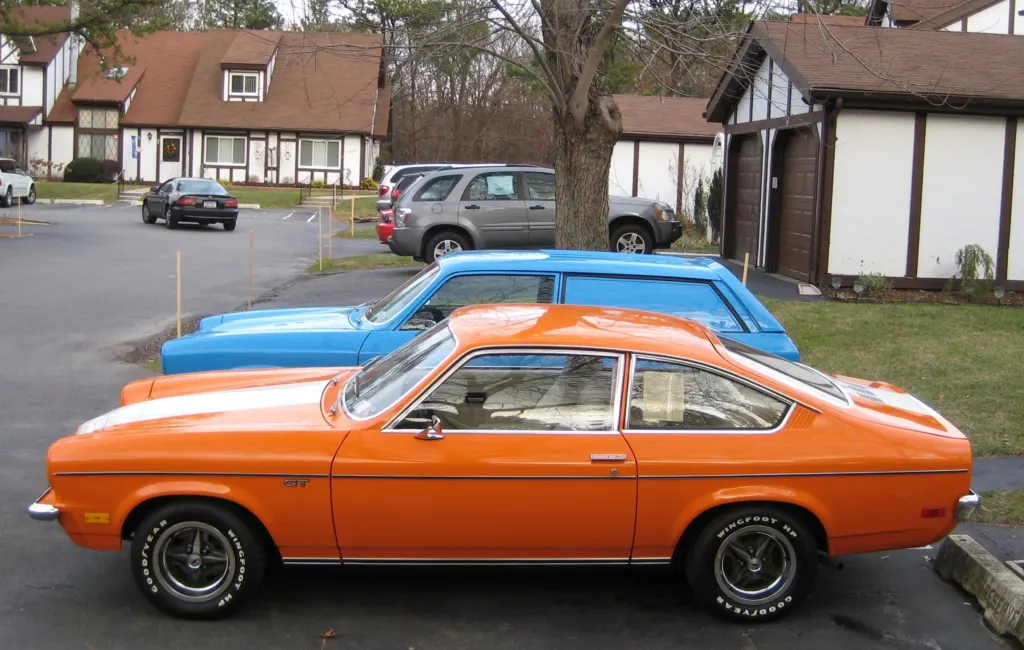
Image: Vegavairbob/Robert Spinello, CC BY-SA 3.0 via Wikimedia Commons
This article was produced with AI assistance and reviewed by our Editorial Desk. How we work.