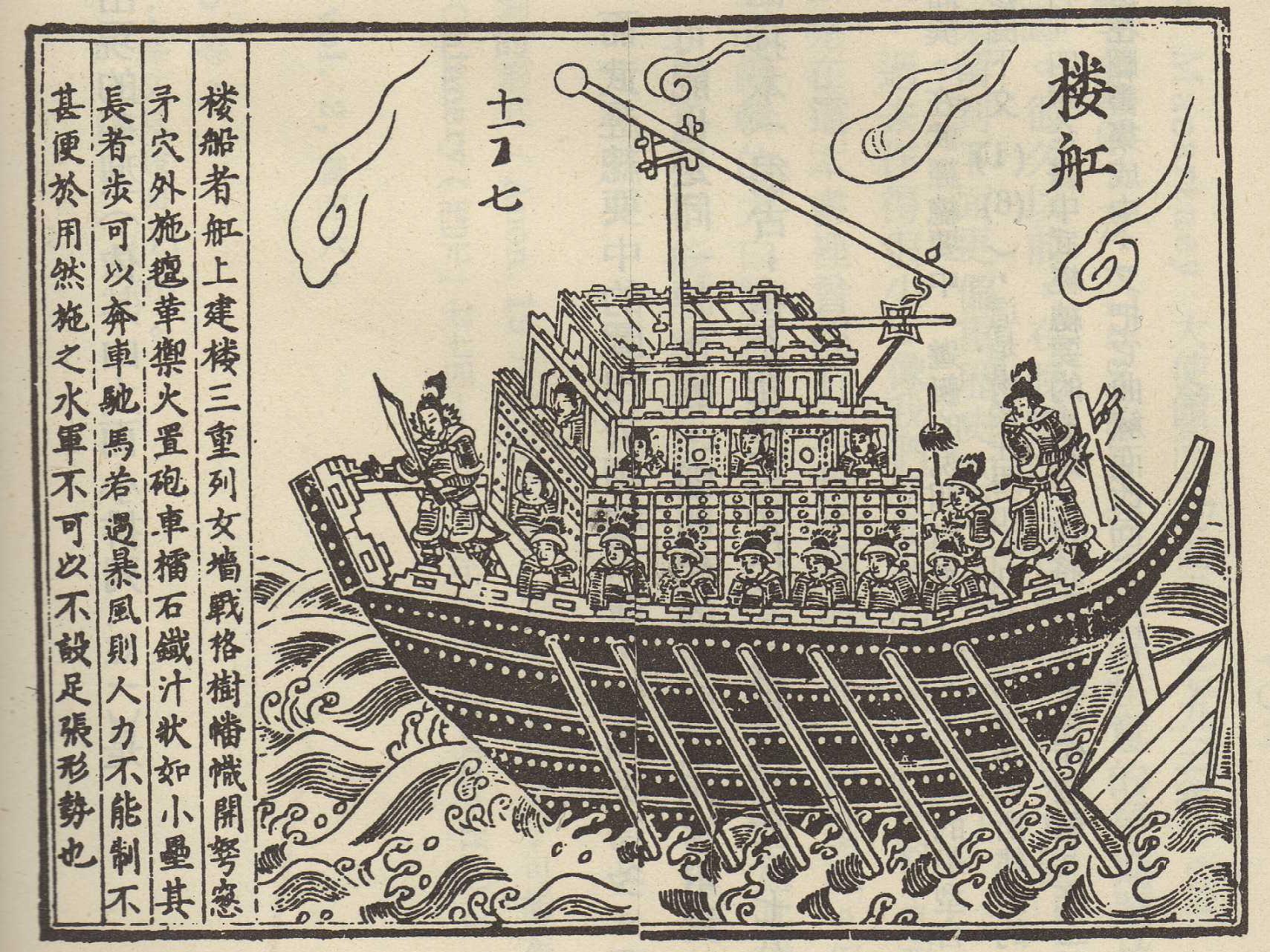
In the autumn of 1161 a Chinese emperor who reportedly listed his three life goals as "conquest, absolute power, and women" sent his fleets south, and twice they ran into gunpowder. The Southern Song navy beat the invading Jin dynasty first off Tang Island in the Yellow Sea, then on the Yangtze River at Caishi on November 26 and 27, the anniversary that falls this week.
The emperor with three desires
That boast belongs to Wanyan Liang, who seized the Jin throne in 1150 in a coup that killed his predecessor and cousin, Emperor Xizong, as his Wikipedia biography records. The quote comes from the History of Jin, as cited in Wikipedia's account of the Battle of Caishi, and it should be read as what a hostile official history said of him rather than a recorded speech. His taste for Song culture, down to drinking tea, earned him the Jurchen nickname "Han imitator."
Wanyan Liang wanted all of China. From 1159 he built ships, drafted soldiers and stockpiled weapons in Beijing for a war on the Southern Song, whose capital sat at Hangzhou.
Tangdao: 120 ships against 600
The first clash came off the coast near modern Qingdao. The Battle of Tangdao entry lists 120 Song warships and 3,000 troops under Li Bao against 600 Jin warships carrying tens of thousands of soldiers and sailors.
The Song surprised them. Li Bao's crews hurled huopao, incendiary gunpowder projectiles, and aimed fire arrows at the rigging. Historian Jung-pang Lo described the result: "The crimson sails of their ships made of oiled silk caught fire." The Jin lost about 300 warships.
Caishi: paddle wheels and thunderclap bombs
The main Jin army tried to cross the Yangtze at Caishi, south of modern Nanjing. There the Song deployed paddle-wheel warships driven by crews pedaling treadmills, with trebuchets on deck lobbing "thunderclap bombs" of gunpowder, lime and sulphur. When the casings broke, the lime made a blinding smoke.
The poet Yang Wanli left a vivid picture: "The men inside them paddled fast on the treadmills, and the ships glided forwards as though they were flying, yet no one was visible on board. The enemy thought that they were made of paper."
Numbers from the battle are wildly uneven. A Song source puts its own army at 18,000, while one document claims 400,000 to 600,000 Jin troops; historian Herbert Franke argues the bigger figure likely counted the whole invasion force before desertions. Either way, the Song held the river.
How fast the Song navy grew
These wins sat on decades of naval tinkering. Gunpowder bombs became mandatory on Song warships by 1129; paddle-wheel ships were built from 1132 to 1183, one design with up to eleven wheels per side; and iron armor plating followed in 1203. Joseph Needham summed up the expansion: the navy grew "from a total of 11 squadrons and 3,000 men" to "20 squadrons totalling 52,000 men" in a century.
Run the numbers and that is more than a seventeenfold jump in manpower. For other moments when explosives rewrote a battle, Badiyaa has covered the 1583 siege of Godesberg and the 1687 blast that wrecked the Parthenon, and the high seas of China return in the story of pirate queen Zheng Yi Sao.
Wanyan Liang never got his second crossing. After ordering his army over the Yangtze within three days on pain of death, he was killed by his own officers in a camp near the river on December 15, 1161, and a peace treaty in 1165 left the border on the Huai River where it had been.
Sources
- Battle of Caishi, Wikipedia, 2026
- Battle of Tangdao, Wikipedia, 2026
- Wanyan Liang, Wikipedia, 2026
Image: Zeng Gongliang, Public domain via Wikimedia Commons
This article was produced with AI assistance and reviewed by our Editorial Desk. How we work.