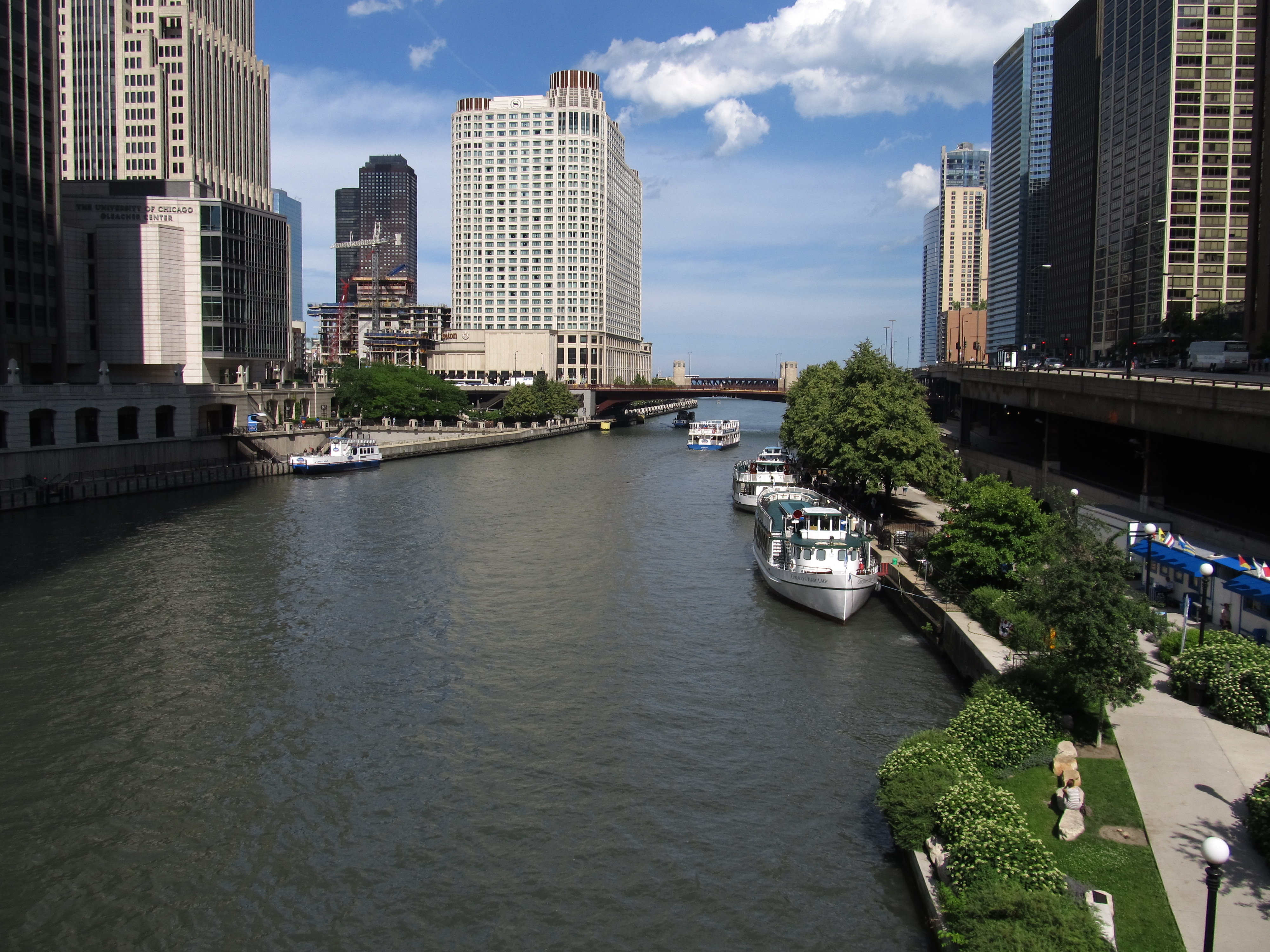
Chicago's first permanent non-Native settler was a Black trader named Jean Baptiste Point du Sable, and for most of the 1800s the city handed his credit to the man who ended up with his house. That trader, John Kinzie, was often named as the settlement's founder instead, while Point du Sable's role went barely recognized until the mid-20th century, according to his Wikipedia biography.
The details of the life he built at the mouth of the Chicago River make the oversight even stranger.
A frontier power couple
Almost nothing is on record about Point du Sable before the 1770s. He was of Black African and possibly European descent; his birthplace is unknown, though a long-repeated story puts it in Saint-Domingue, the French colony that became Haiti. A footnote by a British commandant at Fort Michilimackinac described him as handsome and well educated.
He married Kitihawa, a Potawatomi woman, in a Catholic ceremony at Cahokia in October 1788, though the couple had likely married earlier in a Native tradition. They had a son, Jean, and a daughter, Susanne.
The American Revolution caught up with him. In August 1779 British troops arrested him as a suspected Patriot sympathizer, then sent him to run a British officer's woodland estate on the St. Clair River in Michigan until 1784.
The estate on the river
The first written trace of him in Chicago is a traveler's journal entry from May 10, 1790. Visitors swapped their canoe for his pirogue and bought bread, flour and pork. Around 1794 another visitor called him a large man and a wealthy trader.
The scale of that wealth surfaced in 1913, when the bill of sale for his farm turned up in a Detroit archive. When he sold in 1800 for 6,000 livres, the paperwork listed two barns, a mill worked by horses, a dairy, a bakehouse, a smokehouse and a poultry house besides the main home. That home was a log cabin measuring 22 by 40 feet, fitted out with fine furniture and paintings, details repeated in the homesite's Wikipedia entry.
His granddaughter, Eulalie Pelletier, was born there in 1796, the first non-Native child born in what became the city. Yet a plaque at the site still credits John Kinzie's daughter, born in 1805, as the city's first white child, a wording that skips the earlier birth entirely.
How long the city took
Laid out in order, the recognition crawled:
- 1800: Point du Sable sells up and moves to St. Charles, Missouri, where he runs a ferry.
- 1818: he dies and is buried in an unmarked grave.
- 1933–34: after a campaign by Black Chicagoans, a replica of his cabin appears at the Century of Progress fair.
- 1976: his homesite becomes a National Historic Landmark.
- 2010: the Michigan Avenue Bridge becomes DuSable Bridge.
- 2021: Lake Shore Drive is renamed in his honor.
From the 1800 sale to the 1976 landmark listing is 176 years. The National Park Service's National Register record logs the site at 401 N. Michigan Ave. and dates its listing to May 11, 1976. A bronze bust by sculptor Erik Blome went up there in 2009.
The city's nickname has its own twisty backstory, which Badiyaa traced in how Chicago became the Windy City. For another frontier figure written back into the record, read about Bass Reeves, the marshal who may have inspired the Lone Ranger.
His grave remains a puzzle: a 2002 dig at the marked site in St. Charles found no burial there at all.
Sources
- Jean Baptiste Point du Sable, Wikipedia, 2026
- Jean Baptiste Point Du Sable Homesite, Wikipedia, 2026
- Du Sable, Jean Baptiste Point, Homesite (NRHP 76000690), National Park Service, National Register of Historic Places, 1976
Image: Ken Lund, CC BY-SA 2.0 via Wikimedia Commons
This article was produced with AI assistance and reviewed by our Editorial Desk. How we work.