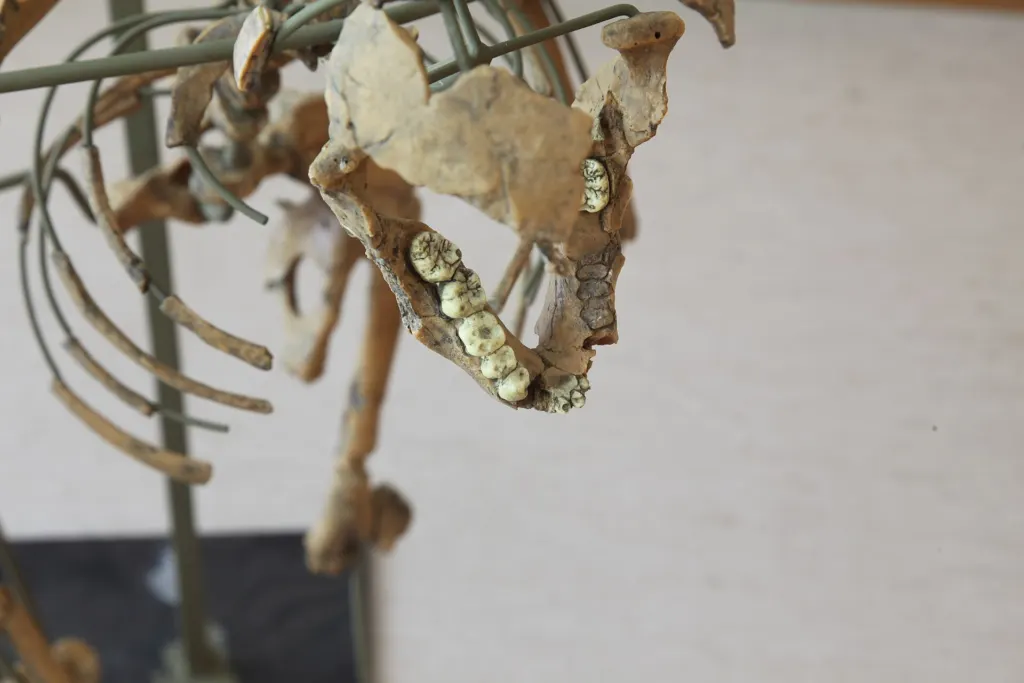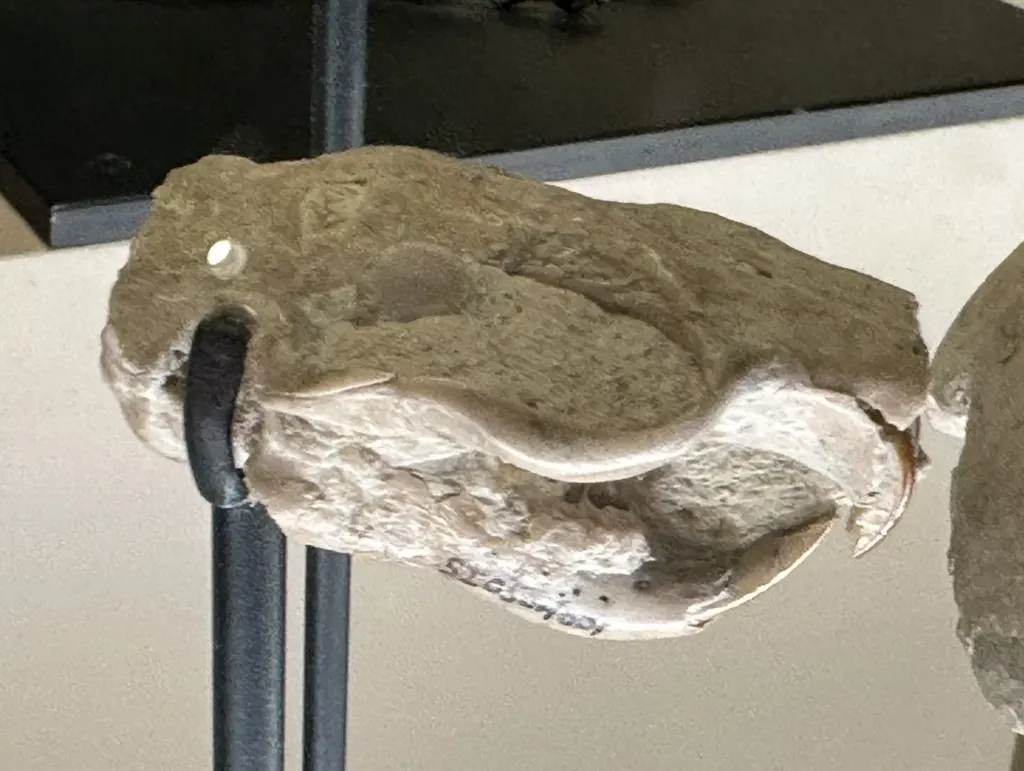
A whale that swam off Peru between 6.3 and 5.6 million years ago had a skull so lopsided that both of its bony nostrils sit entirely on the left side. The newly named species, Scaphokogia huachafo, shows the most extreme facial asymmetry ever measured in a whale or dolphin, and possibly in any mammal, according to a study published on November 9 in Communications Biology.
The animal was a pygmy sperm whale, a member of the family Kogiidae, and it measured roughly 2.7 meters (about 9 feet) from snout to tail. Its species name borrows a Peruvian Spanish word, huachafo, used for anything flashy, tacky or over the top.
How the team measured a crooked face
The skull was dug out of the desert outcrops of southern Peru in the mid-1990s and sat in the collections of the natural history museum in Lima for years. Lead author Aldo Benites-Palomino, who did the work as a doctoral student in paleontology at the University of Zurich and now teaches at Friedrich-Alexander-Universität Erlangen-Nürnberg, first saw it in 2015.
Fossil skulls that look twisted are often just crushed. The team ruled that out: the bone sutures are fully closed and the rest of the skull shows no fractures, disease or deformation. They then ran geometric morphometric and symmetry analyses, comparing the shape of the left and right halves of the face. In the words of the paper’s abstract, the species “is characterised by extreme craniofacial asymmetry that extends beyond the external bony nares to the surrounding cranial structures.”
That last point is what sets it apart. All toothed whales have somewhat lopsided skulls, because the fatty organs in the forehead that produce echolocation clicks are not centered. Living pygmy and dwarf sperm whales already rank among the most asymmetric, and Wikipedia’s overview of the Kogiidae family notes they use a bagpipe-like sound-producing structure in the head. In S. huachafo, the skew spread far beyond the blowhole area into the bones of the whole face.
A whale built to stare at the seafloor
The snout tells a second story. It is a thick, tube-shaped rostrum made of dense bone reinforced with ossified cartilage, which the authors describe as pachyostotic. That extra weight worked like ballast, pulling the front of the animal down. The snout also points downward at about 31 degrees relative to the rest of the skull, and reconstructions of the neck joint in close relatives suggest the head could tilt down by as much as 55 degrees.
Put together, the authors argue, this was a bottom feeder that cruised just above soft coastal sediment. Today’s sperm whales hunt squid in deep water. Because Scaphokogia lacked whiskers or special eyes, the team suspects it scanned the mud with its lopsided biosonar instead.
Why the Pisco Formation keeps producing odd whales
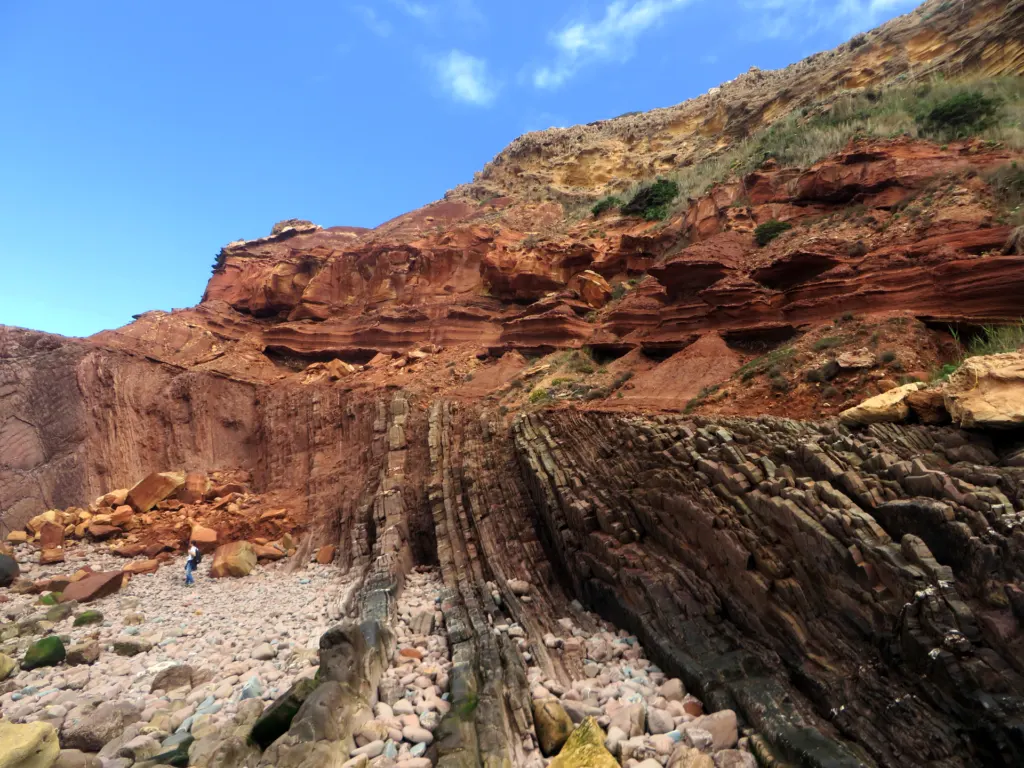
The fossil comes from the Pisco Formation, a stack of Late Miocene to Early Pliocene sediments on Peru’s southern coast that has yielded close to 500 fossil cetaceans. The same rocks gave the world the giant raptorial sperm whale Livyatan and the walrus-faced dolphin Odobenocetops. Badiyaa has covered other whale skull puzzles, including the narwhal and beluga hybrid skull from Greenland, and the living relatives of these animals still turn up surprises, such as the elusive Omura’s whale feeding off northwest Australia.
For scale, here is how the new species compares with its living cousins:
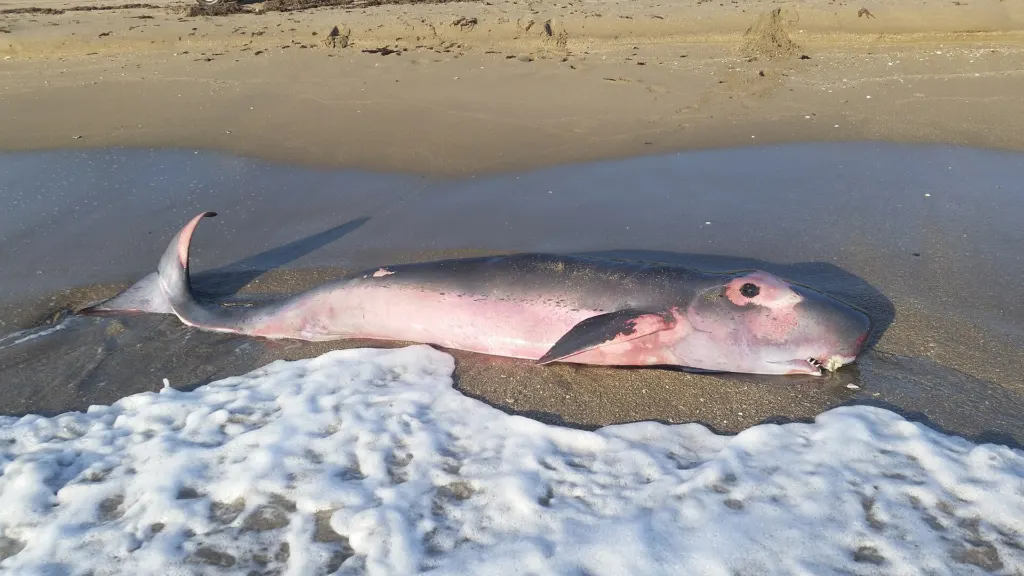
- Living pygmy sperm whales: short, blunt snouts, deep-diving squid hunters, already strongly asymmetric skulls.
- Scaphokogia huachafo: a long downturned tubular snout, both bony nostrils shoved to the left, and a shallow-water, seafloor feeding style.
Limits of the find
The species rests on a single skull, so the body length is an estimate and the neck flexibility comes from related Scaphokogia fossils rather than this specimen. The feeding behavior is inferred from anatomy; no stomach contents survive. The authors write that this seafloor niche vanished as ocean conditions shifted at the end of the Miocene. A 3D model of the skull has been deposited with the online repository MorphoMuseuM, so other researchers can check the measurements for themselves.
Sources
- “Extreme cranial asymmetry in extinct benthic feeding sperm whales”, Communications Biology (Benites-Palomino et al.), 2026
- “Kogiidae”, Wikipedia, 2026
- “Pisco Formation”, Wikipedia, 2026
Image: Inwater Research Group, CC BY-SA 4.0 via Wikimedia Commons
This article was produced with AI assistance and reviewed by our Editorial Desk. How we work.