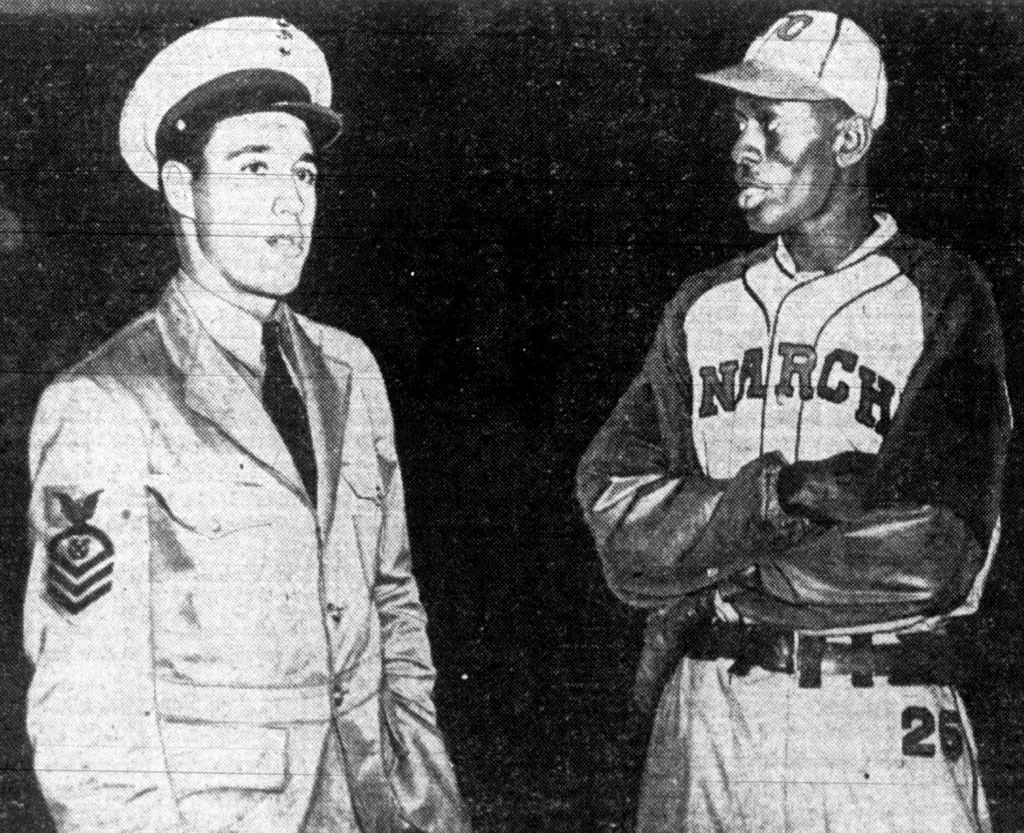
“Don’t look back— something might be gaining on you.” Satchel Paige’s most quoted line was not a clubhouse wisecrack caught by a passing reporter. It was the sixth and last item in a list of rules for staying young, printed under his name in a national magazine article on June 13, 1953, when he was pitching for the St. Louis Browns at an age most players had long since retired.
The six rules in full
Collections of Paige’s sayings give the complete list from the 1953 article, titled “How to Stay Young”:
Avoid fried meats which angry up the blood.
If your stomach disputes you, lie down and pacify it with cool thoughts.
Keep the juices flowing by jangling around gently as you move.
Go very light on the vices, such as carrying on in society— the social ramble ain’t restful.
Avoid running at all times.
And don’t look back— something might be gaining on you.
Read as a set, the rules are a comic routine about aging, written in the voice of a pitcher who had made his own birthday a running joke. The famous ending lands harder because of the five silly lines before it. Lifted out on its own, it reads like stoic advice. In context, it is the punchline.
Why age was the joke
Paige’s age was a genuine puzzle for most of his career. Birthdates reported for him ranged from 1899 to 1908, and Paige himself supplied many of them. The question was settled only in 1948, when Cleveland Indians owner Bill Veeck went to Mobile, Alabama, with Paige’s family and obtained his birth certificate from the county health department. It showed July 7, 1906.
That same summer, Paige signed with Cleveland on his 42nd birthday. When he took the mound on July 9, 1948, he became the oldest man ever to debut in the American or National League, at 42 years and two days. When reporters pressed him on his age, he answered with a question of his own: “If someone asked you how old you were and you didn’t know your age, how old would you think you were?”
He had spent the two decades before that in the Negro leagues and on barnstorming tours, from the Birmingham Black Barons in 1927 to the Kansas City Monarchs, while the major leagues stayed closed to Black players. Talk of naming him Rookie of the Year in 1948 struck the 20-year veteran as absurd, and he considered turning the award down if it came to him.
The rules, put to the test
Paige followed his own advice longer than anyone expected. Here is how the timeline runs against the 1953 list:
- 1948: debuts for Cleveland at 42 and wins the World Series that fall.
- 1952 and 1953: picked for the American League All-Star team with the Browns, the years around the published rules.
- September 25, 1965: at 59, pitches for the Kansas City Athletics against the Boston Red Sox, after owner Charles O. Finley signed him for one game. He waited in the bullpen in a rocking chair.
- 1971: becomes the first player elected to the Baseball Hall of Fame by its Negro Leagues Committee.
Count the gap: the man who wrote “avoid running at all times” pitched in the majors 12 years after the article ran, and his 1965 game made him the oldest player in major league history. His final professional game came on June 21, 1966, for the Peninsula Grays, two weeks short of his 60th birthday.
Other lines pinned on him
Paige was quotable enough that his sayings travel separately. His 1961 memoir, Maybe I’ll Pitch Forever, has his reply to the rookie talk: “22 years is a long time to be a rookie.” Badiyaa has traced other famous lines back to their first printing, including the ‘how you made them feel’ line credited to Maya Angelou and the ‘light of truth’ sentence attributed to Ida B. Wells.
Paige died in Kansas City on June 8, 1982, at 75. The list is 73 years old in 2026, and its last line is still the one people remember.
Further reading
Image: Unknown photographer, Public domain via Wikimedia Commons
This article was produced with AI assistance and reviewed by our Editorial Desk. How we work.