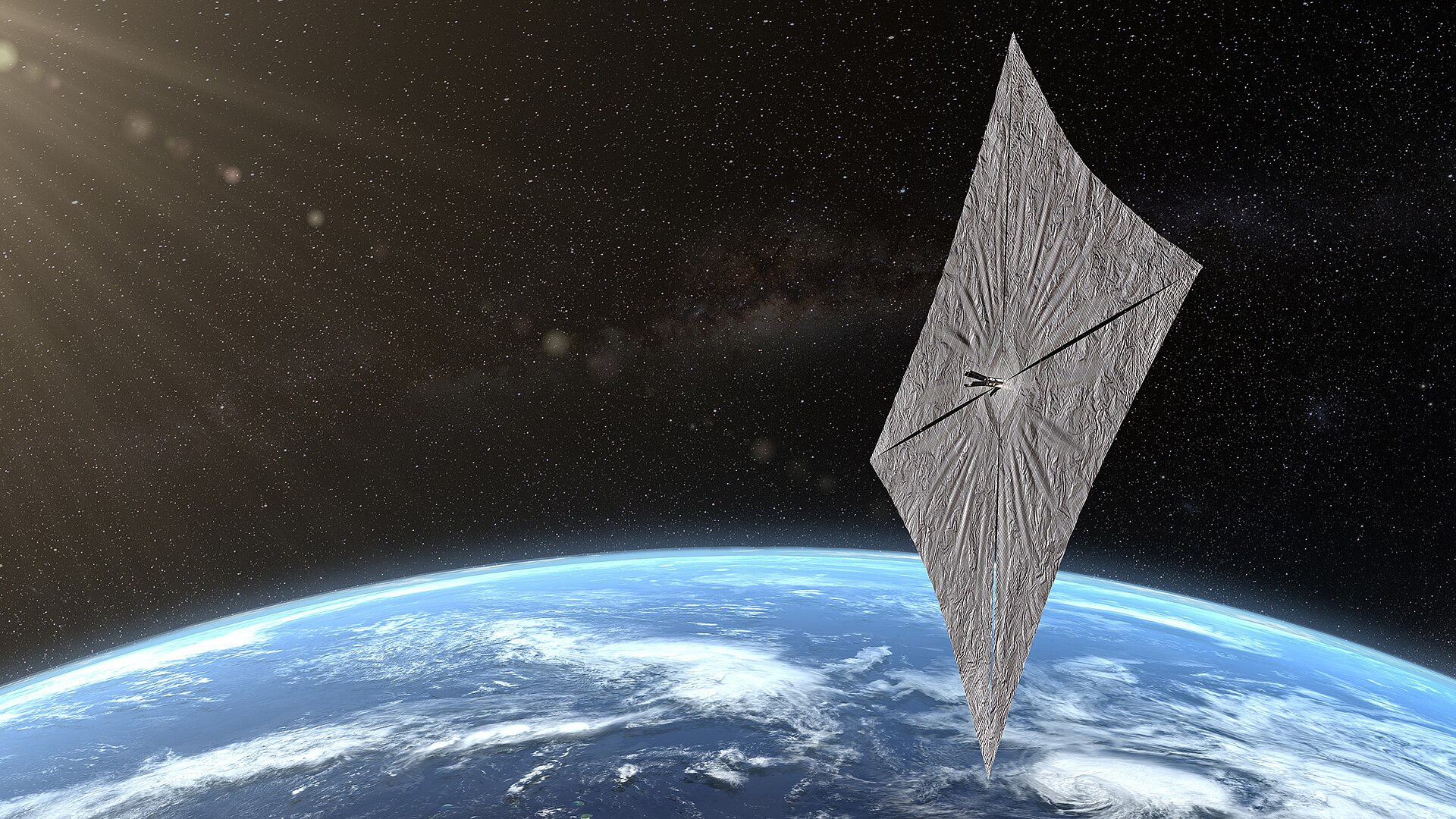
Push a light sail fast enough and some of the light that drives it starts holding it back. That is the strange result in a 2026 arXiv preprint titled Relativistic Lightsail Propulsion Dynamics, by Chao Shen and Jiaze Li, which models how laser-driven sails behave as they close in on light speed.
The craft still speeds up. But past a critical velocity, one of the three ways light pushes on the sail flips from thrust to drag.
Three pushes from one beam
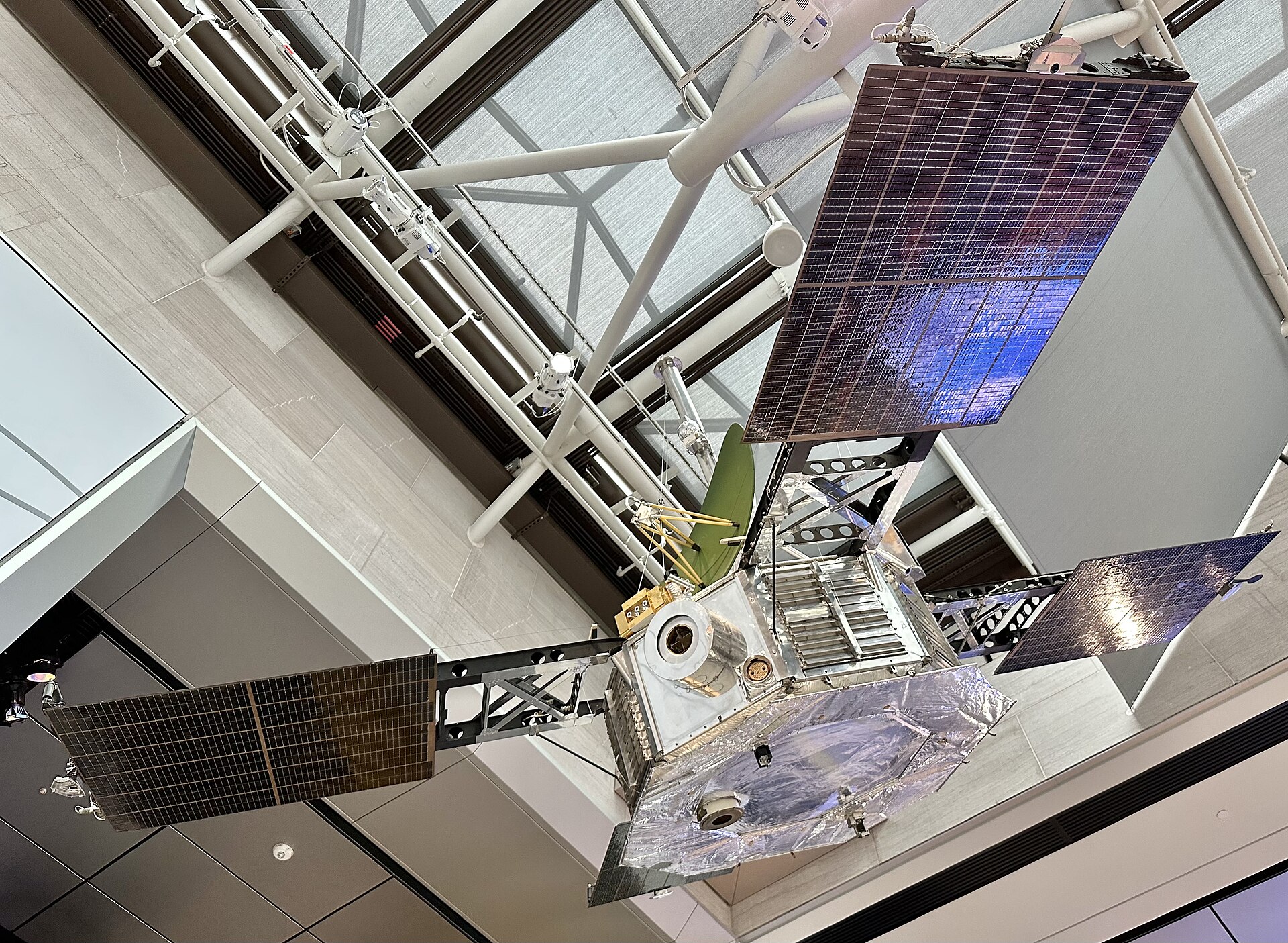
Light has no mass, yet it carries momentum. Shine enough of it on a thin reflective sheet in space and the sheet moves. Real sails already work: The Planetary Society's LightSail 2 spread a sail about the size of a boxing ring, 32 square meters, in 2019 and used sunlight to raise its orbit.
Shen and Li split the push into three parts:
- Incident light: the kick from photons striking the sail. The paper finds this is the strongest of the three.
- Specular reflection: the extra kick when photons bounce cleanly off, like a mirror. This comes second.
- Diffuse scattering: light the sail absorbs and sends back out in scattered directions. This is the weakest.
Where it goes wrong
As the sail races away from its laser, the beam reaching it is stretched by the Doppler effect, so every photon delivers less of a shove. The paper finds thrust from all three components falls as speed climbs.
The bigger twist is in the scattered light. Near light speed, motion bends the apparent direction of light, an effect called relativistic aberration, described on Wikipedia as light from a fast-moving source bunching up toward its direction of travel. Light the sail scatters gets thrown forward, and that forward-flung light kicks the sail backward. The preprint calls the turning point a critical velocity: beyond it, diffuse scattering becomes drag, while the total force from the beam keeps accelerating the craft.
The abstract does not give a single crossover speed, so the exact point where drag starts to dominate depends on the sail design.
What it means for Starshot-style missions
The best-known plan for a laser-pushed probe was Breakthrough Starshot, announced in 2016. It aimed to fling gram-scale chips toward Alpha Centauri, 4.34 light-years away, at 15% to 20% of light speed.
Run the numbers. At 20% of light speed, the trip takes about 4.34 divided by 0.2, or roughly 22 years. At 15%, about 29 years. The result points to diminishing returns: the model shows most of the speed is gained early, with efficiency falling as the sail goes faster.
Badiyaa has tracked how far our real probes have gone, including Voyager 1 reaching one light-day from Earth, and the Arecibo message still crossing space toward M13.
Limits
This is a theory paper and a preprint, posted on June 2, 2026, and not yet peer reviewed. It treats the sail as an idealized surface and models only the forces from light, so it does not include heating of the sail or collisions with gas and dust between the stars, both serious problems for any real mission.
Starshot itself has stalled. According to its Wikipedia entry, the project was put on hold indefinitely in September 2025 after spending about $4.5 million of a proposed $100 million.
Sources
- Relativistic Lightsail Propulsion Dynamics (arXiv:2606.04052), arXiv (Chao Shen, Jiaze Li), 2026
- LightSail, Wikipedia, 2026
- Relativistic aberration, Wikipedia, 2026
- Breakthrough Starshot, Wikipedia, 2026
Image: Josh Spradling / The Planetary Society, CC BY-SA 3.0 via Wikimedia Commons
This article was produced with AI assistance and reviewed by our Editorial Desk. How we work.