The right side of your brain moves your left hand because mammals inherited a nervous system that was already crossed long before the thinking cortex appeared, two University of Minnesota neuroscientists propose. Martin Wessendorf and Daniel Wang set out the idea in a hypothesis paper published on October 27 in Frontiers in Neuroanatomy.
The crossover is familiar from medicine: damage to one side of the brain usually affects movement or feeling on the opposite side of the body. What has never been settled is why. Their paper in Frontiers in Neuroanatomy notes that scientists going back at least to the Spanish anatomist Santiago Ramón y Cajal have speculated about what advantage the arrangement might bring, but that none appears to have traced its evolutionary history.
It starts with the eyes
Wessendorf and Wang began with vision, because it is crossed in every vertebrate on record. Signals from each half of the visual field travel to the opposite side of a midbrain hub called the optic tectum, known in mammals as the superior colliculus, where they are laid out as a map.
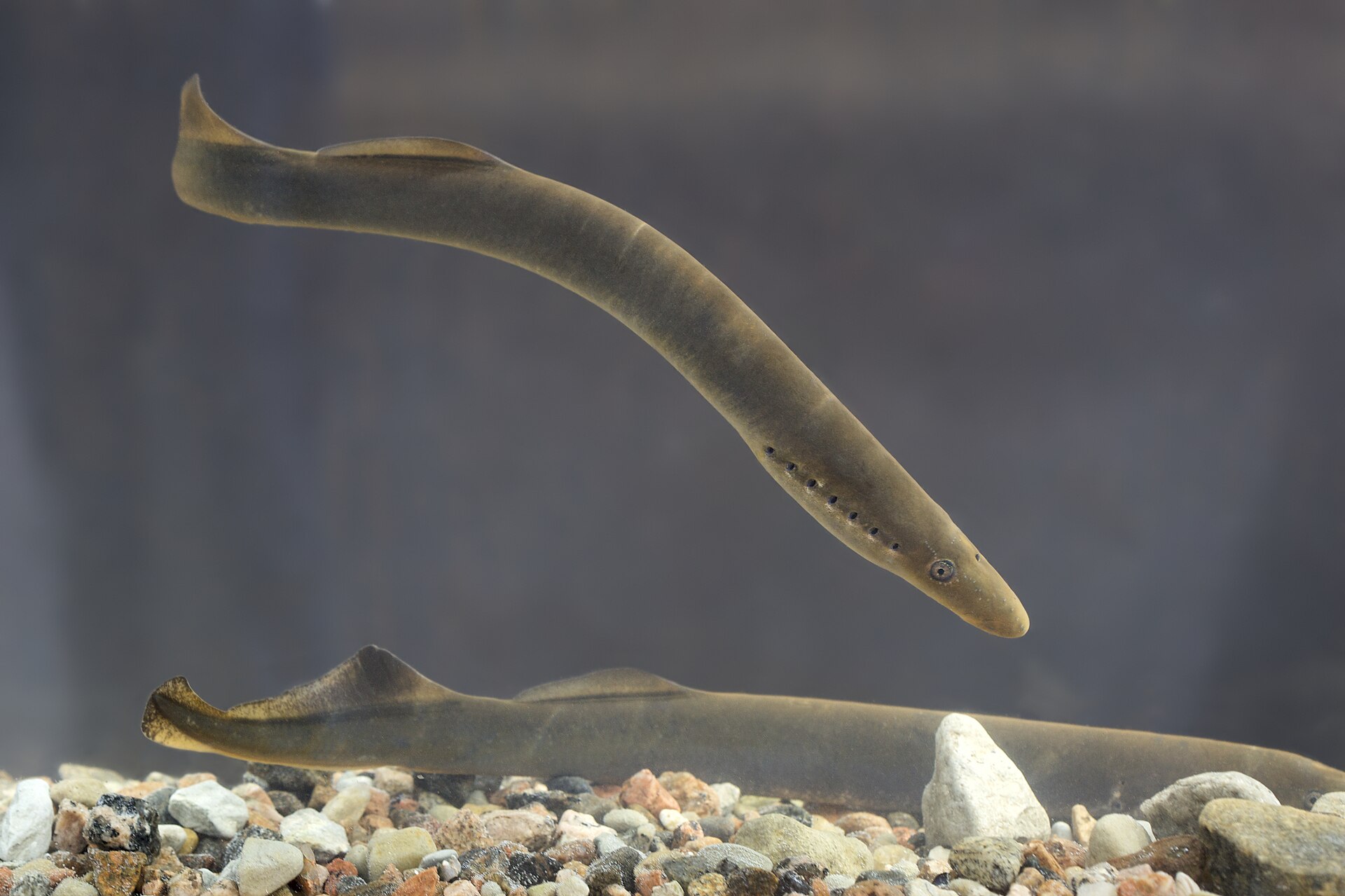
That crossing happens at the optic chiasm, the X-shaped junction where the optic nerves meet. Wikipedia's entry on the optic chiasm notes that it is found in all vertebrates, including lampreys and hagfishes, the jawless fish that are the most primitive living vertebrates. The paper cites studies finding chiasms in both groups as well as in sharks, bony fish, frogs, salamanders, turtles, snakes, birds and mammals, which suggests the last common ancestor of all vertebrates had one too.
Then everything else lined up behind it
The authors argue the other crossed circuits came later and followed the pattern vision had set:
- Touch and hearing: in most four-limbed animals, these signals also travel to the forebrain along crossed routes.
- Movement: the ancestors of reptiles, birds and mammals appear to have had crossed motor pathways, including the tectospinal and rubrospinal tracts.
- The cortex: the last common ancestor of mammals seems to have had a crossed neocortex already, complete with a corticospinal tract, the pathway humans rely on for fine finger control.
The key step comes last. By the time the mammalian neocortex evolved, the major sensory and motor circuits it had to plug into were already crossed. Matching that layout was the cheap option. In the paper's words, "By adapting contralateral organization itself, the neocortex was able to integrate directly with those circuits without the 'wiring cost' incurred by altering them."
An inheritance, not an advantage
The striking part of the idea is what it does not claim. It does not say that controlling the opposite side of the body is better. It says the crossing may simply be a leftover that each new layer of brain found easier to keep than to undo.
That sets it apart from older explanations. Wikipedia's overview of the contralateral brain lists Cajal's 1898 visual map theory, which held that the crossing corrects the image flipped by the eye's lens, along with twist theories proposing that the front of the early vertebrate embryo turns around. It also notes that none of these is generally accepted.
The paper opens on a lighter note, with a joke attributed to the left-handed former Red Sox pitcher Bill Lee: "If the right side of the brain controls the left side of the body, then only left-handed people are in their right minds." The authors use it to separate two ideas that are often confused: lateralization, where a skill like handedness sits mostly on one side, and the symmetric crossing that this paper is about.
The authors label their work a hypothesis, and they point to ways it could be tested, including tracking whether the corticospinal tract follows the path of early optic axons as the brain develops.
For more on how researchers study the brain, see Badiyaa's reports on a University of Melbourne EEG study of free and forced choices and a University of Iowa fMRI study of brain variability in autism.
Sources
- Wessendorf and Wang, hypothesis and theory article on contralateral brain evolution, Frontiers in Neuroanatomy, University of Minnesota, 2026
- Optic chiasm, Wikipedia, 2026
- Contralateral brain, Wikipedia, 2026
- Bill Lee (left-handed pitcher), Wikipedia, 2026
Image: Tiit Hunt, CC BY-SA 3.0 via Wikimedia Commons
This article was produced with AI assistance and reviewed by our Editorial Desk. How we work.