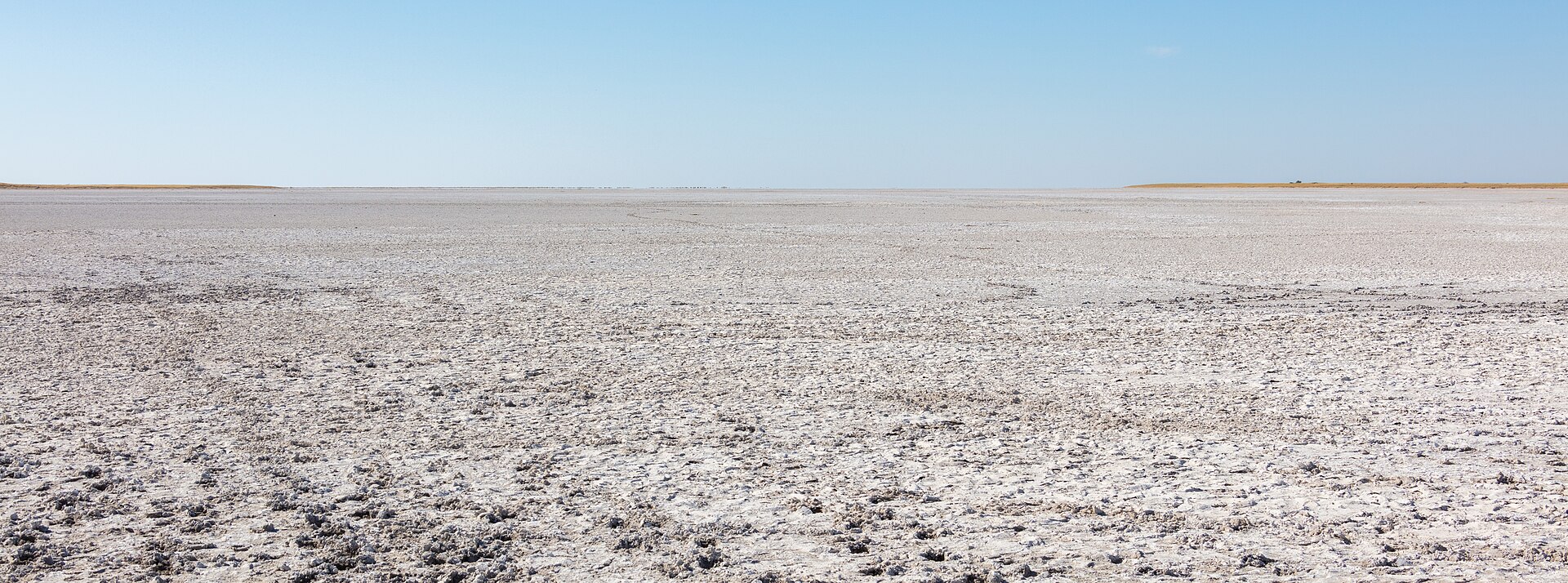
A rift that first cracked open in the Jurassic period, more than 145 million years ago, under eastern Botswana is moving again, according to a study of the Khurutshe Graben published on November 4 in the journal Tectonics. The fault zone sits inside the Kalahari Craton, one of the oldest and stiffest slabs of continent on Earth, a place where geologists normally do not expect the crust to pull apart.
The team, led by Boniface Kgosidintsi of the Botswana International University of Science and Technology with Folarin Kolawole of Columbia University's Lamont-Doherty Earth Observatory, describes fault scarps about 80 kilometers (50 miles) long and more than 100 meters (330 feet) high. Their paper in Tectonics, "Incipient Rifting of the Kalahari Craton", argues the faults first broke during the Jurassic and are now being reused.
Why a craton is the wrong place for a rift
Cratons are the ancient cores of continents. The Kalahari Craton spans large parts of South Africa, Botswana, Namibia and Zimbabwe and contains crust at least 3.2 billion years old, resting on a mantle keel about 250 kilometers thick, according to the Kalahari Craton entry on Wikipedia. Old, cold and thick rock like this tends to resist being stretched, which is why the paper's authors note that new rifts usually open in younger mountain belts and steer around cratons.
That is what makes the Khurutshe site unusual. Earthquakes in recent years drew attention to eastern Botswana, including the magnitude 6.5 event of April 3, 2017, the second-largest quake ever recorded in the country, as summarized in the 2017 Botswana earthquake article. Before that, the area was widely treated as tectonically quiet.
How the team read the buried history
Most of the evidence lies under sand. The researchers combined three kinds of observation:
- Electrical resistivity imaging: 2-D scans across the Khurutshe Fault separated a thin top layer of young Kalahari sand, about 80 meters of Jurassic "Karoo" basalts and sandstones, and the Precambrian bedrock below.
- Borehole records: thickness maps showed the Jurassic layers getting thicker toward the fault on its down-dropped side, a sign they piled up while the fault was moving.
- Trenches: digs across the fault exposed hard-cemented Karoo sandstone with polished, scratched slip surfaces altered by calcite.
Put together, the authors conclude the rift opened during the Karoo period, went through a phase of faulting and then volcanic activity, and finally went dormant. They suggest it formed where it did because an old suture inside the craton left a built-in weak line.
The link to Africa's great rift
The study ties the reawakening to the far end of a much bigger system. The Khurutshe faults, it says, sit at the tip of the Southwestern Rift, a branch of the Cenozoic African rift network. Further north, the East African Rift is slowly splitting the African plate into the Somali and Nubian plates at 8 to 9 millimeters a year, a process that began 22 to 25 million years ago.
In practical terms, the new work suggests that when the stress driving that rift system reaches southern Africa, it does not have to break fresh rock. It can reopen a scar that was already there. That helps explain why a craton that should be among the most stable places on the planet hosts long, tall fault scarps and modern earthquakes.
A timeline of the Khurutshe Graben
- Over 3.2 billion years ago: the oldest crust of the Kalahari Craton forms.
- Jurassic period: Karoo-age faulting opens the rift and sediments pile up against the fault, followed by volcanism and dormancy.
- 22 to 25 million years ago: the East African Rift begins to develop to the north.
- 2017: a magnitude 6.5 earthquake strikes Botswana's Central District.
- November 2026: the Tectonics study identifies the Khurutshe Graben as a reactivated rift.
Badiyaa has followed the region's deep past before, including the new 3-million-year date for South Africa's Taung Child fossil and the 1974 discovery of Lucy in Ethiopia's rift country, where shifting faults helped bury and preserve early human relatives.
Sources
- Incipient Rifting of the Kalahari Craton (Kgosidintsi et al.), Tectonics (American Geophysical Union), 2026
- Kalahari Craton, Wikipedia, 2026
- 2017 Botswana earthquake, Wikipedia, 2026
- East African Rift, Wikipedia, 2026
Image: Diego Delso, CC BY-SA 4.0 via Wikimedia Commons
This article was produced with AI assistance and reviewed by our Editorial Desk. How we work.