A team led by Keiya Hirashima at Japan's RIKEN research institute has built the first computer model of the Milky Way that follows more than 100 billion stars one by one. The trick was letting an artificial intelligence model handle the messiest part of galaxy physics, exploding stars, so that the rest of the simulation could keep up.
According to RIKEN's announcement of the simulation, the model tracks 100 times more individual stars than earlier state-of-the-art efforts and runs more than 100 times faster. The work was presented at SC '25, the big annual supercomputing conference, held in St. Louis, in a paper titled "The First Star-by-star N-body/Hydrodynamics Simulation of Our Galaxy Coupling with a Surrogate Model".
Why star-by-star is so hard
A galaxy model has to juggle gravity, flowing gas, supernova blasts and the creation of new elements, all on wildly different scales of space and time. Until now, the best simulations topped out at about a billion suns' worth of mass. That forced modelers to lump stars into "particles" of roughly 100 suns each, so the fate of any single star was averaged away.
The bottleneck is the time step. To catch fast events like a supernova, the model has to take very short steps, and short steps are expensive. RIKEN says the best conventional code would need 315 hours of computing for every million years of galaxy history if it tried to resolve every star.
What the AI shortcut saves
Hirashima's group trained a deep-learning "surrogate" on detailed simulations of a single supernova. It learned to predict how the surrounding gas spreads out over the 100,000 years after the blast, so the main simulation no longer has to compute those details itself. The team checked the results against large test runs on RIKEN's Fugaku supercomputer and the University of Tokyo's Miyabi system.
The speed-up is easiest to see side by side. Badiyaa worked the numbers from RIKEN's figures:
- Old method: 315 hours per million simulated years. A billion years would take 315,000 hours, or roughly 36 years.
- New method: 2.78 hours per million simulated years. A billion years takes about 2,780 hours, or roughly 115 days.
- Ratio: 315 divided by 2.78 is about 113, consistent with RIKEN's "more than 100 times faster."
The 10,000-year run in the headline result is a tiny slice of a galaxy that is billions of years old, but it shows the method can keep every star in play at full Milky Way scale.
The machine behind it
Fugaku, at the RIKEN Center for Computational Science in Kobe, was the world's fastest supercomputer from June 2020 until 2022, when it was overtaken by Frontier, according to the Fugaku entry on Wikipedia. RIKEN's headline for the project credits the use of 7 million CPU cores.
The payoff goes beyond astronomy. RIKEN says the same approach could help weather, ocean and climate models that must connect tiny processes to huge ones.
"I believe that integrating AI with high-performance computing marks a fundamental shift in how we tackle multi-scale, multi-physics problems across the computational sciences," Hirashima said in the RIKEN release.
For more on modeling our galaxy, see Badiyaa's reports on Durham simulations that put the Milky Way's mass back near a trillion suns and the Lumina simulation of the universe's first 2 billion years.
Sources
- Press release on the 100-billion-star Milky Way simulation, RIKEN, 2025
- Hirashima et al., star-by-star galaxy simulation with a supernova surrogate model, SC '25 Proceedings, ACM, 2025
- Fugaku (supercomputer), Wikipedia, 2026
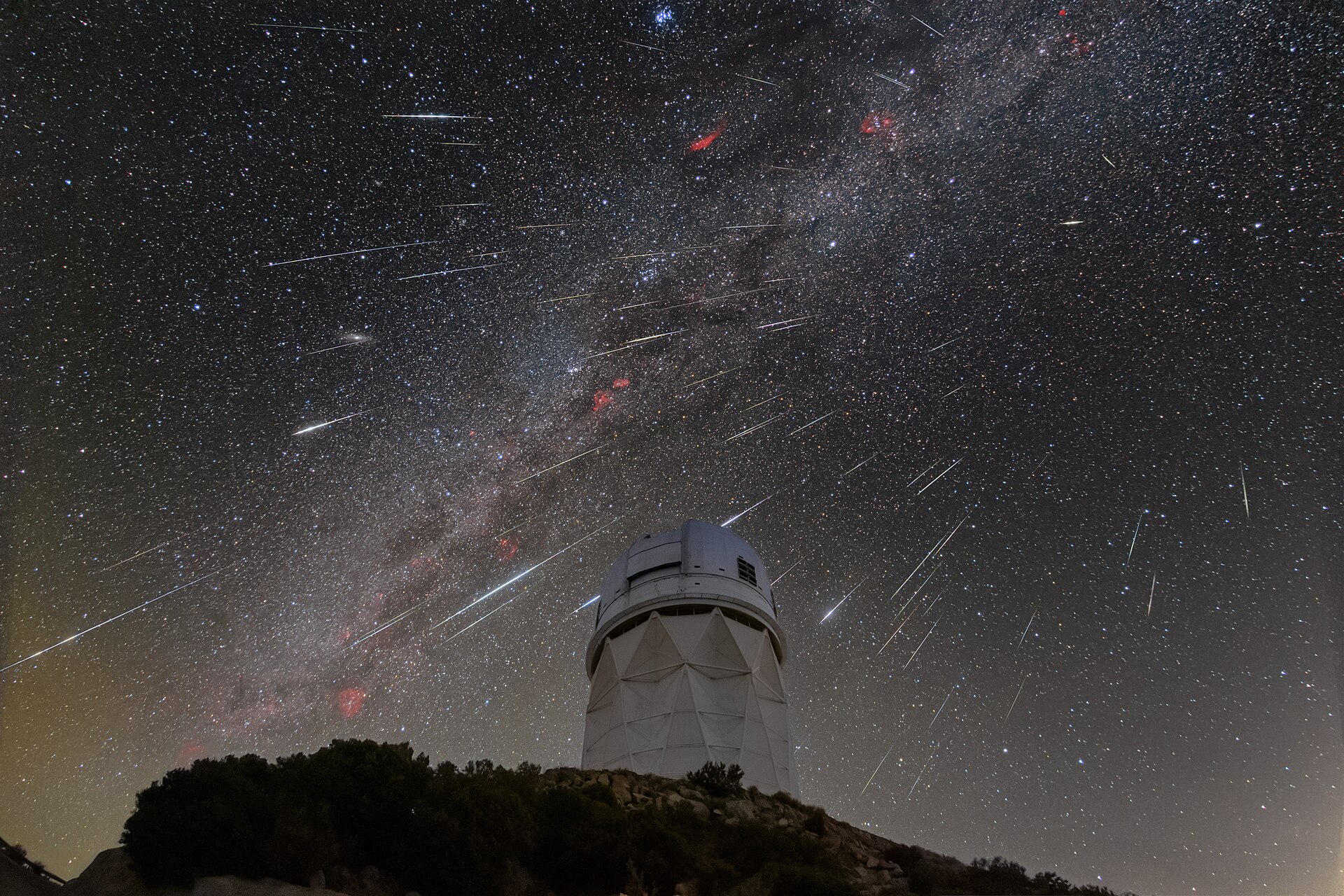
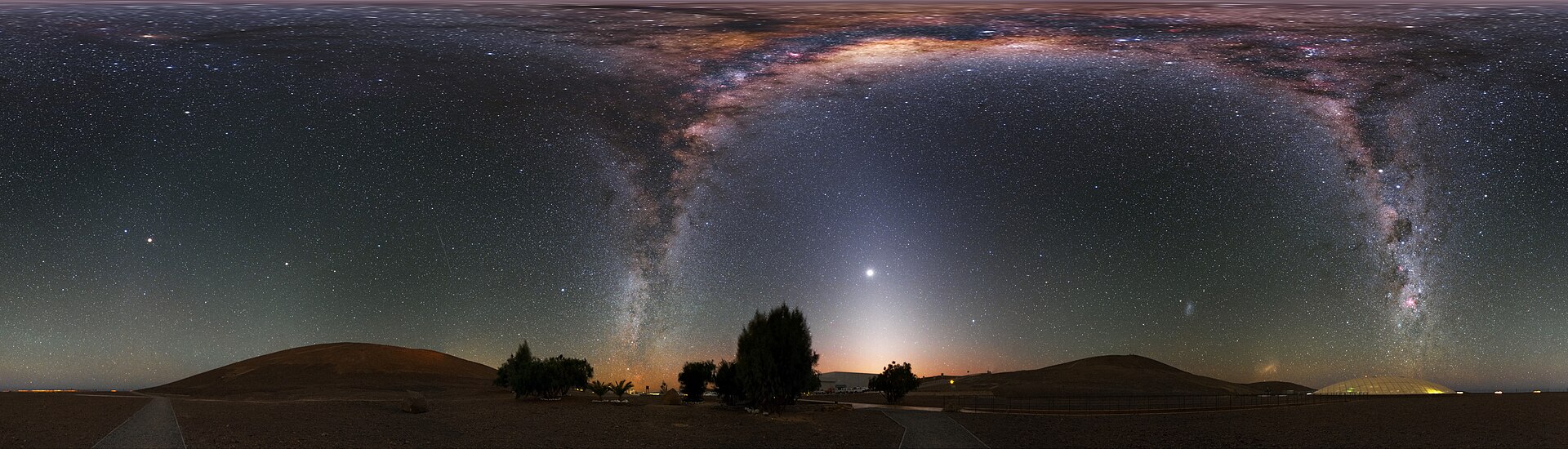
Image: Y. Beletsky (LCO)/ESO, CC BY 4.0 via Wikimedia Commons
This article was produced with AI assistance and reviewed by our Editorial Desk. How we work.