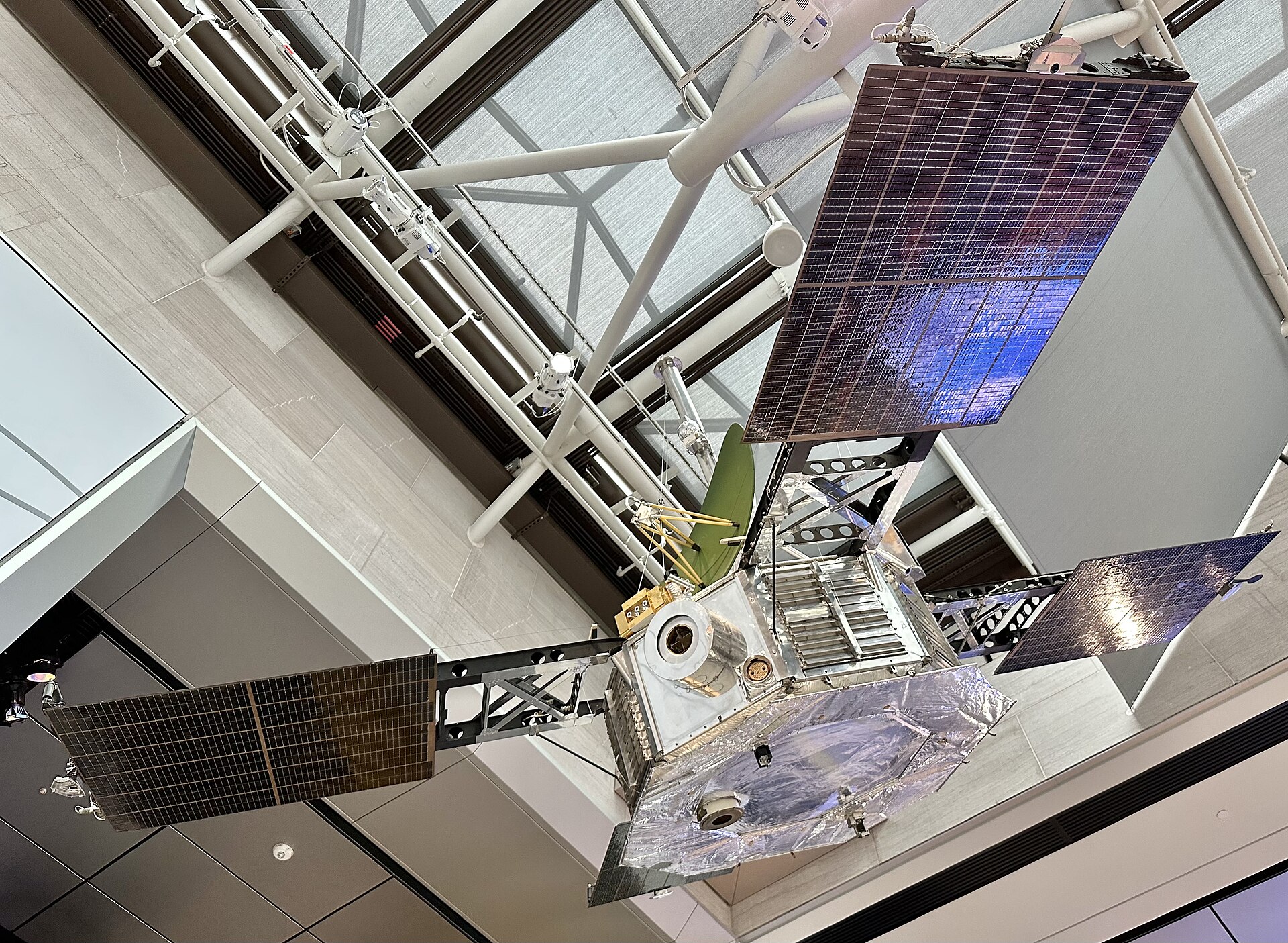
Sixty-two years ago this Saturday, on November 28, 1964, an Atlas-Agena rocket lifted a 575-pound NASA probe off Cape Canaveral and pointed it at Mars. Seven and a half months later, Mariner 4 sent home the first close-up pictures of another planet, and they showed craters, not canals.
The mission is listed on NASA's Mariner 4 mission page as the first successful trip to Mars. Its grainy black-and-white frames ended long-running hopes of finding a living civilization there and opened the age of Mars orbiters, landers and rovers.
A second chance
Mariner 4 was the backup. Its twin, Mariner 3, launched on November 5, 1964, but its protective nose shroud never came off, so its solar panels could not open and it drifted away uselessly into a solar orbit. Engineers built a new all-metal shroud in a matter of weeks, and Mariner 4 got away cleanly 23 days after its sibling.
Finding its way was a puzzle of its own. According to Wikipedia's Mariner 4 article, it was the first space probe to steer by a star, Canopus, and its tracker locked onto several wrong stars before it found the right one.
The flyby, by the numbers
- Closest approach: 6,118 miles (9,846 kilometers) above Mars at 01:00:57 UT on July 15, 1965, which was the evening of July 14 in the eastern US.
- Pictures: 21 full frames plus part of a 22nd, covering about 1% of the planet's surface.
- Data rate: 8⅓ bits per second, so each picture took about six hours to send.
- Total haul: 5.2 million bits for the whole mission, as logged in NASA's NSSDCA master catalog entry.
- Cost: an estimated $83.2 million.
Do the math on that haul: 5.2 million bits is about 650,000 bytes, under one megabyte for the entire mission. At 8⅓ bits per second, sending all of it in one stream would take roughly 173 hours, more than a week of nonstop transmission.
The first image was drawn by hand
The team could not wait for computers to process the first frame. NASA's page tells how they printed the raw numbers on strips of paper and colored them in with pastels, light where the numbers were high and dark where they were low. NASA describes the colored strips as artwork, and as the earliest digital picture ever sent from space.
What it found
The pictures showed an old, Moon-like surface full of craters. A radio experiment, in which Mariner 4 dipped behind Mars so its signal passed through the air there, revealed an atmosphere far thinner than expected, with surface pressure of only 4.1 to 7.0 millibars. NASA records daytime temperatures of about minus 148 degrees Fahrenheit and no magnetic field strong enough to measure.
That thin air had a practical lesson: any future lander would need rockets as well as parachutes to slow down.
When the images went public at the White House on July 29, 1965, President Lyndon Johnson said, "This advance for mankind is awe-inspiring," according to NASA's mission page.
A timeline of Mariner 4
From launch on November 28, 1964, to closest approach on July 15, 1965, the trip took 229 days. NASA lost regular contact on October 1, 1965, at about 192 million miles from Earth, regained it in 1966 and used the probe for tests in late 1967 before communications ended that December.
Mars exploration has come a long way since. Badiyaa covered Perseverance confirming organic carbon in ancient Mars rocks and NASA's twin ESCAPADE probes slingshotting past Earth toward Mars.
The anniversary falls on Saturday, November 28, 2026, the 62nd since launch.
Sources
- Mariner 4 mission page, NASA, 2026
- Mariner 4 (1964-077A), NASA Space Science Data Coordinated Archive, 2026
- Mariner 4, Wikipedia, 2026
Image: jurvetson, CC BY 2.0 via Wikimedia Commons
This article was produced with AI assistance and reviewed by our Editorial Desk. How we work.