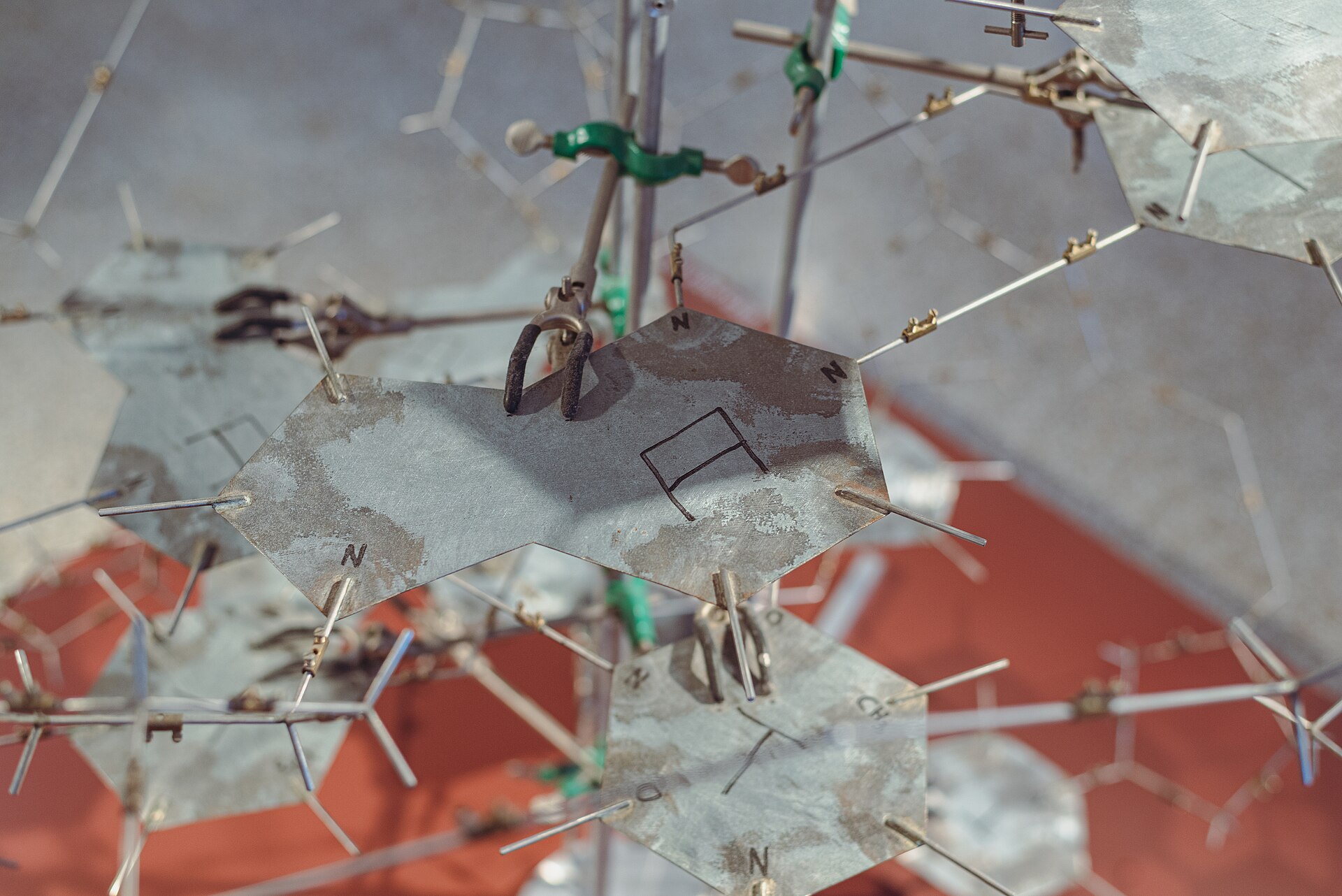
Thymine, the "T" in DNA's four-letter code, soaks up ultraviolet light more readily than its stand-in from RNA, and that has puzzled biologists for decades. A Texas A&M University team now reports a twist: when sunlight does damage thymine, it mostly causes a kind of harm that can be undone.
The three-person team from the university's Department of Electrical and Computer Engineering laid out the result in a 2026 paper in the Proceedings of the National Academy of Sciences. Think of it as a built-in sunscreen that does not block the burn but keeps it fixable.
The puzzle
RNA spells its genetic messages with uracil. DNA swaps uracil for thymine, which, as Wikipedia's thymine entry notes, is simply uracil with an extra methyl group bolted on. Most researchers think RNA came first and DNA took over later, the idea known as the RNA world hypothesis.
So why would evolution pick the more light-sensitive letter? The paper starts from a stark fact: the young Earth was bathed in intense UV radiation. On paper, thymine looks like a bad bet.
What the lab did
Keyvan Khosh Abady, Negar Karpourazar and Peter Rentzepis hit thymine and uracil with tightly controlled UV light at a wavelength of 265 nanometers. They then tracked the damage with three light-based tools: absorption, fluorescence and Raman spectroscopy.
The first results confirmed the problem. Thymine broke down faster overall, absorbed across a broader band of UV, and peaked at a slightly longer wavelength, where the ancient Sun would have shone more strongly.
The twist
The kind of damage mattered more than the amount. UV light can weld two neighboring DNA letters together in two main ways. Wikipedia's pyrimidine dimer article describes both:
- Cyclobutane pyrimidine dimers (CPDs): a ring-shaped link that can be split apart again by light, in a process called photoreversal, and in some cases by the DNA strand itself.
- (6-4) photoproducts: a different bond that does not reverse that way, so it is far harder to undo without help.
According to the PNAS paper, thymine formed the stubborn (6-4) lesions at a significantly lower rate than uracil and funneled most of its UV damage into the reversible CPD route. The authors argue that DNA's letters were tuned by evolution not to dodge damage but to keep it inside the bases and steer it toward forms that can repair themselves without enzymes.
Why it matters
The first genetic molecules had no repair crews. A letter that breaks in a way it can later fix on its own would have had an edge under a harsh sky. That gives one candidate answer to the thymine paradox without needing protective chemistry that did not yet exist.
Radiation toughness shows up all over biology. Badiyaa has covered Deinococcus radiodurans, the bacterium that survives 5,000 grays, and the tardigrades that could not survive full sunlight in orbit.
Limits
This was chemistry in a controlled lab, using single bases under one UV wavelength, not whole strands in a primordial pond. It shows thymine favors reversible damage; it does not prove that this is why DNA adopted thymine. Other pressures, such as how cells tell real uracil from damaged cytosine, may also have played a part.
The paper was received on May 13 and accepted on July 11, 2026, a turnaround of 59 days, and it is published open access under a CC BY 4.0 license.
Sources
- “UV photodamage pathways and the evolutionary selection of thymine over uracil in early genetic systems”, PNAS (Texas A&M University), 2026
- Thymine, Wikipedia, 2026
- RNA world, Wikipedia, 2026
- Pyrimidine dimer, Wikipedia, 2026
Image: Flocci Nivis, CC BY 4.0 via Wikimedia Commons
This article was produced with AI assistance and reviewed by our Editorial Desk. How we work.