A pink, ball-shaped microbe called Deinococcus radiodurans can take an instant dose of 5,000 grays of ionizing radiation with almost no loss of life, and about one in ten cells still survive 12,000 grays. It was discovered by accident in 1956, when a can of meat that had been blasted with enough gamma rays to sterilize it went bad anyway.
That hardiness earned it the nickname “Conan the Bacterium,” and in January 1998 it was listed as the most radiation-resistant lifeform known.
The spoiled can in Oregon
Arthur Anderson was working at the Oregon Agricultural Experiment Station in Corvallis, testing whether high doses of gamma radiation could sterilize canned food. One tin of meat received a dose thought to kill every known form of life. It spoiled, and the culprit was isolated as a new bacterium. It was first placed in the genus Micrococcus before genetic evidence gave it a genus of its own. The name is apt: Deinococcus comes from Greek words meaning “terrible berry,” and radiodurans from Latin for radiation-surviving.
How much radiation is 5,000 grays?
A gray measures how much radiation energy a material absorbs. Natural background radiation in most places runs at about 0.4 milligrays a year. Divide 5,000 grays by 0.0004 grays a year and you get 12.5 million years of ordinary background exposure, delivered in one go, which this microbe barely notices.
A dose that large is estimated to snap the organism’s DNA in dozens of places, roughly 80 double-strand breaks for a single copy of its 3.2-million-letter genome.
How it puts itself back together
The trick is redundancy plus fast repair. Each resting cell keeps four copies of its genome, and a rapidly growing cell holds eight to ten. Its DNA is packed into tight rings that may keep broken pieces close together.
Repair usually takes 12 to 24 hours and runs in two steps. First, overlapping fragments find each other and stick, using the spare copies as guides. Then a protein called RecA stitches the pieces back into complete chromosomes by swapping matching stretches between copies.
Researcher Michael Daly’s team proposed in 2007 that the microbe also protects its proteins with manganese-based antioxidants. Their argument, as quoted in the species record, was that “protein, rather than DNA, is the principal target” of radiation damage in sensitive bacteria. Another idea, from Valerie Mattimore of Louisiana State University, is that radiation resistance is a side effect of surviving extreme drying, which breaks DNA in similar ways.
Space, Mars and a song
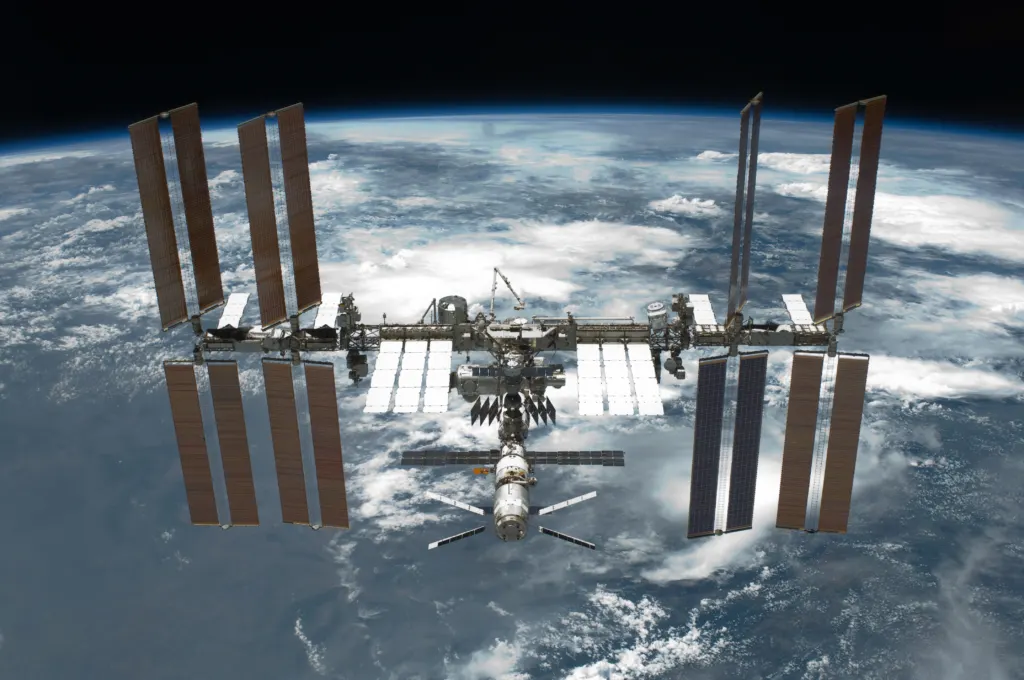
In 2020, scientists reported that D. radiodurans survived three years outside the International Space Station. A 2022 study found that dried, frozen cells could resist up to 140,000 grays, which its authors estimated would allow survival for about 280 million years at a depth of 10 meters below the Martian surface.
A 2006 NASA Astronomy Picture of the Day called these microbes candidate astronauts, noting the agency’s interest in whether extremophiles could one day be adapted to help crews survive on other worlds. The bacterium has also been genetically engineered to help clean up toxic mercury.
In 2003, US researchers even used it as a data vault: they encoded the song “It’s a Small World” in DNA, inserted it into the bacteria, and read it back without errors 100 generations later.
The limits
Its survival does not make it alien. Apart from its toughness, the microbe is genetically and chemically much like other Earth life, which argues against a once-proposed Martian origin. Several other microbes, including some cyanobacteria and an archaeon called Thermococcus gammatolerans, show comparable resistance. And 280 million years is still far shorter than the two billion years or more since Mars lost its surface water.
Other tiny survivors have limits too: our story on what tardigrades cannot survive in space covers one, and microbes eating the wreck of the Titanic appear in our piece on Halomonas titanicae rust bacteria.
The microbe’s full genome, sequenced in 1999, holds about 3,195 genes across two chromosomes and two plasmids.
Further reading
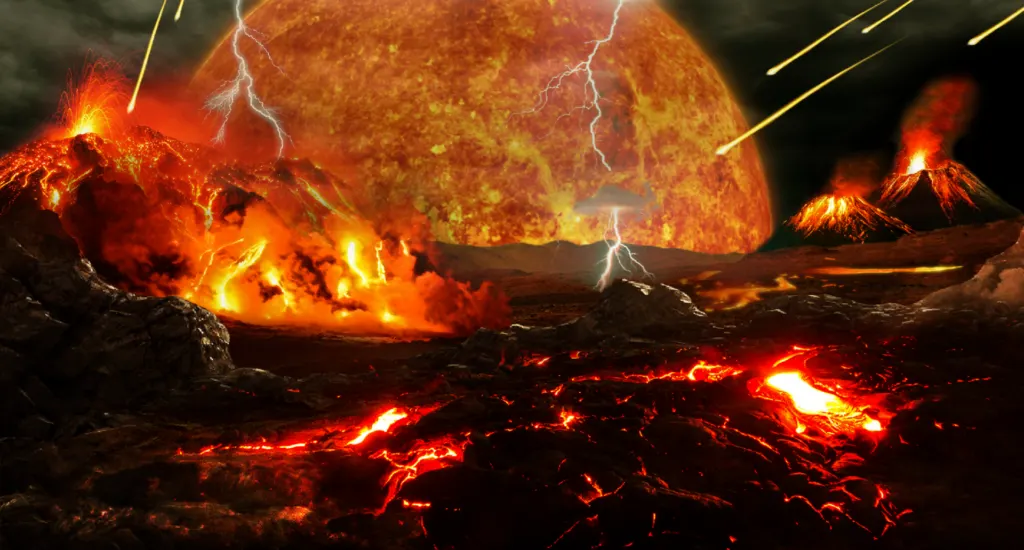
Image: NASA, Public domain via Wikimedia Commons
This article was produced with AI assistance and reviewed by our Editorial Desk. How we work.