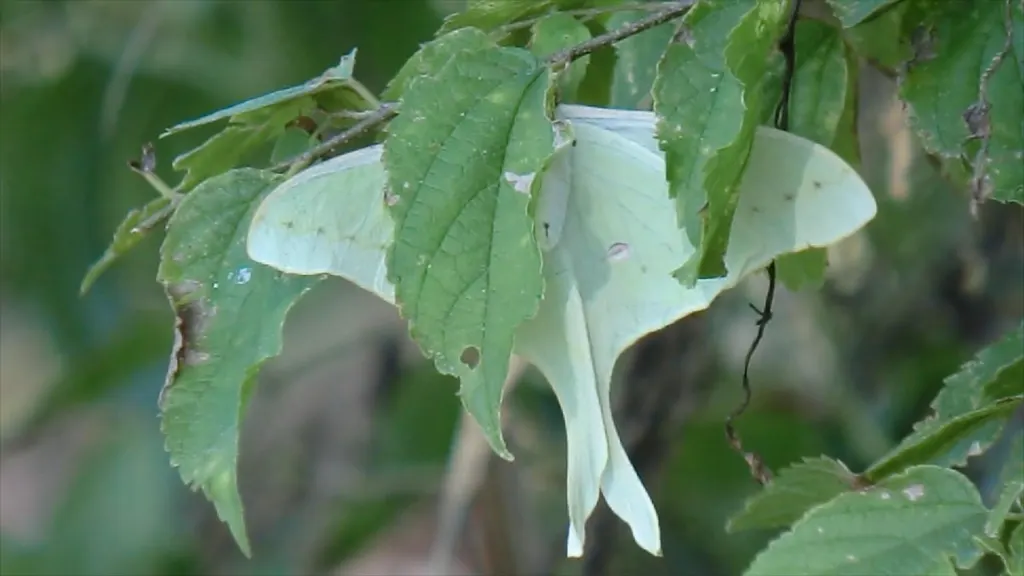
A single luna moth with unusually wide tails, produced after two years of failed attempts, turned into the first experimental change to wing shape ever recorded in moths or butterflies. Andrei Sourakov, who oversees the moth and butterfly collection at the Florida Museum of Natural History, hand-reared more than 700 luna and polyphemus moths over seven years to get there.
That count matters because the effect was rare and hard to trigger: the first visible change took two years of adjusting doses and timing.
The museum described the results this week. The paper itself, “Wing Shape and Color Pattern Modifications in Giant Silk Moths Using Sulfated Polysaccharides”, first appeared online on August 21, 2026, in the journal Evolution & Development, with Sourakov as its only author.
How one researcher reshaped 2 moth species with 2 compounds
Sourakov worked with two North American giant silk moths: the pale green luna moth (Actias luna), known for its long hindwing tails, and the polyphemus moth (Antheraea polyphemus), which carries large eyespots.
He injected tiny amounts of two sulfated polysaccharides, sugar-based molecules, into the animals shortly before and after pupation, the stage when a caterpillar rebuilds itself into an adult and its wing patterns are laid down. Heparin boosts Wnt/wingless signaling, a family of proteins that tells cells where to grow. Dextran sulfate pushes that signaling the other way.
For the first two years, nothing visible happened. Then one luna moth emerged with tails wider than any of the hundreds he had raised. “I kept trying, and eventually, I achieved a single transformation. But it wasn’t of the wing pattern. It was the wing shape,” Sourakov said in the museum’s announcement.
Shifting the timing of the doses later produced the expected eyespot changes as well. According to the paper’s abstract, heparin expanded hindwing tails and eyespots, while dextran sulfate shrank them, and the effects could be produced consistently in both species.
- Polyphemus moths: the yellow rims of the two upper eyespots thickened, nearby brown scales turned whiter, and the black ring around the hindwing eyespots grew.
- Luna moths: the round hindwing eyespots narrowed into a squint and gained a thick dark border, and the tails widened.
Both changes made eyespots far more conspicuous. That is the second headline result: a leaf-like, camouflaged moth can become a warning-colored one without new genes, simply by expanding pattern elements it already has. “All they need is a slight increase in the amount of certain compounds at the right moment,” Sourakov said.
What the 2010 “cookie cutter” paper proposed
The idea his tails support dates back 16 years. In 2010, Warren Macdonald, Arnaud Martin and Robert Reed published “Butterfly wings shaped by a molecular cookie cutter” in the same journal. They found that two genes, the transcription factor Cut and the signal wingless, switch on together in a narrow band around the edge of the developing wing, and that this band already traces the final outline, including the tails of swallowtail butterflies, long before the adult forms.
During the pupal stage the cells in that band die on schedule, trimming the wing to shape like a cutter pressed into dough. The authors argued that this trimming system is unique to moths and butterflies and helped them evolve such varied wing outlines.
Here is the link Badiyaa sees between the two studies: in 2010 the evidence was a map of where genes were active, while in 2026 a chemical that tunes wingless physically changed a tail. One is correlation, the other is an intervention, and together they point at the same gene.
Sourakov’s explanation is that cut does not respond to heparin, but wingless does. Wingless is usually quiet by the time eyespots form, yet it can switch back on to repair injured wing tissue. He suspects luna moths reuse it to build their tails, which would explain why heparin bent the cutter out of shape in this species and not in butterflies tested before.
Limits: 1 author, 2 species, a lab setting
This is one lab study by one researcher, on two species of one moth family. The tail change first showed up in a single specimen, and the abstract describes the tail results as expansion and contraction rather than giving a rate of change across all 700-plus insects.
The role of wingless in luna moth tails is an inference. Sourakov calls it “just my deduction” and says it is “very plausible”, but no gene expression was mapped in luna tails here. Heparin also acts on more than one pathway, so a drug effect is weaker evidence than editing the gene directly.
The moths were raised indoors, and nobody has yet measured whether wider tails or bolder eyespots change survival against bats or birds in the wild. Luna moth tails are thought to divert bat attacks away from the body, which makes that a testable next question.
What comes next for the 700-moth dataset
The paper’s images and data are deposited in an open repository, so other labs can reuse them. Sourakov writes that luna moths with wider or narrower tails could help link wing shape to flight performance in future work. The most direct test of his idea would be to look for wingless activity at the tail tips of developing luna moths, the same kind of experiment the 2010 team ran on swallowtails.
Further reading
- Evolution & Development: Wing Shape and Color Pattern Modifications in Giant Silk Moths (2026)
- PubMed: Butterfly wings shaped by a molecular cookie cutter (2010)
Image: Andy Reago & Chrissy McClarren, CC BY 2.0 via Wikimedia Commons
This article was produced with AI assistance and reviewed by our Editorial Desk. How we work.