A ground pangolin's tongue is longer than the rest of the animal. When it is not slurping up ants, that tongue does not sit in the mouth at all: it is anchored down near the pelvis and the last pair of ribs and tucks away inside the chest.
The ground pangolin, also called Temminck's pangolin or the Cape pangolin, is the only pangolin living in southern and eastern Africa, according to Wikipedia's ground pangolin entry. It is one of eight or nine pangolin species, and every one of them is built around the same odd toolkit of armor, claws and an enormous tongue.
A tongue that starts at the ribs
In most mammals the tongue is rooted to the hyoid bone in the throat. Pangolins break that rule. The general Wikipedia article on pangolins explains that the root sits in the chest, between the breastbone and the windpipe, the same arrangement found in the giant anteater and the tube-lipped nectar bat.
The result is a tongue that larger pangolins can push out as far as 40 centimeters (16 inches), while staying only about half a centimeter wide. Sticky saliva does the catching. A pangolin pokes it down insect tunnels and pulls it back coated in ants or termites, getting through 140 to 200 grams (5 to 7 ounces) of insects a day.
Pangolins have no teeth, so they cannot chew any of it. Instead they swallow small stones that collect in a muscular, spine-lined section of the stomach and grind the insects up, much like a bird's gizzard.
Armor worth a fifth of the body
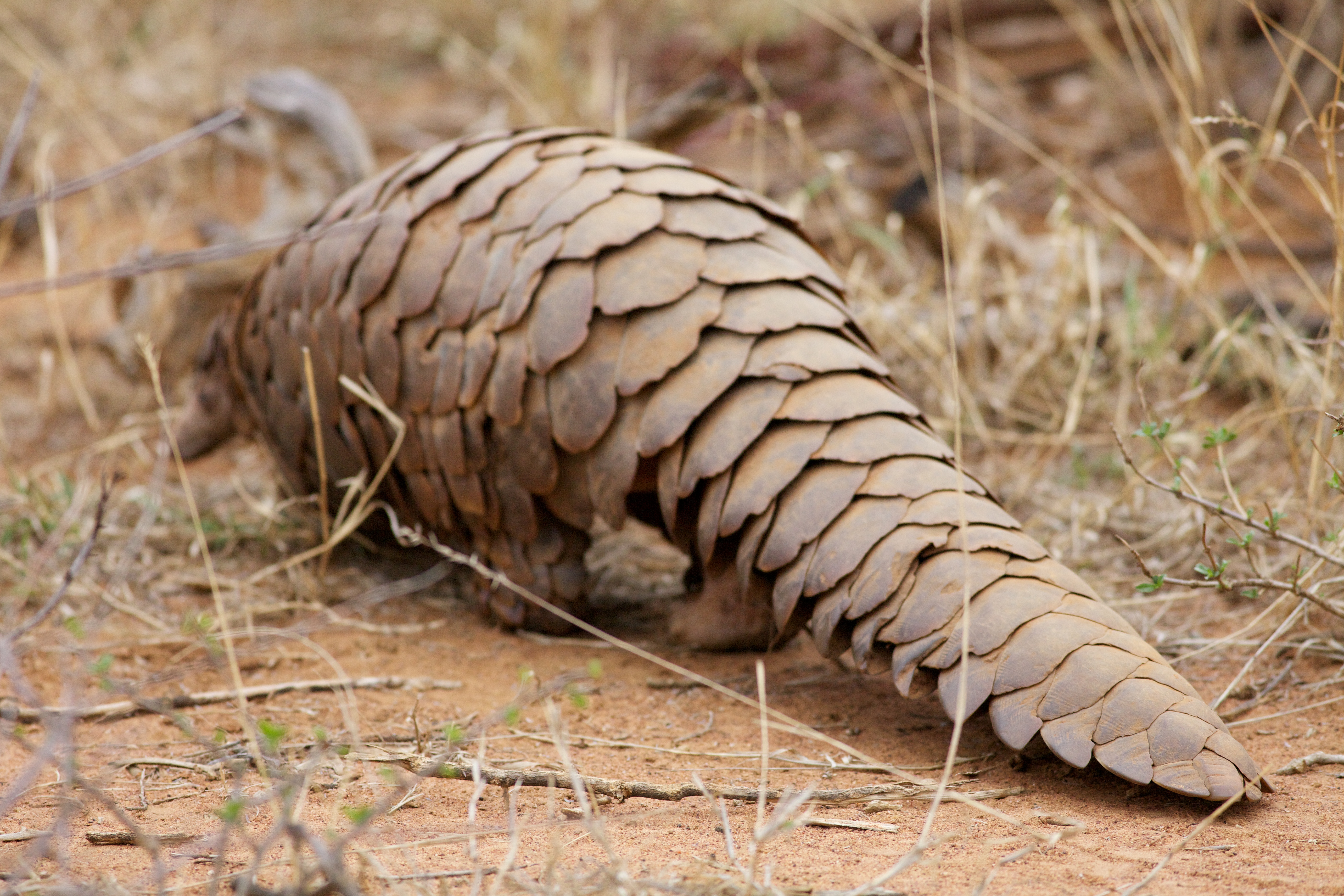
The other famous feature is the coat of overlapping scales, which makes the animal look like a walking pine cone or artichoke. The scales are keratin, the same protein as human fingernails, and on a ground pangolin they account for about 20 percent of body weight.
Put that in human terms: a 180-pound person carrying the same share would be hauling around 36 pounds of fingernail.
The belly has no scales, only sparse fur, which is why a frightened pangolin curls into a tight ball with the armor facing out. The name itself comes from the Malay word pengguling, meaning "one who rolls up." Ground pangolins can also hiss, puff, swing a sharp-edged tail and release a foul-smelling spray from glands near the tail, much like a skunk.
Pangolin facts at a glance
- Size: ground pangolins measure 30 to 90 centimeters long without the tail and weigh 5 to 27 kilograms (11 to 60 pounds).
- Walk: they move mostly on their hind legs, with front claws tucked in to protect them.
- Babies: newborns weigh about 340 grams, have soft pale scales that start hardening by day two and ride on the base of their mother's tail.
- Diet: only ants and termites, and only certain species of them, even when other prey is right there.
- Relatives: despite the look, pangolins are not close kin of armadillos; genetic evidence puts their nearest living relatives among the carnivorans.
All eight assessed pangolin species are listed as threatened by the International Union for Conservation of Nature. The IUCN Pangolin Specialist Group's species overview says the Red List assessments were updated in December 2019, placing Temminck's pangolin in the vulnerable category, and that every pangolin species was moved to CITES Appendix I in 2016, banning international commercial trade in wild-caught animals. Pangolins are still described as the most trafficked mammals in the world.
Badiyaa has looked at other animal oddities, including the venomous slow loris, the Andean condor's 11-foot wingspan and why zebra stripes keep horse flies away.
World Pangolin Day falls on the third Saturday of February, which in 2027 is February 20.
Sources
- Ground pangolin, Wikipedia, 2026
- Pangolin, Wikipedia, 2026
- Pangolins, IUCN SSC Pangolin Specialist Group, 2026
Image: David Brossard, CC BY-SA 2.0 via Wikimedia Commons
This article was produced with AI assistance and reviewed by our Editorial Desk. How we work.