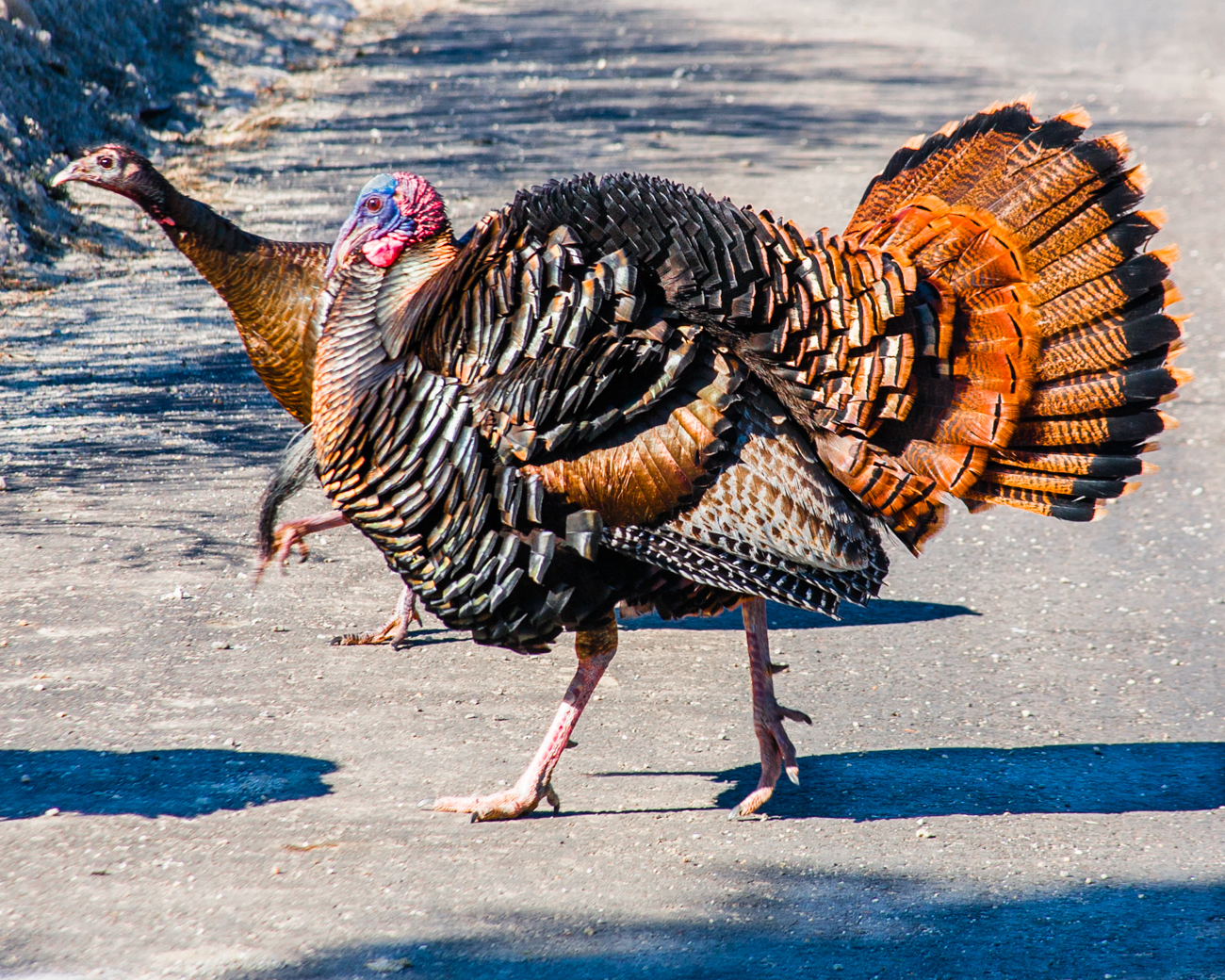
That rattling gil-obble-obble from the woods is a male wild turkey advertising himself. A gobble lasts only a second or two, but it does two jobs at once: it tells every hen within earshot where he is, and it warns rival males to keep their distance.
"The gobble's purpose is to announce the male wild turkey's presence to all hens within earshot and hopefully to summon their company plus repel competing males," Jeff Lusk, a wildlife biologist with the Nebraska Game and Parks Commission, said in the commission's explainer on the gobble.
Weather sets the volume
Field studies cited in the Nebraska Game and Parks gobbling research roundup found gobbling peaked in light winds of about 3 mph, faded as winds rose, and almost stopped above 12 mph. Birds called most when the average daily temperature sat between 60 and 69 degrees Fahrenheit, and falling barometric pressure, often a sign of rain, quieted them down. One adult tom in an Alabama survey gobbled 46 times in 10 minutes.
Do the math on that Alabama bird and it works out to roughly one gobble every 13 seconds. In spring, Penn State's video notes, the routine can begin as early as February on warm, sunny days.
A dawn broadcast from the treetops
Wild turkeys sleep in trees, and the gobbling starts before they ever touch the ground. "While perched atop a roost in large, mature trees, males begin to gobble to inform females of their location," Tony Musselman of Penn State's Wildlife and Fisheries Science department explains in Penn State Extension's Sunrise with a Spring Gobbler video. As daylight grows, the gobbles get louder and more frequent, and several toms often sound off one after another, each trying to coax hens to fly down near his roost.
The perch matters. According to research summarized by the Nebraska commission, a gobble from a tree carries about twice as far as one made on the ground.
Why the gobble goes quiet
Here is the twist. Once a tom actually has hens around him, he usually stops gobbling. "Males that are in the presence of females will generally mute their gobbles," Musselman says. Instead he switches to a closer-range show: he fans and struts, and makes a "spit and drum," a sharp spitting tone followed by a low drumming as he beats his wings against his chest.
A tom still looking for company keeps gobbling as he travels, and Penn State notes that males may cover up to two miles a day in the search.
Who gobbles, and when
- Adult toms do most of the gobbling, mainly in spring.
- Jakes, the young males, gobble too, though in their first year they are often just spectators.
- Hens can gobble but rarely do.
- Fall birds still gobble, just less often, and a turkey may gobble at any season in answer to a sudden loud noise such as a train whistle.
Badiyaa has more on these birds, including how wild turkeys see and hear, the fact that wild turkeys can fly at up to 50 mph, and how the turkey became America's Thanksgiving bird.
Listen at first light next spring: the earliest gobbles usually come from the treetops, before the toms fly down to strut.
Sources
- The Gobble, Nebraska Game and Parks Commission, 2020
- Sunrise with a Spring Gobbler, Penn State Extension, Pennsylvania State University, 2026
Image: Paul VanDerWerf, CC BY 2.0 via Wikimedia Commons
This article was produced with AI assistance and reviewed by our Editorial Desk. How we work.