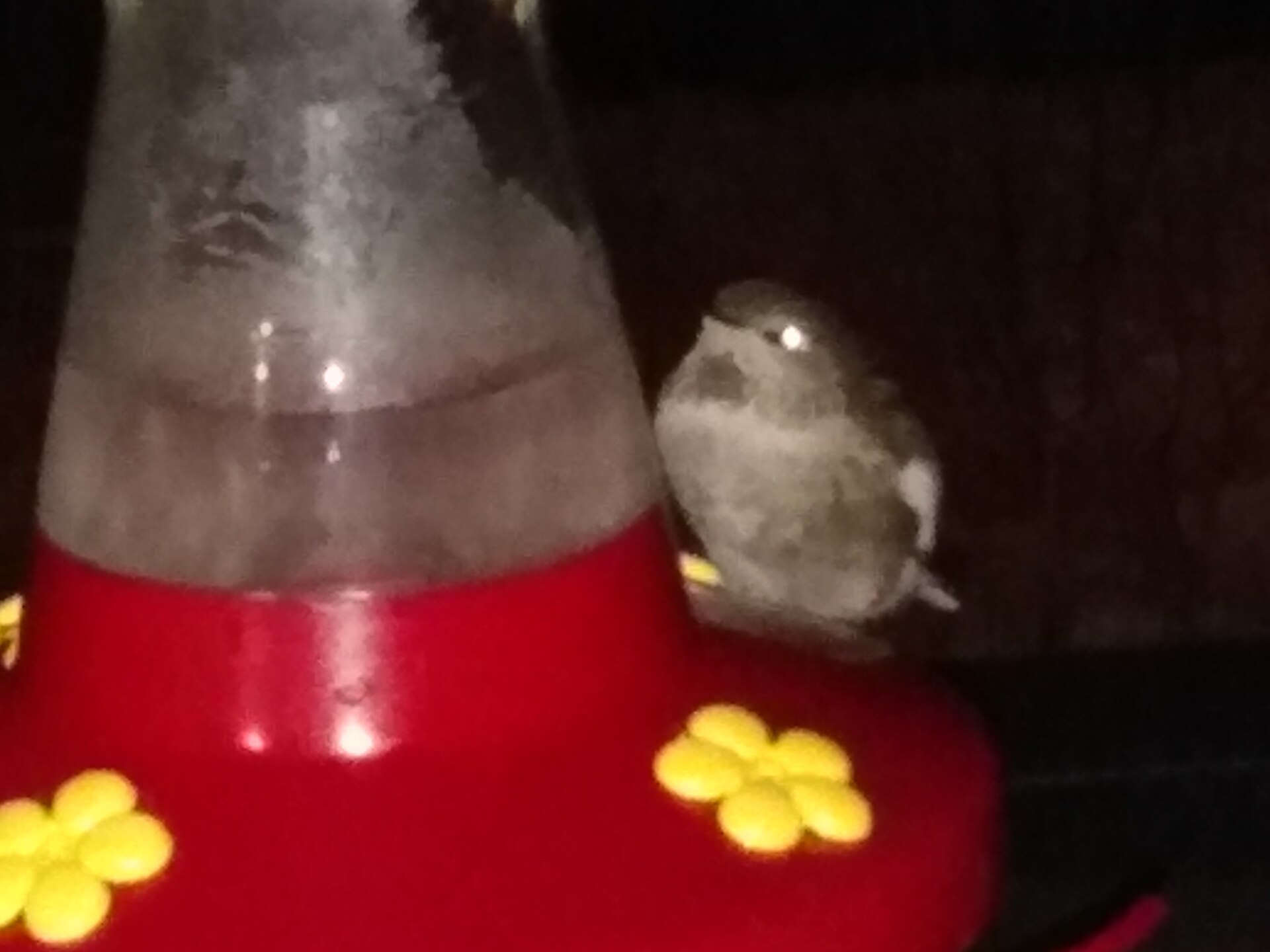
Hummingbirds get through freezing nights by letting their bodies go nearly cold. In the Peruvian Andes, one black metaltail cooled to a body temperature of 3.26 degrees Celsius, about 38 degrees Fahrenheit, the lowest ever reported for any bird or for any mammal that does not hibernate.
That record comes from a team led by Blair Wolf of the University of New Mexico, which published its 2020 study in Biology Letters. The researchers tracked body temperature overnight in 26 hummingbirds from six species, held in captivity at about 3,800 meters, roughly 12,500 feet, while the air outside followed its natural nightly chill.
What torpor is
The trick is called torpor: a controlled drop in body temperature and metabolism that saves energy when food runs short. Wikipedia's entry on torpor describes daily torpor as lasting less than 24 hours, unlike hibernation, which stretches across a season. Hummingbirds are among the best-known birds to use it.
The key word is controlled. Torpor is not the same as a body simply failing in the cold. The animal keeps regulating its temperature at a much lower setting, then rewarms itself when it is time to wake, faster than it cooled down.
Why hummingbirds need it
A hummingbird burns energy at a furious rate, and it carries very little fuel. The black metaltail, a hummingbird found only in Peru, is 11.5 to 12.5 centimeters long and weighs about 6 grams, around 0.21 ounces, according to the species' Wikipedia entry. It lives as high as 4,500 meters in the Andes.
The Andes study put a number on what is at stake. Every one of the six species dropped into deep torpor, and birds that cooled less or stayed torpid for shorter spells lost more body mass overnight. In other words, the colder and longer the shutdown, the more of its small fuel tank a bird still had at dawn.
The record, worked out
Badiyaa converted the study's figures for readers who think in Fahrenheit:
- Record low: 3.26 degrees Celsius multiplied by 1.8, plus 32, comes to 37.9 degrees Fahrenheit, only about 6 degrees above freezing.
- Study altitude: 3,800 meters is about 12,470 feet, more than twice the height of Denver, the Mile High City.
- Sample: 26 birds across six species works out to an average of a little over four birds per species.
The team also found that how deep a species goes runs in families. Closely related hummingbirds tended to share similar minimum temperatures, which points to a trait shaped by evolution rather than one each bird improvises.
Closer to home
North American hummingbirds do it too. The torpor entry shows an Anna's hummingbird near Vancouver, British Columbia, sitting in torpor through a winter night of minus 8 degrees Celsius, about 18 degrees Fahrenheit, without moving for more than 12 hours. Migrating hummingbirds also use torpor at night to protect the fat they need for the journey.
For more on small birds with outsize habits, read about the willie wagtail that dive-bombs kookaburras and the kagu, New Caledonia's ghost of the forest.
The Andes team called deep torpor routine for high-mountain hummingbirds, which means the 3.26-degree record was one bird's ordinary night, repeated whenever the temperature falls.
Sources
- Extreme and variable torpor among high-elevation Andean hummingbird species, Biology Letters, University of New Mexico, 2020
- Torpor, Wikipedia, 2026
- Black metaltail, Wikipedia, 2026
Image: Zefr, CC BY-SA 4.0 via Wikimedia Commons
This article was produced with AI assistance and reviewed by our Editorial Desk. How we work.